Content
Your Inbox Is Not Your Todo List
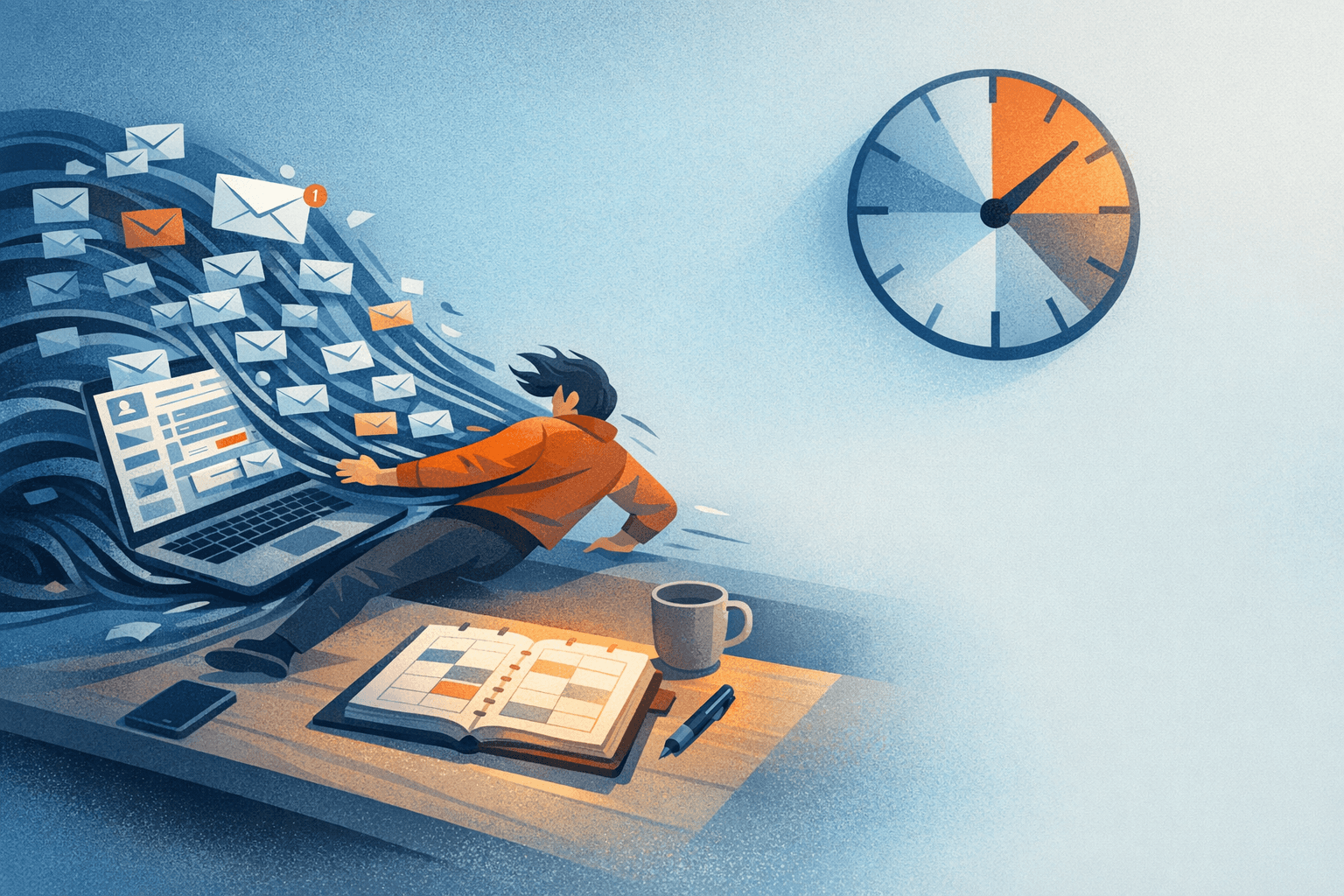
If your inbox decides what you do next, you’re not “staying on top of things”. You’re letting the loudest input win.
The day your inbox becomes your agenda, you stop leading
I see this pattern constantly with founders. They wake up, open email, then Slack, then whatever has a red badge. One message turns into ten. Ten turns into an hour. And by lunch, the day is “gone”… but somehow nothing meaningful moved.
That’s not productivity. That’s reactivity.
When you run your day from the inbox, you outsource your priorities to everyone else: clients, teammates, your boss, that newsletter you don’t even remember subscribing to. The most recent message becomes the most important work. You end up building a business based on whatever arrived last.
Notifications are a slot machine, not a strategy
The trap is psychological. Every ping gives you a tiny hit of relief. You answered. You cleared something. You feel useful. But usefulness isn’t leverage.
There’s a reason inbox work feels addictive: it’s endless, it’s measurable, and it rewards you instantly. Meanwhile, the work that actually changes your company is slower and scarier. Strategy doesn’t come with a red badge.
“Where you decide to put your time and attention says a lot about who you are as a human being.”
And it’s not just a vibe. A constant stream of notifications fragments attention and makes deep thinking harder to access. You can’t do real product work, real writing, real problem solving, or real leadership inside a perpetual interrupt loop.
Why “inbox zero” doesn’t fix the real problem
Even if you’re good at replying fast, you’re still playing the same game. You’re optimizing response speed instead of optimizing outcomes.
I’ll say it bluntly: replying to messages is rarely the work that moves the business forward. It’s the work that keeps the business from catching fire. Necessary sometimes, but not the engine.
The brutal version of this is when someone has thousands of unread emails and still thinks their “system” is: handle the five messages visible at the top. It feels like progress because the list changes. It is progress in the same way bailing water is progress when your boat has a hole.
The shift: make the inbox serve your priorities
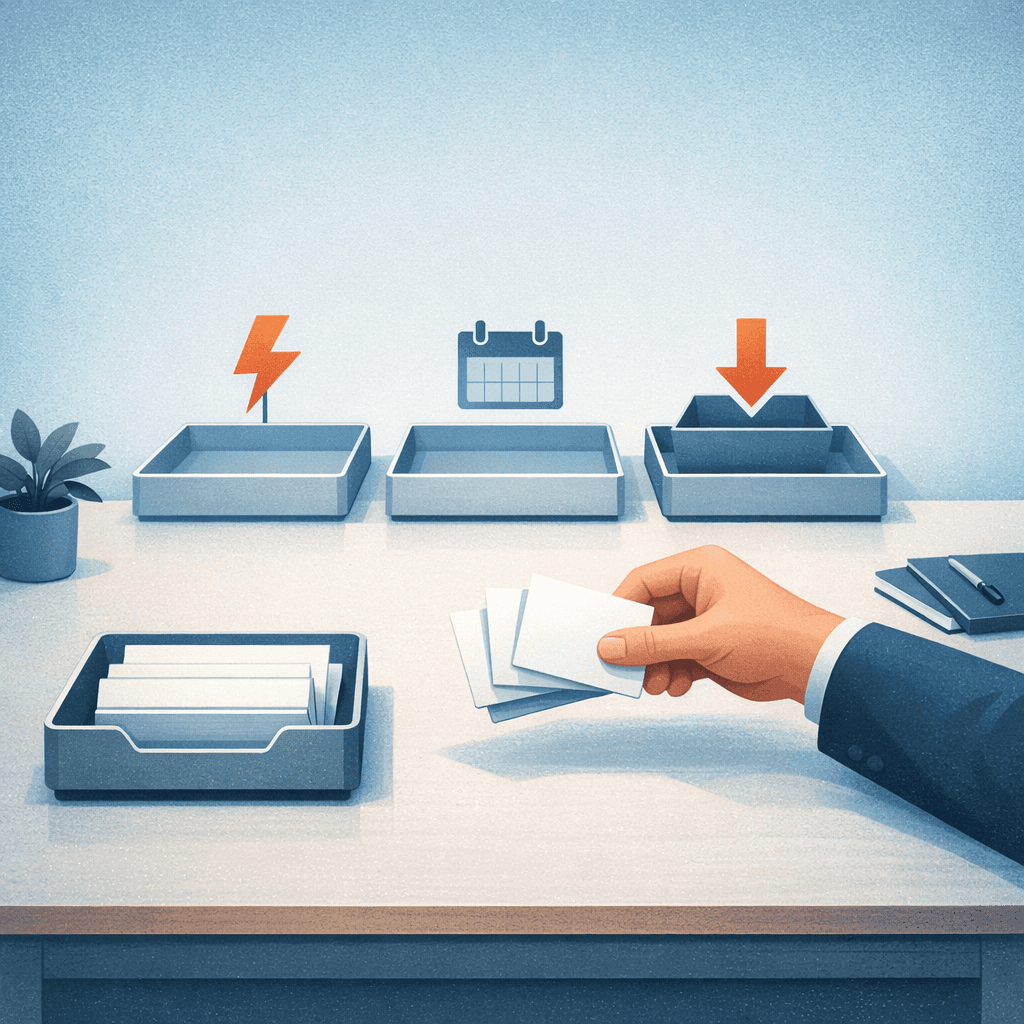
What changed everything for me was treating the inbox as an intake channel, not a command center.
I still capture everything that comes my way: requests, ideas, opportunities, bugs, intros, questions. But I don’t let it dictate timing. I route it into a system where I can evaluate it against what I’ve already decided matters.
That evaluation is the whole point. The goal isn’t to respond faster. It’s to respond to the right things.

A simple operating system you can run tomorrow
Here’s the model I use, and the one I push founders toward.
Start from priorities, not inputs
Before you open anything, decide what winning looks like today. Not the fantasy version of the day. The real version.
Pick the one strategic project that would create disproportionate impact if it moved forward this week. Then define what “movement” means in concrete terms. A shipped feature. A draft sent. A customer conversation done. A decision made.
If you don’t choose your priorities first, your inbox will happily choose them for you.
Capture everything, but process it on purpose
When something arrives, don’t let it live as an open loop in your head, and don’t let it sit as a starred email that you’ll re-read ten times.
Capture it somewhere you trust, then process it later during a dedicated window. You’re creating a separation between collection and decision-making. That separation is where you get your leverage back.
Batch your communications into time blocks
I’m not anti-communication. I’m anti-random communication.
Batching is what protects your attention. It also makes you faster when you do respond, because you’re not context-switching every ten minutes.
Respond like an owner
When you finally process the inbox, do it with a simple question: “Does this deserve time from my priorities?”
Some messages get a quick reply. Some get scheduled properly. Some get delegated. Some get ignored. That’s not being rude. That’s being responsible.
Stop being a passenger in your own business
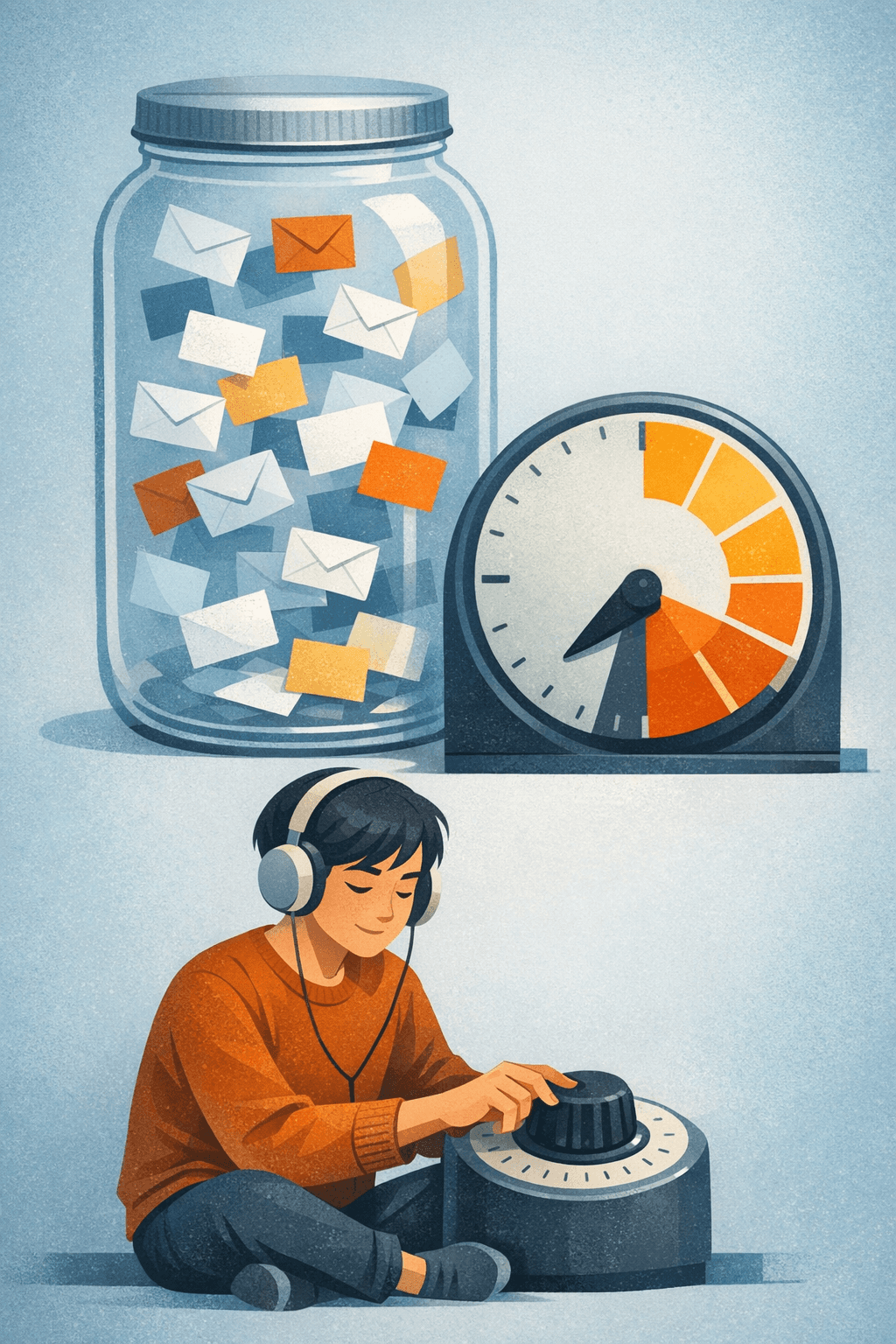
If you take nothing else from this: your attention is the real budget.
You can spend it on whatever shouts the loudest, or you can spend it on what compounds. The second option looks boring on the outside. On the inside, it’s what gives you momentum.
Your inbox should serve your agenda, not create it.

Flo is the founder of Mind the Flo, an Agentic Studio specialized into messaging and voice agents.