Content
Voice Notes Aren't About Speed - Here's the Real Reason
I used to think voice notes were a hack for speed. Talk faster than you type, ship more, end of story. But after watching how founders actually work, I realized that’s not why voice notes change your day.
Voice notes win because they remove the tiny bits of friction that stop you from doing the thing in the first place. They’re a shortcut around resistance. And resistance is the real productivity killer.
Voice notes aren’t about speed—they’re about lowering the bar to start
Most of the work you don’t do doesn’t die because it’s hard. It dies because it asks you to begin at the wrong moment.
You know the moment. You’re between meetings. You’re walking. You’re holding coffee. You’ve got one good thought and ten competing tabs in your brain. Typing feels like opening a mini-project. You need both hands, the right app, the right place to put it, and enough attention to not lose the thread halfway.
Voice notes collapse that entire decision tree into one move: talk.
That’s the real magic. Not velocity. Lower activation energy.
In behavior design terms, the probability you’ll do something is often less about motivation and more about ability in the moment. When the capture method becomes nearly effortless, you stop negotiating with yourself. You stop saying “I’ll write that down later.” You just get it out.
And once it’s out, you’ve already won the first battle.
Capture is not execution (and why voice notes can fail)
Here’s where people get burned: they discover voice notes, capture everything, then wonder why nothing changes.
Because capture is only the first half of the system.
If you treat voice notes as the final destination, you end up with an audio attic. Dozens of clips. No structure. No next steps. No leverage.
Voice is excellent at catching sparks. It’s terrible at being a long-term storage format. Audio is high bandwidth on the way in and surprisingly expensive on the way out. You can’t skim it. You can’t glance at it. You have to listen.
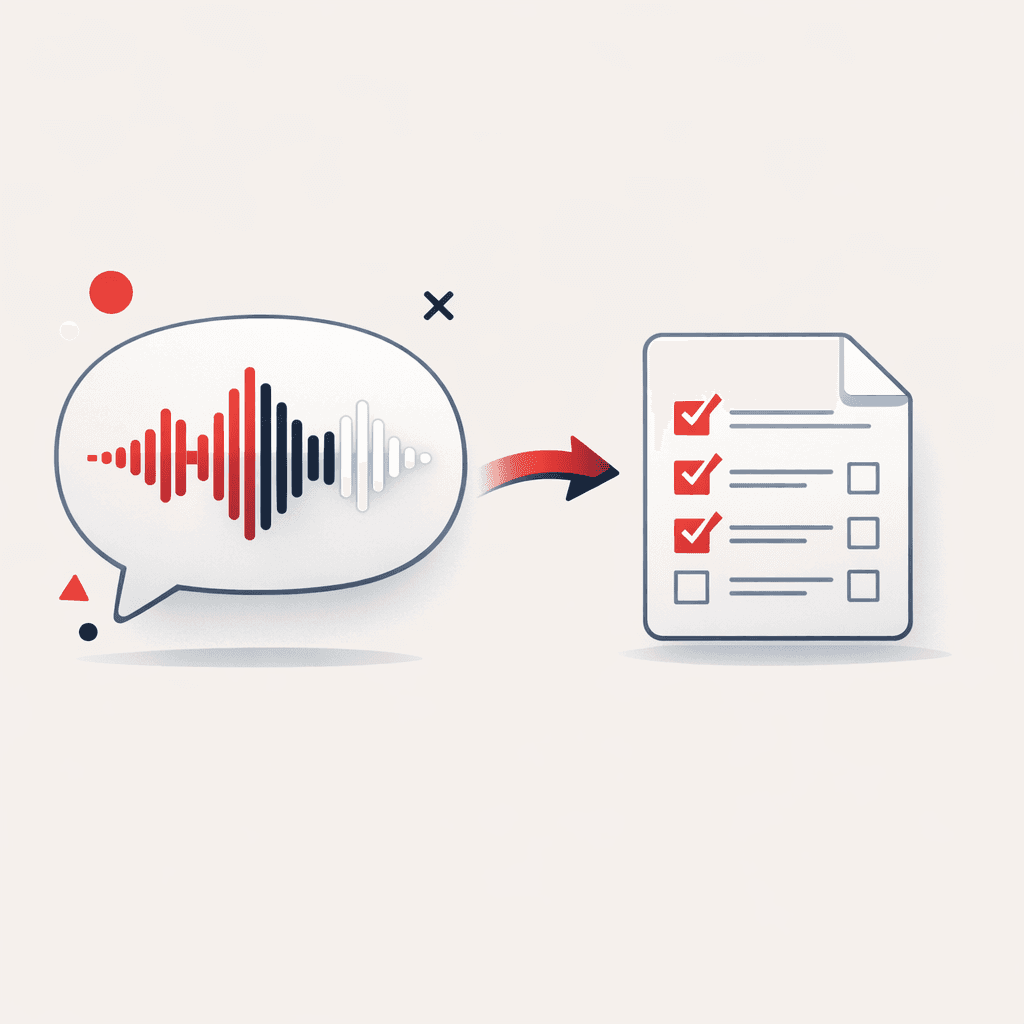
So if you want voice notes to make you productive, you need a second move: turning raw capture into something your future self can execute.
The simplest rule I follow is this: if it matters, it becomes text and a next action. If it doesn’t, it gets archived without guilt.
Cognitive offloading: stop using your brain like a sticky note
A lot of founders live with a constant background fear: “Don’t forget this.”
That fear is expensive.
Working memory is limited. When you’re trying to hold a task, an idea, a follow-up, and a half-formed strategy in your head, you aren’t just risking forgetfulness. You’re paying a continuous tax in attention.
Voice notes are a form of cognitive offloading. You’re taking something that’s squatting in your mental RAM and putting it somewhere reliable. That frees you to actually think.
That’s why voice notes feel calming when they work well. It’s not that you did the task. It’s that you stopped carrying it.
The catch is that offloading only helps if you trust you’ll see it again in a usable form. If your notes disappear into a pile of audio you never revisit, your brain learns it can’t rely on the system, and you’re back to carrying everything.
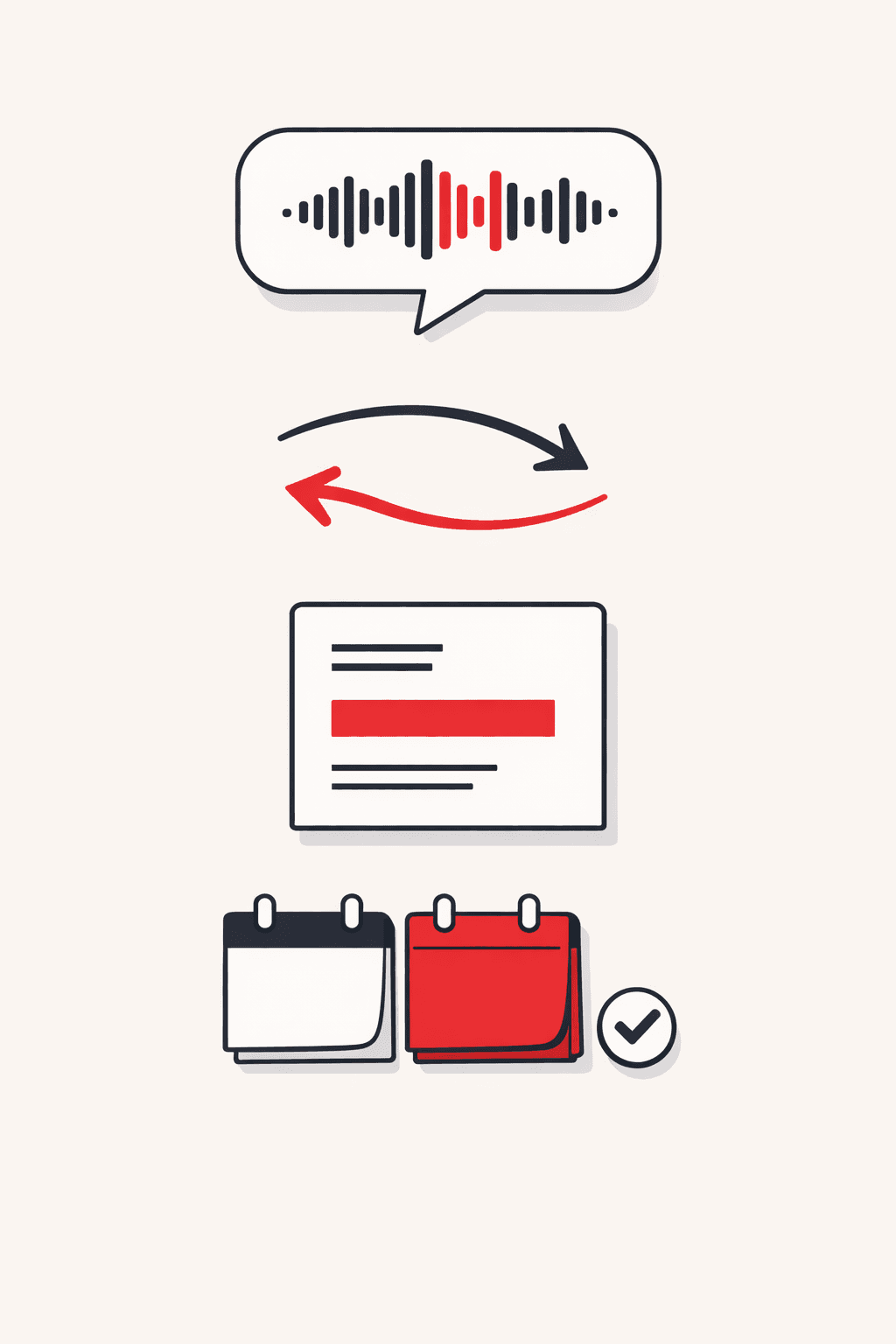
A simple structure to keep voice notes actionable
You don’t need a perfect workflow. You need a voice note format that survives time.
When I record something I care about, I try to include three pieces of information, spoken like I’m leaving a message for a stranger.
First, I name the context. I say the project, the person, or the area of life. Context is what your future self won’t have.
Second, I state the point in one sentence. Not the backstory. Not the debate. The point.
Third, I end with a next step. Something that can become a task, a calendar block, or a decision.
Here’s what that sounds like in real life.
“Hiring. Follow up with Sam about references. Next step: send the email today before 5.”
Or.
“Product. The onboarding drop is happening after step two. Next step: ask support for the top five complaints this week.”
If you do only this, your voice notes stop being diary entries and start being executable commands.
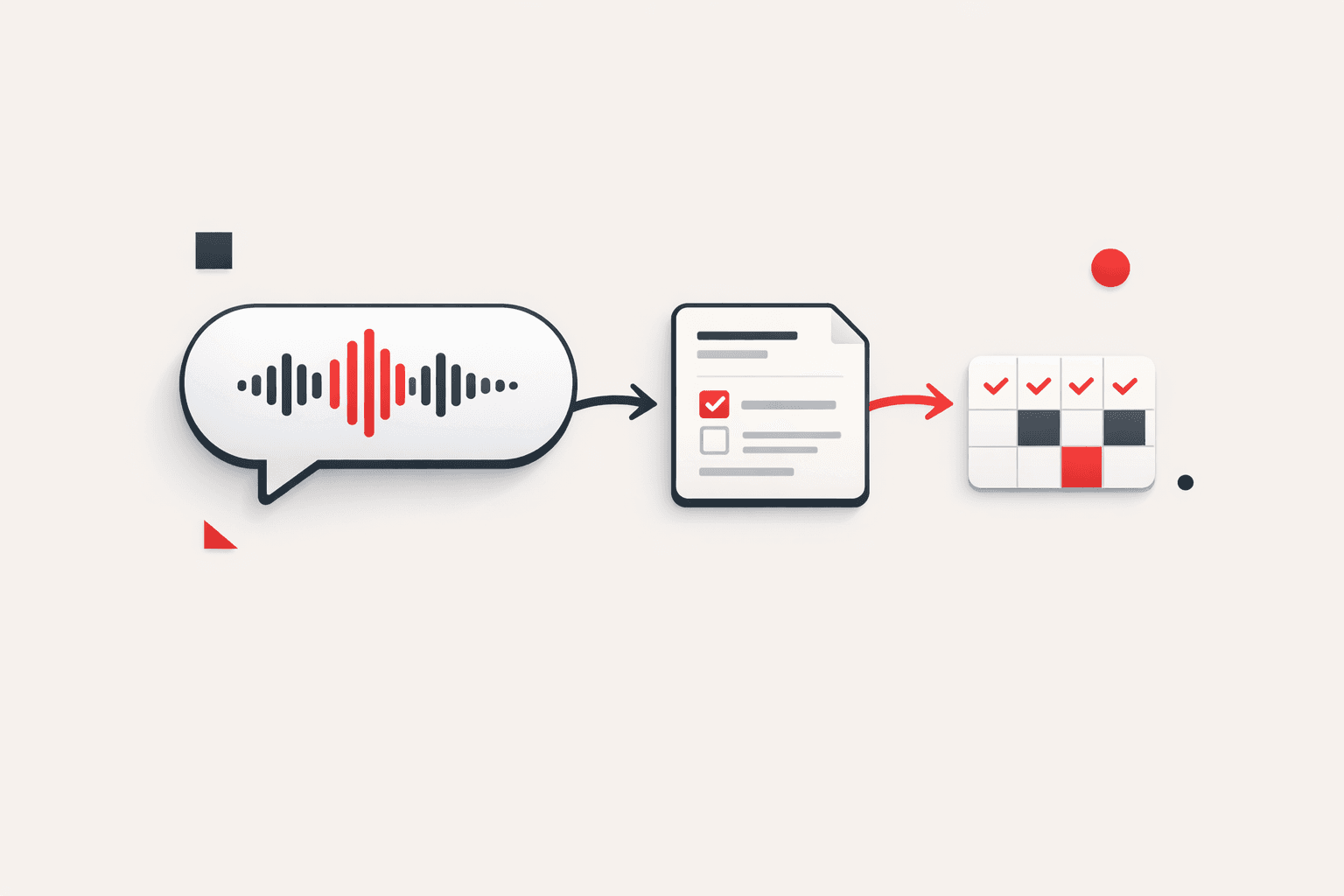
This is also why transcription matters. The moment your voice turns into searchable text, the retrieval cost collapses. You can find what you said. You can sort it. You can turn it into tasks without replaying your entire brain dump.
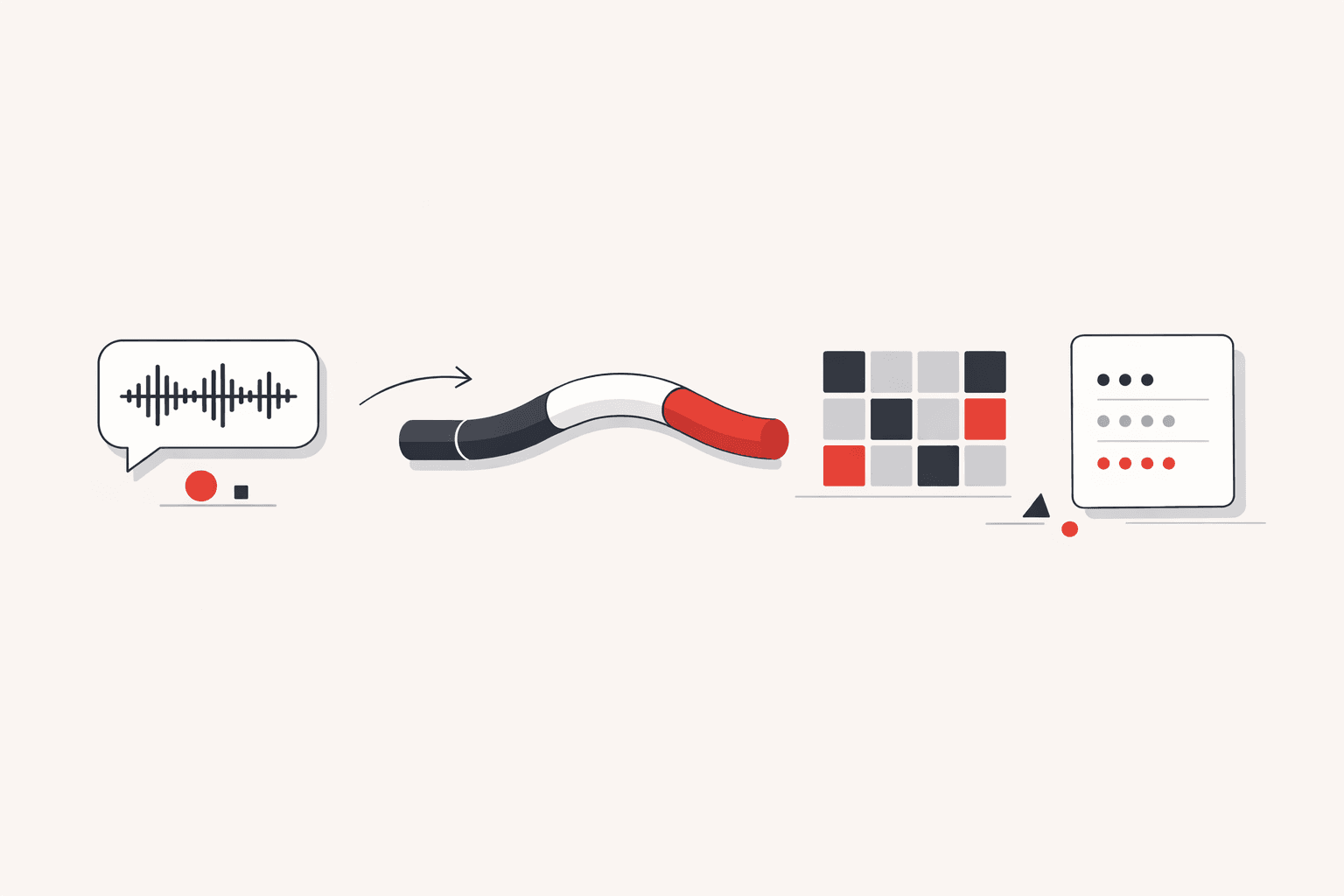
Failure modes and fixes
Voice notes usually fail for boring reasons, not philosophical ones.
The first is missing context. If you say “follow up on that thing,” you’ve created a note that expires in twelve hours. Fix it by naming the nouns out loud. People. Projects. Places. Numbers.
The second is no processing habit. Capture without review is just procrastination with better UX. Fix it with a tiny ritual: a daily five-minute sweep or a weekly review where you convert the good stuff into tasks and delete the rest.
The third is social and privacy friction. You won’t record voice notes in a quiet office or on a crowded train. Fix it by having a fallback: quick text capture, or wait for a private moment. The system has to match real life.
The fourth is over-recording. If every thought becomes a two-minute memo, you’ve recreated inbox anxiety in audio form. Fix it by keeping notes short and ending with a next step.
When voice notes work, they’re not a content format. They’re a bridge. From intention to action.
The gentle challenge
If you’ve tried voice notes and bounced off them, don’t throw the idea away. Throw away the assumption that capture is the same as progress.
Use voice for what it’s best at: lowering the bar to start. Then build the smallest possible conversion step so your future self can execute.
If you want to experiment with this workflow, try it for three days. Record voice notes only when you feel resistance, and always end with the next step. At the end of each day, process them into tasks or calendar blocks.
If you like this kind of thinking, subscribe for more productivity insights. And if you want a system that turns voice into organized, actionable work, you can also try Notis when you’re ready.

Flo is the founder of Mind the Flo, an Agentic Studio specialized into messaging and voice agents.