Content

Traditional vs AI Automation: Complete Breakdown for 2026
The automation trap almost every founder falls into
If you’ve ever set up a Zapier or Make scenario at 11pm because you were tired of copying data from one tool to another, you know the feeling. For a moment, it feels like you’ve unlocked a cheat code: no more manual busywork, no more “I’ll do it later,” no more forgetting.
And then a few weeks later, something changes. A form field gets renamed. A teammate tweaks a pipeline stage. An API updates. Suddenly your “automation” becomes a silent liability. The worst part is not that it breaks. The worst part is that it breaks quietly, and you only notice when a customer slips through.
That’s the core reason this conversation matters in 2026. We’re not choosing between automating or not automating. We’re choosing between two very different philosophies of automation.
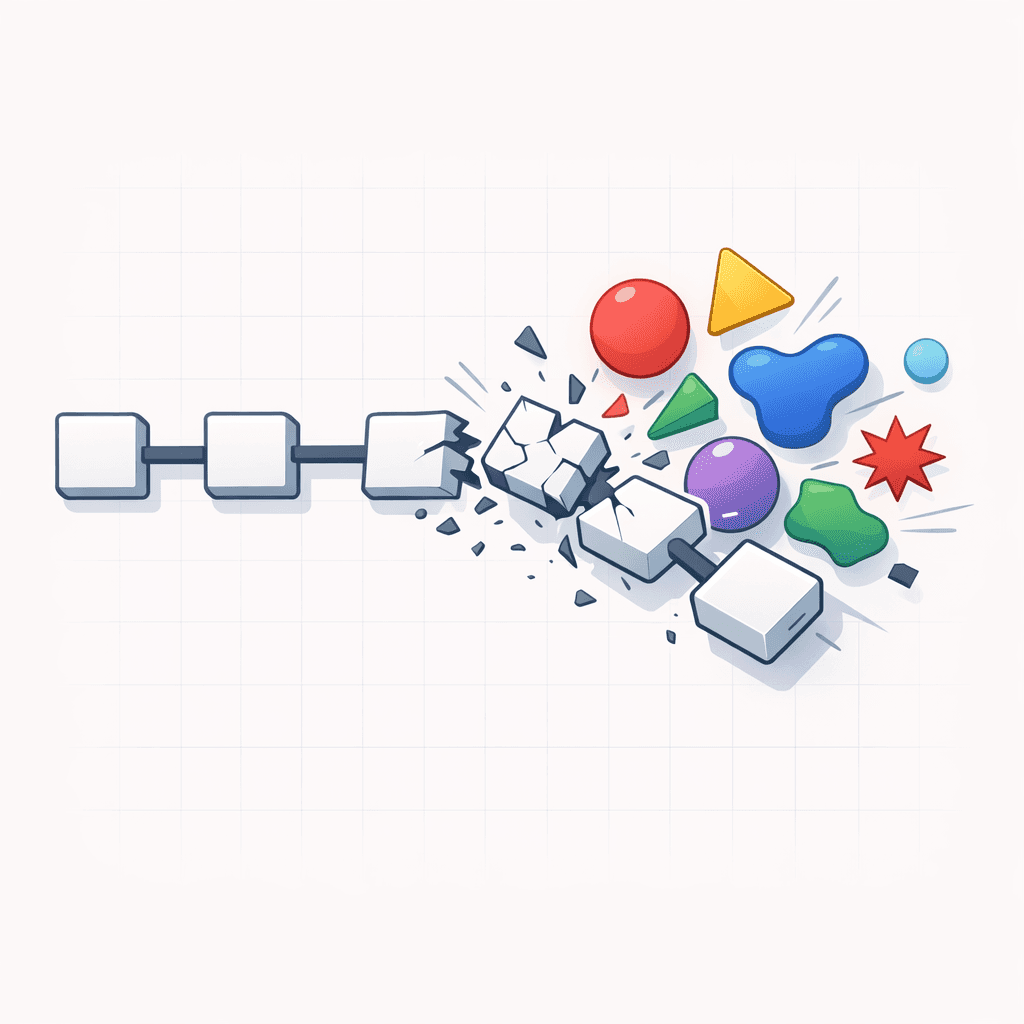
Traditional automation versus AI automation is not a tool debate
Traditional automation is what most people mean when they say “automation.” It’s Zapier, Make, n8n, or any workflow builder where you connect triggers and actions. It’s deterministic. If X happens, do Y. It’s incredibly powerful when the world stays stable.
AI automation is a different beast. It’s not just “a workflow with GPT inside.” It’s an agentic system that interprets messy input, adapts to change, and makes judgment calls. It can still call tools, move data, and push buttons, but it’s operating with a model of intent, not just a brittle set of conditions.
In practice, traditional automation is closer to a factory conveyor belt. AI automation is closer to hiring an operator who can handle exceptions. Both can save time. One breaks when reality changes. The other can handle reality changing, but needs oversight.
The framework I use: automate certainty, assist ambiguity
Here’s the simplest decision rule I’ve found after building and watching automation systems in the wild.
If the work is fully predictable, automate it traditionally. If the work requires interpretation, context, or constant adaptation, use AI automation.
Predictable work has stable inputs and stable outputs. A new Typeform submission should create a CRM lead with the same fields every time. A payment should generate an invoice and update a status. These are perfect for deterministic workflows.
Ambiguous work is anything involving language, intent, and human nuance. Routing inbound requests based on what the person actually wants. Turning a messy voice note into structured tasks. Summarizing meetings into decisions and next steps. Following up with the right tone based on the history of the relationship. You can try to “if/else” your way through that world, but you’ll end up building a house of cards.
The trick is not to force one approach everywhere. The trick is to let each approach do what it’s naturally good at.
Why traditional automation fails for most people
Traditional automation doesn’t fail because Zapier is bad. It fails because most businesses live in a constant state of change.
Your internal naming conventions evolve. Your Notion database gains a new property. Your sales process updates. Your onboarding changes. Your team grows and starts using slightly different language. The automation you built last month assumed a frozen world.
Traditional automation also has a hidden cost: you pay for certainty upfront. You pay with technical setup time, maintenance, and debugging. For technical teams, this can still be worth it. For most founders, it creates an automation graveyard: a collection of workflows you’re scared to touch because nobody remembers how they work.
There’s another subtle failure mode. Traditional automation encourages over-structuring too early. You spend time designing perfect forms, perfect fields, perfect conventions, because the workflow depends on that structure. But founders don’t operate in perfect structure. We operate in bursts of chaos.
How AI automation works differently
AI automation starts from the assumption that inputs are messy and that the environment changes.
Instead of requiring every field to be named correctly, it can infer what a field means. Instead of failing when an email is written differently, it can still extract intent. Instead of needing you to define every branch, it can decide which branch makes sense based on context.
This is where people get overly optimistic and overly disappointed at the same time.
Overly optimistic because they expect AI to be fully autonomous. Overly disappointed because the first time the AI makes a wrong call, they conclude “AI automation doesn’t work.”
The reality is more boring and more useful. AI automation is powerful because it can handle exceptions, but it needs a human-in-the-loop design. You don’t remove humans. You move humans to the right places.
In 2026, the winning systems are the ones where AI does the interpretation and drafting, and humans do the approval and the high-stakes decisions.

When each approach makes sense in the real world
Traditional automation makes sense when correctness matters more than flexibility. If a workflow touches billing, permissions, or compliance, you want deterministic behavior. You want predictable logs. You want a clear reason why something happened.
AI automation makes sense when speed and adaptability matter more than perfect consistency. Anything dealing with unstructured text, human requests, customer conversations, internal notes, and messy cross-tool coordination is where AI shines.
Most businesses should run both, but with a clean separation of roles.
Let deterministic automations move data and enforce rules. Let AI automation interpret requests, translate intent into structure, and propose actions.
If you blur the line, you get the worst of both worlds: brittle workflows with hallucinations.
Real examples from building automation systems
One of the highest leverage patterns I keep seeing is using AI to turn “natural language chaos” into “structured operations.”
A founder records a voice note after a call. The AI turns it into a meeting summary, extracts decisions, creates tasks with owners, and updates the right CRM record. The human quickly reviews and hits approve.
A customer emails support with a long message. The AI classifies the issue, drafts a response in the right tone, and routes it to the right person. The team stays fast without sacrificing quality.
A lead fills a form with weird answers. Traditional automation creates the record, but AI automation enriches it: it normalizes company size, infers urgency, and suggests the next best action.
In all three cases, the “automation” is not just moving data. It’s translating meaning.
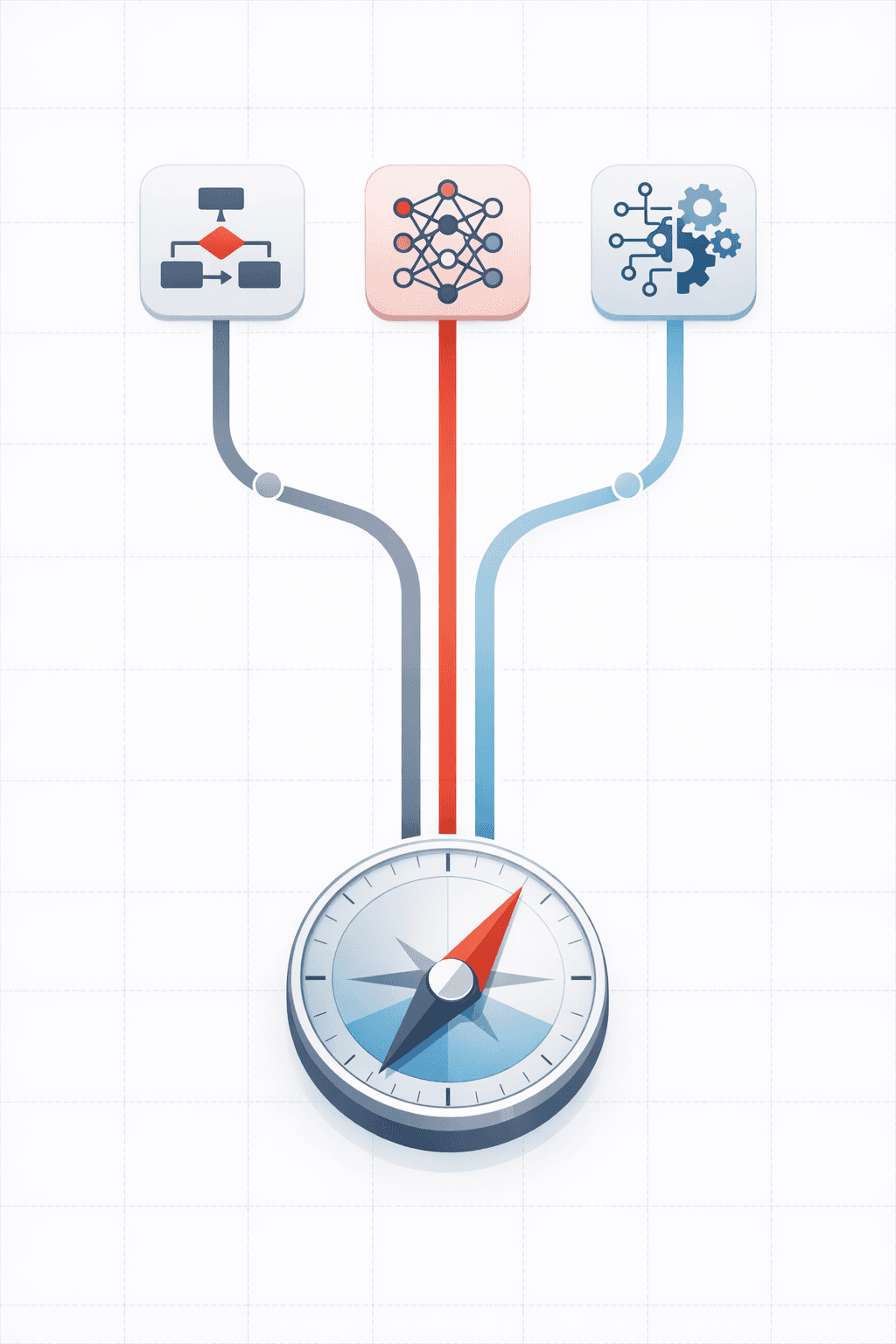
The strategy most people should adopt in 2026
If you take one thing from this, let it be this: don’t try to replace your entire operations stack with AI, and don’t try to solve human ambiguity with a giant Zap.
Build a base layer of traditional automation for stable, rules-based workflows. Then add an AI layer on top that handles interpretation, exceptions, and drafting.
And be honest about the oversight. AI automation is not “set it and forget it.” It’s “set it and supervise it.” The benefit is that supervision is dramatically cheaper than doing the work yourself.
The future isn’t fully automated businesses. It’s businesses where founders stop being the routing layer for everything.
A simple way to audit what you should automate next
Start by looking at the work that repeatedly steals your attention. Not the work that is hard, but the work that is frequent and mentally interruptive.
If it’s repetitive and structured, put it on rails with traditional automation.
If it’s repetitive but messy, give it to an AI system that can interpret intent and keep you in the loop.
That’s the difference between saving a few minutes and actually getting your head back.

Flo is the founder of Mind the Flo, an Agentic Studio specialized into messaging and voice agents.