Content

The Week Notis Hit Break-Even (and Why I’m Betting on ADHD Founders)
I didn’t expect the “growth week” to feel so… quiet.
No viral moment. No huge launch. Just a bunch of small, unsexy changes stacking on top of each other until the numbers started behaving like a real business.
This is the behind-the-scenes of what clicked recently at notis: why we hit break-even on acquisition, why I’m leaning hard into ADHD founders as our core segment, and why I now believe distribution is the only thing that matters when building software in 2026.
The week acquisition stopped being scary
For the first time, paid acquisition stopped feeling like I was lighting money on fire to buy “learning.” We spent roughly $2,000 and generated roughly $2,000 in net revenue. That’s not a unicorn outcome, but it changes the psychology completely.
The weirdest part is that it didn’t come from some genius creative. It came from getting the basics right: cleaner tracking, fewer assumptions, and a willingness to stop treating the US like the default market.
When we actually looked at country-level performance, the data basically yelled at me. The US is strong on revenue, but it’s expensive. Meanwhile, we were seeing organic conversions from places we weren’t even targeting: France, Mexico, the UAE, Saudi Arabia, India, Israel. So we shifted.
I’m being careful because ad accounts are fragile and they punish “optimizations,” but early returns were hard to ignore. Mexico, for example, had a spend-to-value ratio that made me double-check if tracking was broken.
More importantly, our cost per trial acquisition landed around $24. That number alone unlocked a lot of downstream decisions, because suddenly I can afford to be patient about activation and retention. I can spend time teaching users how to win, instead of begging them not to churn.
The real product isn’t a feature, it’s a system
I used to think shipping features was the main loop: build, release, promote, repeat. The past few weeks reminded me that the loop that matters is actually: ship the thing, then make sure people experience the thing.
That’s why team plans and templates became so important.
At a high level, the team plan is about reducing friction for groups who want to standardize how they work. Admins can invite teammates, subscriptions are handled upfront, and everyone is on the same tier so you don’t end up with a “half-onboarded” team.
The interesting part is templates.
Templates aren’t just “copy this automation.” They’re operational leverage. An admin can create an automation, convert it into a template, decide who can edit it, and let team members click “use” to duplicate it into their own library. If the admin improves the template later, that improvement can propagate to everyone—unless someone intentionally breaks away to customize it.
That pattern is the difference between a tool that helps one person and a system that upgrades a whole team.
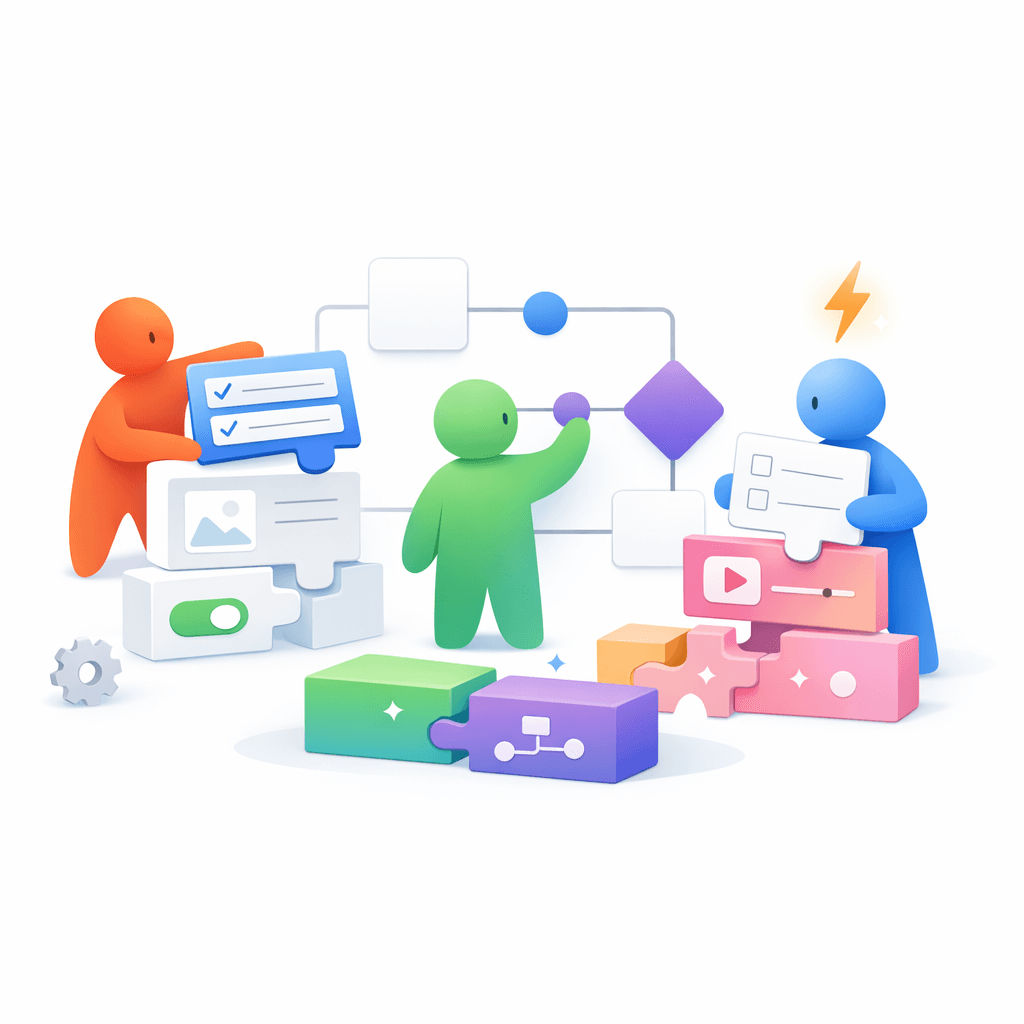
The first template we’re pushing is deliberately boring: a weekly standup. But boring is good. It means it can be repeated.
Every Monday at 9AM, notis pings you on WhatsApp, Telegram, or Slack and collects your priorities, wins, blockers, and asks. It lands in a shared Notion database. Over time, that database becomes the truth of the team’s weekly reality.
There’s still onboarding friction here. You still need to connect Notion and point to the right database. But the direction is clear: notis isn’t just “chat with AI.” It’s about turning consistent habits into consistent output.
Slack changed the tone of the product overnight
Slack integration sounds like a checkbox feature. In practice, it changes how people relate to notis.
When you can DM notis inside Slack, it stops being “a product you open” and becomes “a teammate you talk to.” That’s the mental model I care about.
We also shipped a channels page to make it obvious where you can reach notis. Email aliases, allowed senders for iMessage, and now Slack. The point isn’t the list. The point is: you shouldn’t have to remember how to access your assistant. It should meet you where you already work.
That’s also why we built the feature nudge system.
People don’t churn because the product is bad. They churn because they never cross the moment where the product becomes obviously useful.
So we created a set of nudges across eight core capabilities. If someone hasn’t tried automations, or hasn’t used a particular workflow, notis will bring it up inside the same conversation thread they already use. The timing matters. We trigger nudges about an hour after a user sends a message, so they’re active and paying attention.
It’s not an email drip pretending to be “personal.” It’s a prompt inside the place where the user already trusts the assistant.
We’re applying the same philosophy to onboarding completion, review requests, trial cancellation flows, and eventually a daily eight-email drip that teaches each of the main use cases. I’m not trying to spam people. I’m trying to reduce the time-to-value that makes retention inevitable.
The meta lesson here is that “support” is also a product surface. We moved bug reports and feature suggestions into the notis conversation itself. That single decision forces us to treat every interaction as both help and training data for the product’s next iteration.
The ICP became obvious: ADHD founders
I didn’t set out to build for ADHD founders. I just kept noticing who actually stayed.
When I look at the users who become power users, who message daily, who build automations, who treat notis like infrastructure, there’s a pattern: they’re founders, they’re executives, and a shocking proportion of them are ADHD.
Founders and executives represent about 60% of acquisition. That by itself is a strong signal. But the deeper signal is in behavior. Most users don’t pick one use case. They pick three, four, six. They don’t want a note-taking app or a task app. They want a multi-purpose assistant that can flex with their day.
That’s exactly the ADHD founder problem: context switching is the default state, and the cost of that switching is brutal.
When notis works, it works because it reduces the cost of being yourself.

This is also why recent user calls started to feel like coaching. People don’t just want a tool. They want a system. They want someone to help them design the workday, pick the right priorities, stop drowning in decisions, and still ship.
That’s the pivot I’m making in content.
Not “here’s a feature.”
Here’s how an ADHD founder builds a productivity system that makes AI actually useful.
The pricing change that made everything easier
In December, acquisition slowed down. MRR kept growing, but the top of the funnel got weirdly quiet.
The simplest hypothesis was also the most uncomfortable: I raised the base plan to $30 and crossed a psychological line.
So I dropped it back to $20. On annual, it’s effectively $13/month. And almost immediately, things loosened.
I’m not romantic about pricing. I just think most founders underestimate how much pricing is about mental friction rather than value math. People don’t do ROI calculations at $20. They just try it.
Then you upsell once they’re winning.
That’s exactly what we’re seeing. A meaningful chunk of users upsell after signup, and the product now has natural reasons for it: credits, automations, and soon live voice workflows that change how people create and capture context.
Why distribution is everything now
This is the part that keeps me up at night in a good way.
Building product is getting cheaper and easier every month. The real scarcity is attention and trust.
So the content strategy is no longer “marketing.” It’s the product.
The three themes that keep connecting in my head are productivity systems, solo founding, and AI-powered content creation. If you get your system right, you create better context. If you create better context, AI becomes dramatically more useful. If AI becomes more useful, you can produce content and distribution at a pace that makes most founders uncomfortable.
That’s the loop.
Second brain systems used to be about remembering. Now they’re about feeding LLMs the right context so they can act like agents across your company.
And here’s the uncomfortable conclusion: if you’re a founder in 2026, distribution comes first. Product is the easiest it’s ever been. The winners are going to be the people who can build trust at scale while shipping fast.
I’m going to teach that openly. Templates, short webinars, lead magnets that actually help, and a funnel that doesn’t feel like a funnel because it’s just education packaged with intent.
If that sounds like “content creator stuff,” good. Because the founders who learn to do it will be the ones who don’t need permission to grow.
What I’m watching next
The next few months are about tightening the loop.
I want notis to feel like the place where an ADHD founder goes to turn messy days into consistent output. Not by adding more features, but by designing the path that gets them to the ones that matter.
If we nail that, acquisition gets easier, retention gets boring, and the product stops being a tool and becomes a reflex.

Flo is the founder of Mind the Flo, an Agentic Studio specialized into messaging and voice agents.