Content

The Context Problem: How I Turn One Conversation into a Week of Content with Notion + AI
You don’t have a content problem. You have a context problem. If you’re an ADHD founder like me, you’re sitting on an absurd amount of insight, stories, and strong opinions… but they’re spread across ten tools, twelve tabs, and a brain that moves faster than your cursor. Then you open an AI tool, try to "just write," and it spits out something generic because you fed it a copy‑pasted, context‑free prompt.
The messy-workspace tax (and why AI makes it hurt more)
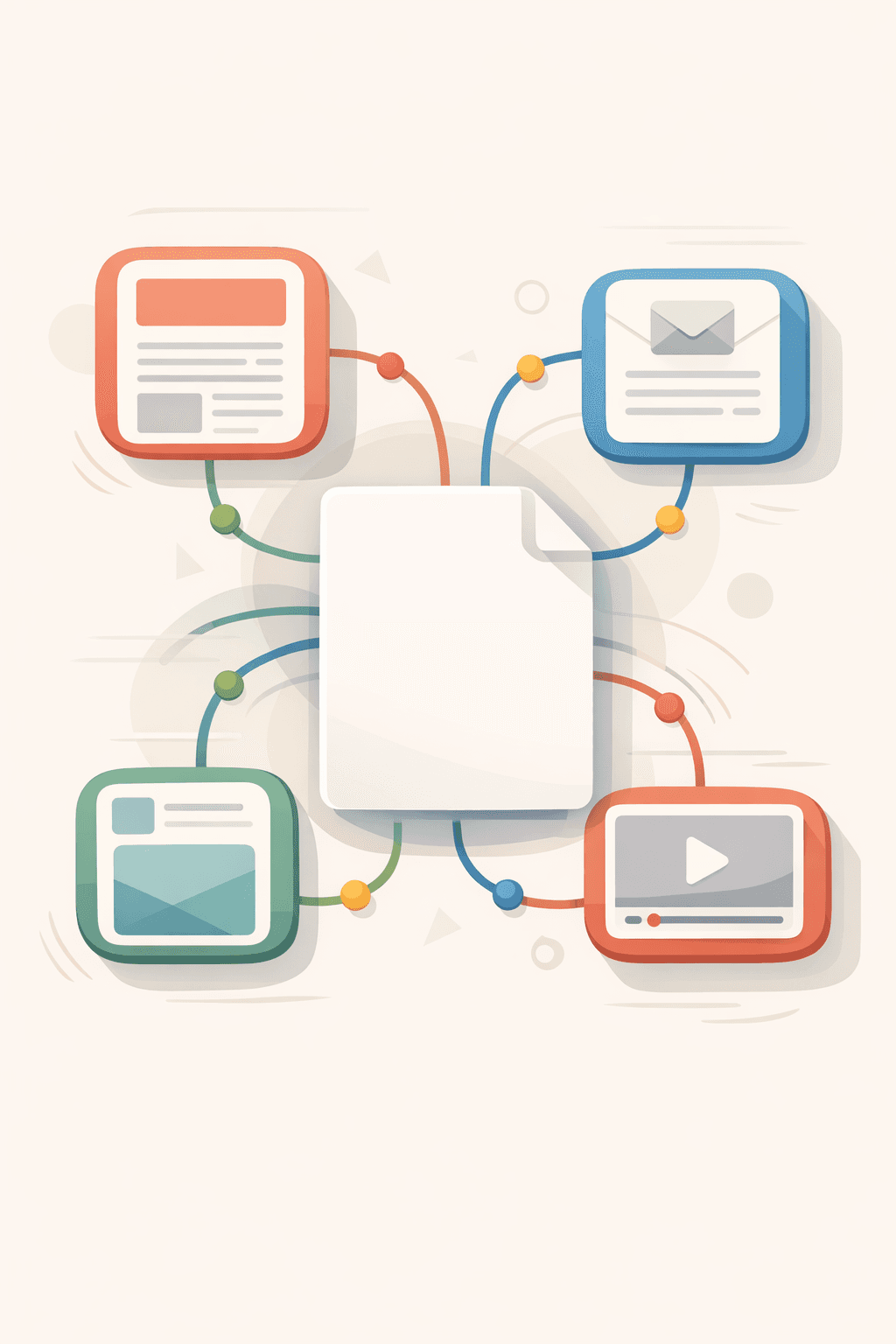
My ideal customer profile is pretty simple: entrepreneurs with ADHD energy, a thousand ideas per day, and a workspace that looks like a digital yard sale. Some docs in Google Drive, decisions buried in email, tasks in Todoist, half-written thoughts in random Notion pages shared with clients, and meeting notes living inside yet another tool.
This setup is annoying on its own, but AI makes the pain sharper. Because now, your output is only as good as your inputs. When your context is fragmented, you end up doing the worst kind of work: copy-pasting, re-explaining yourself, forgetting key details, and getting bland results that don’t sound like you.
The moment most founders hit the wall is exactly here. They want to adopt AI, but they realize the chaos in their system blocks them from actually using it.
Why I put everything in Notion (even though Notion can be high friction)
I chose Notion for one reason: structure. Databases and properties aren’t “productivity porn.” They’re the difference between an AI guessing and an AI actually understanding.
When information lives inside a database, it becomes queryable. It becomes filterable. It becomes composable. It becomes something an agent can reliably consume, transform, and route.
But I’m not going to pretend Notion is effortless. Notion can be high friction, and productivity systems only work if you actually use them. If capturing your thoughts feels like chores, you’ll stop capturing. And then your “second brain” becomes a second junk drawer.
That tension is exactly why I built Notis.
The idea behind Notis: an AI intern with access to your tools
Notis is the thing I always wished existed: an AI intern that connects to your Notion workspace and does the boring parts for you, like any employee with software access.
Instead of asking you to be disciplined, it reduces friction. Instead of asking you to keep things tidy, it organizes for you. It takes the raw mess and turns it into structured context.
Once your workspace is organized, it stops being storage and starts becoming leverage.
The lesson I learned the hard way: distribution beats product perfection
I spent six months building a product that basically no one saw.
It wasn’t because the product was “bad.” It was because I was optimizing the wrong variable. I was polishing, refining, redesigning… while ignoring the uncomfortable truth: the best product in the world dies quietly without distribution.
So I made a decision that surprised even me. I would spend most of my brain cycles on distribution.
Here’s the twist. I hate social media. I don’t enjoy putting myself out there. But I also know that people can’t buy what they never discover. In today’s world, distribution often comes before quality—not because quality doesn’t matter, but because quality can’t matter if you don’t exist in anyone’s mind.
The goal became: solve distribution with AI, without losing what makes me me.
Organic to synthetic: how I create content without sounding like AI slop
My entire content system is built on one principle: start with organic content.
Organic content is anything I actually said. A meeting. A rant. A voice note. A messy first take on a camera. That’s the gold.
Synthetic content is the stuff that gets produced from it: blog posts, newsletters, scripts, social posts.
AI is incredible at converting one thing into another. But it behaves like a photocopy machine. If you copy a copy of a copy, quality degrades fast.
Never create synthetic content from other synthetic content.
That’s how you end up with the same recycled “5 tips to…” posts everyone else is publishing. The system collapses into average.
Instead, I use meeting transcripts as a ridiculously high-volume source of organic content straight from my brain. Not for note-taking. For capture.
Notis saves transcripts into a Notion database, then uses automations to surface what’s worth posting and turn the raw material into structured outputs.
The “AI producer” workflow: batching a week of content in one morning
Here’s the part that changed everything for me.
I don’t sit down and try to “be creative” every day. I batch.
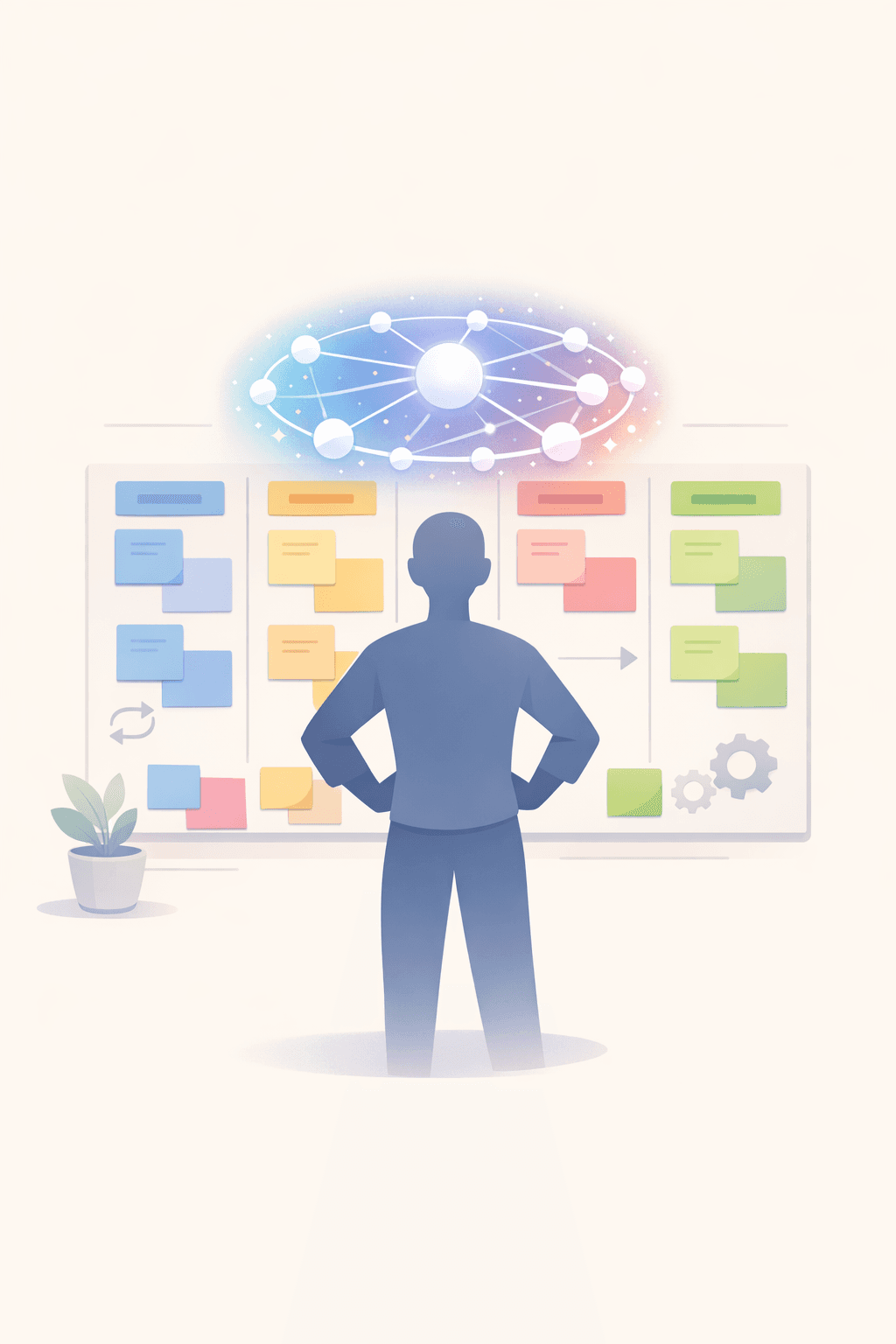
I give Notis the context of what I’m trying to say, then I call it on WhatsApp and treat it like an executive producer. It guides the session. It helps me find a hook. It tells me when I’m getting lost in my own thoughts. It pushes for clarity. It coaches me through multiple takes until there’s one that lands.
The meta-point is important: it’s messy. You don’t record one perfect take. You do a few. You ramble. You reset. Then you get the line that feels like you.
When that morning is done, I hand everything to my video editor. And suddenly I’m not “trying to post daily.” I’m shipping multiple times per day with content that sounds authentic—because it literally came from my mouth.
If you want to steal this system, start here
If you only take one thing from this, make it this: stop asking AI to create from nothing.
Build a capture habit for organic material, keep it in one place, and let AI convert it into the formats your business needs.
When your context lives in a structured workspace, you stop fighting your tools. You stop copy-pasting. You stop forgetting what matters.
And distribution stops being a daily grind and becomes a repeatable machine.

Flo is the founder of Mind the Flo, an Agentic Studio specialized into messaging and voice agents.