Content
The Brain Dump Method: Capture Now, Organize Later
My brain doesn’t have an off switch.
Ideas hit me everywhere. In meetings, in the middle of playing with my kids, while I’m ordering a coffee with a friend. For years, that constant stream felt like living with a second conversation in my head: one part of me trying to be present, the other part yelling, “Don’t lose that idea.”
That background panic is what exhausted me. Not the work itself. The remembering.
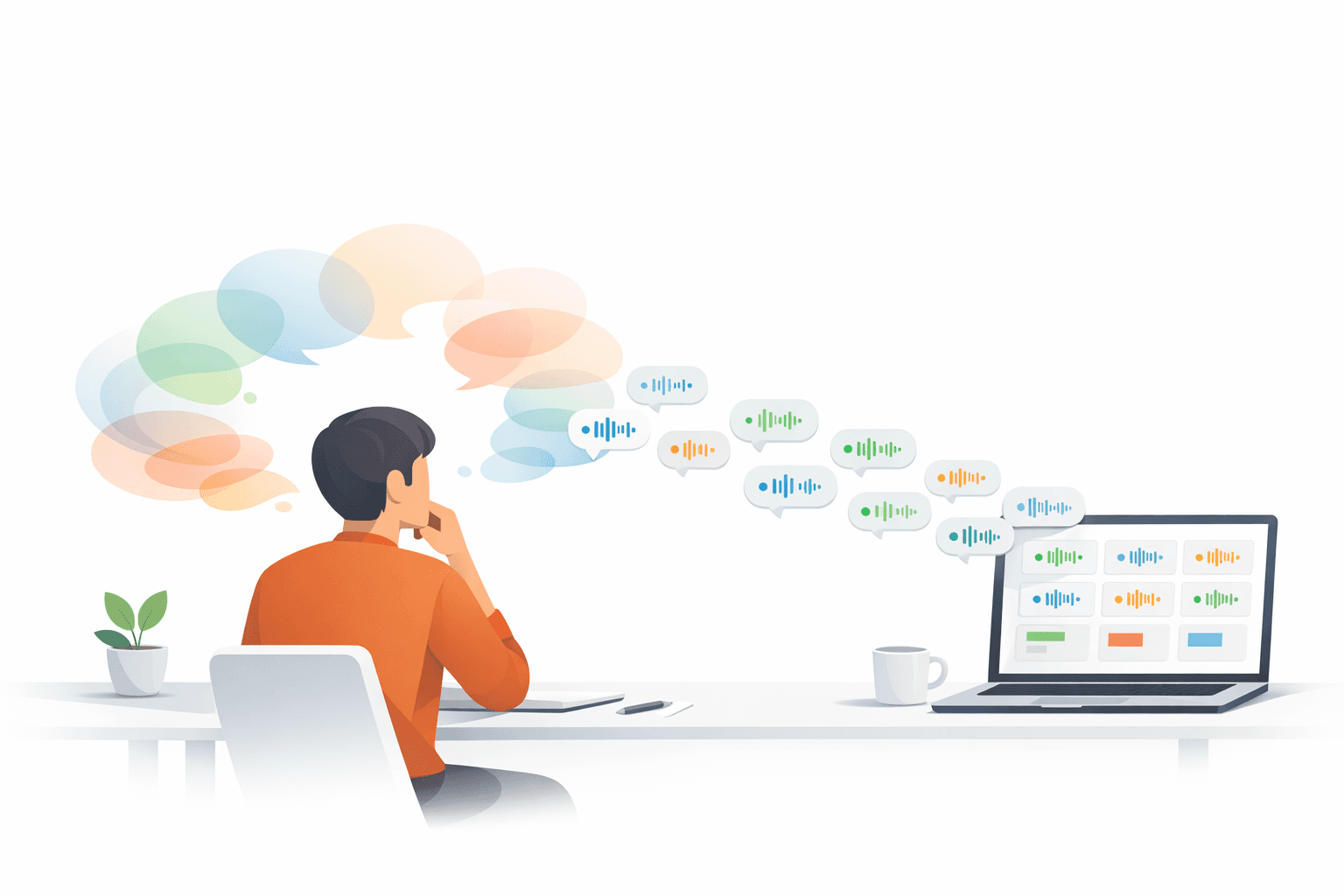
A calm desk, and a messy mind turning into something you can actually work with.
The real problem isn’t ideas, it’s the storage
When your brain generates ideas faster than you can process them, “just write it down” isn’t helpful advice. The hard part isn’t capturing. The hard part is capturing without switching modes.
Because the moment you try to organize a thought while you’re in the middle of life, you’re asking your brain to do two incompatible things at once: stay present and build a system.
That’s where most productivity methods quietly break. They assume you have a clean desk, a calm mind, and time to sort everything perfectly as it comes.
Real life doesn’t show up like that.
The brain dump method that changed everything for me
The shift was simple: I stopped asking myself to organize in the moment.
Now I capture everything through voice notes. Every random thought, every “we should try this,” every task that pops into my head. No structure. No labels. No guilt about how messy it sounds.
The rule is: if it shows up, it gets out of my head.

A phone, a waveform, and a bunch of tiny sparks that don’t need to be “sorted” yet.
Why voice works (especially when you’re scattered)
Typing forces you to slow down, choose words, and format thoughts. Voice lets you stay in the same mental state you’re already in.
When I’m walking, rushing, overstimulated, or mid-conversation, voice is the only input method that doesn’t add friction. It matches my brain’s speed.
And something interesting happens the moment the thought is captured: the stress drops.
It’s like my brain releases the grip. It stops rehearsing the idea in the background because it trusts it’s safe.
Capture when you’re scattered, organize when you’re focused
This is the counterintuitive part: the system works because it respects that I have two different modes.
There’s the “scattered mode,” where ideas are flying and attention is fragmented. That’s capture time.
Then there’s “deep work mode,” where I can lock in.
That’s when I go back to my computer and process everything. The voice notes become tasks, notes, or project ideas. The chaos gets turned into something executable.
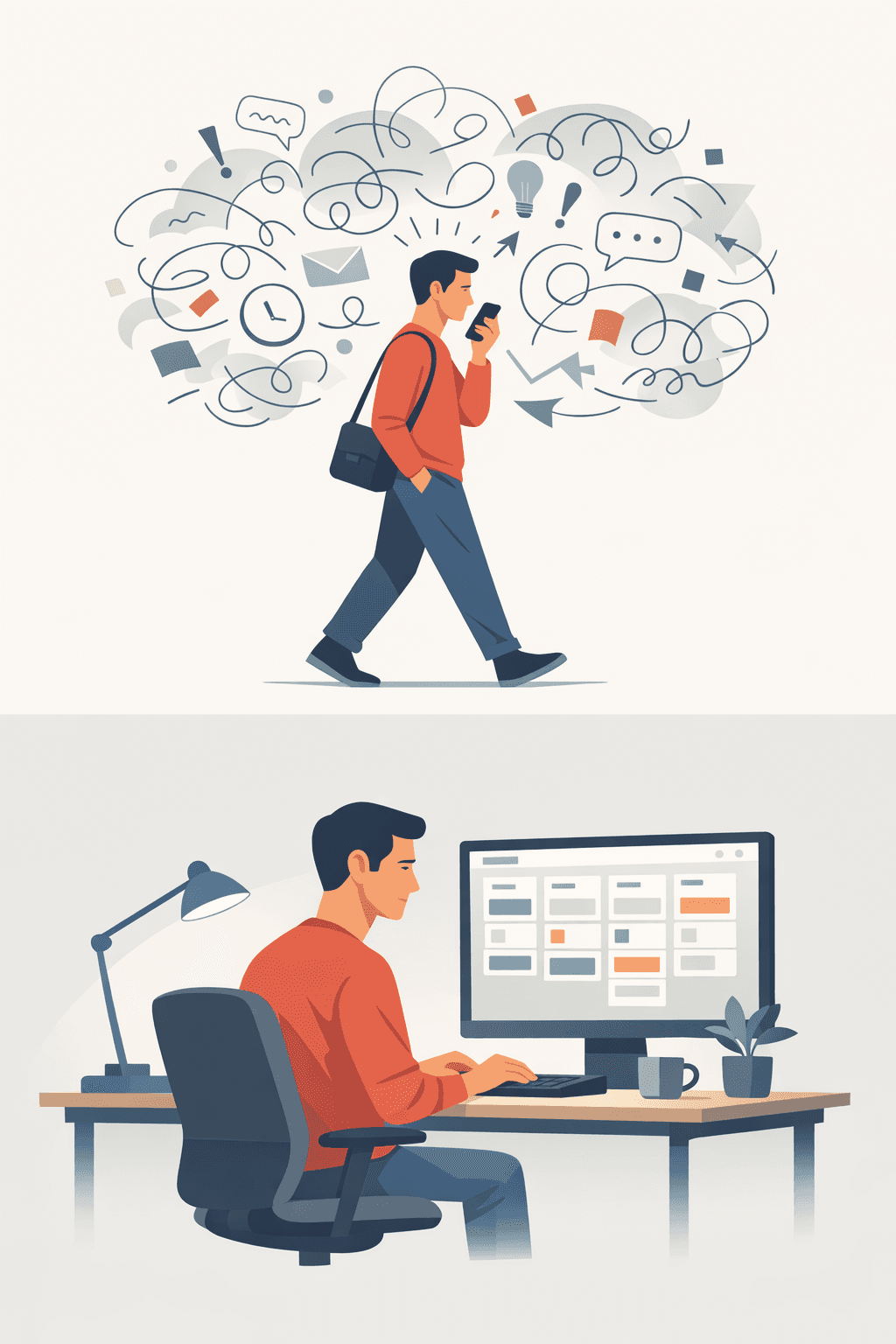
Two halves of the same day: messy capture on the go, calm execution at the desk.
The hidden superpower: hyperfocus
ADHD is weird like that.
It can scatter your attention all day… and then, when the conditions are right, it can turn you into a machine.
Once I pick the thing I’m doing during a deep work block, I can go for hours. Four to six hours of real progress. One task after another. No context switching. No “what was I doing again?”
The brain dump method makes that possible because it protects deep work from interruption. If a new thought pops up mid-focus, it goes into a voice note and I keep going.
How I process a brain dump in a deep work session
I treat processing like a conversion step, not like journaling.
First, I listen through the captures and decide what each one actually is.
Second, I turn it into the right container: a task if it’s an action, a note if it’s insight, a project if it has multiple steps.
Third, I pick one meaningful thing and commit to a focused block.
If you want to copy this, start small: do one capture day, then do one processing session. The goal isn’t perfection. The goal is trust.
This is productivity, but it’s also mental health
The biggest win wasn’t “getting more done.”
It was being more present.
Once I stopped relying on my memory to be a storage system, I could actually listen in meetings. I could hang out with my friends without mentally pinning ideas to the wall. I could play with my kids without the constant fear of forgetting something important.
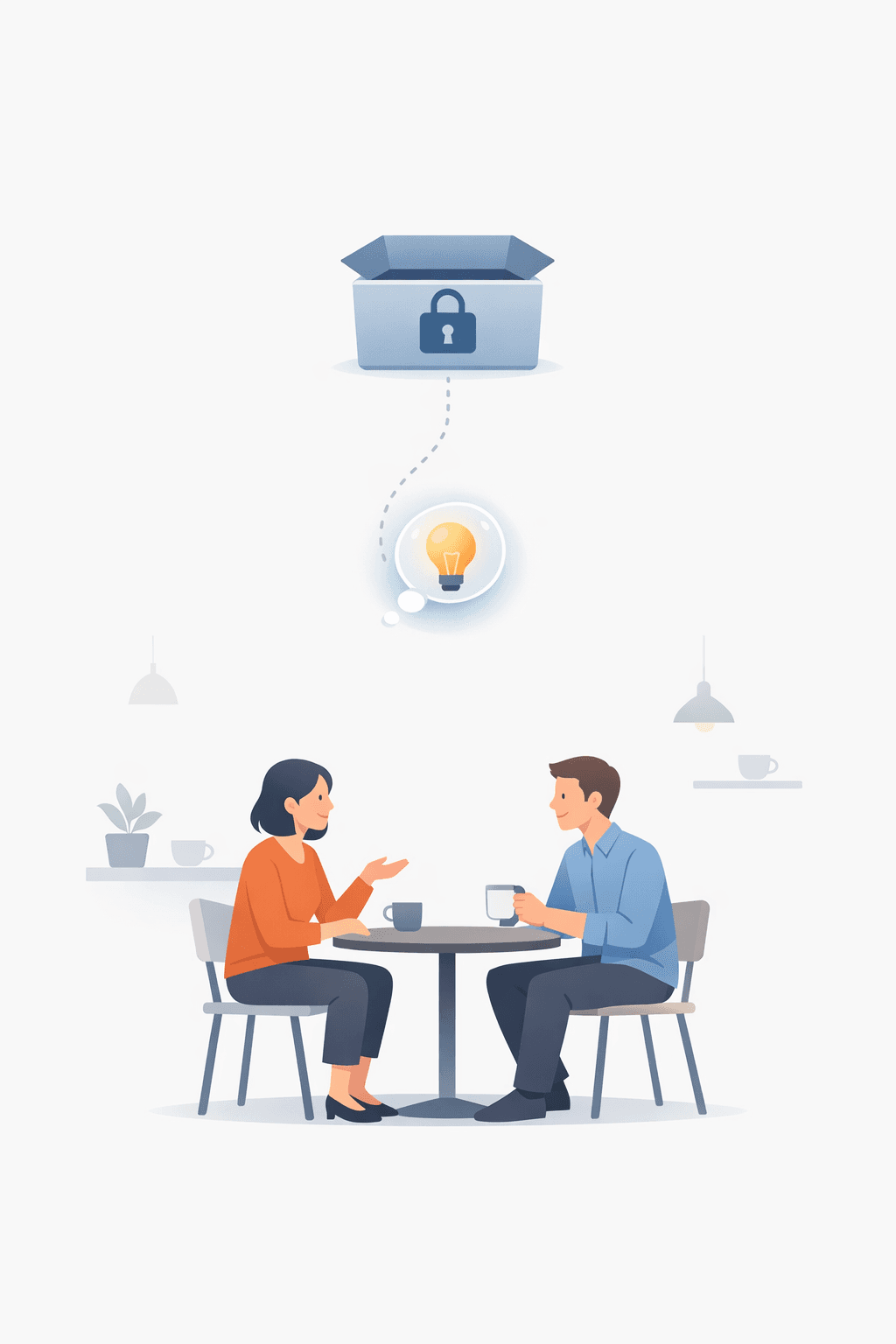
Being present now, because the idea is already captured and safely stored.
The simplest rule that keeps it all working
Capture everything.
Organize later.
Execute in focused blocks.
If your brain is fast, your system has to be faster. Not by forcing you to be disciplined every second, but by giving you a place to put things the moment they appear.
That’s the real productivity gain: not just doing more, but having your mind back while you do it.

Flo is the founder of Mind the Flo, an Agentic Studio specialized into messaging and voice agents.