Content
The Automation Mindset Gap
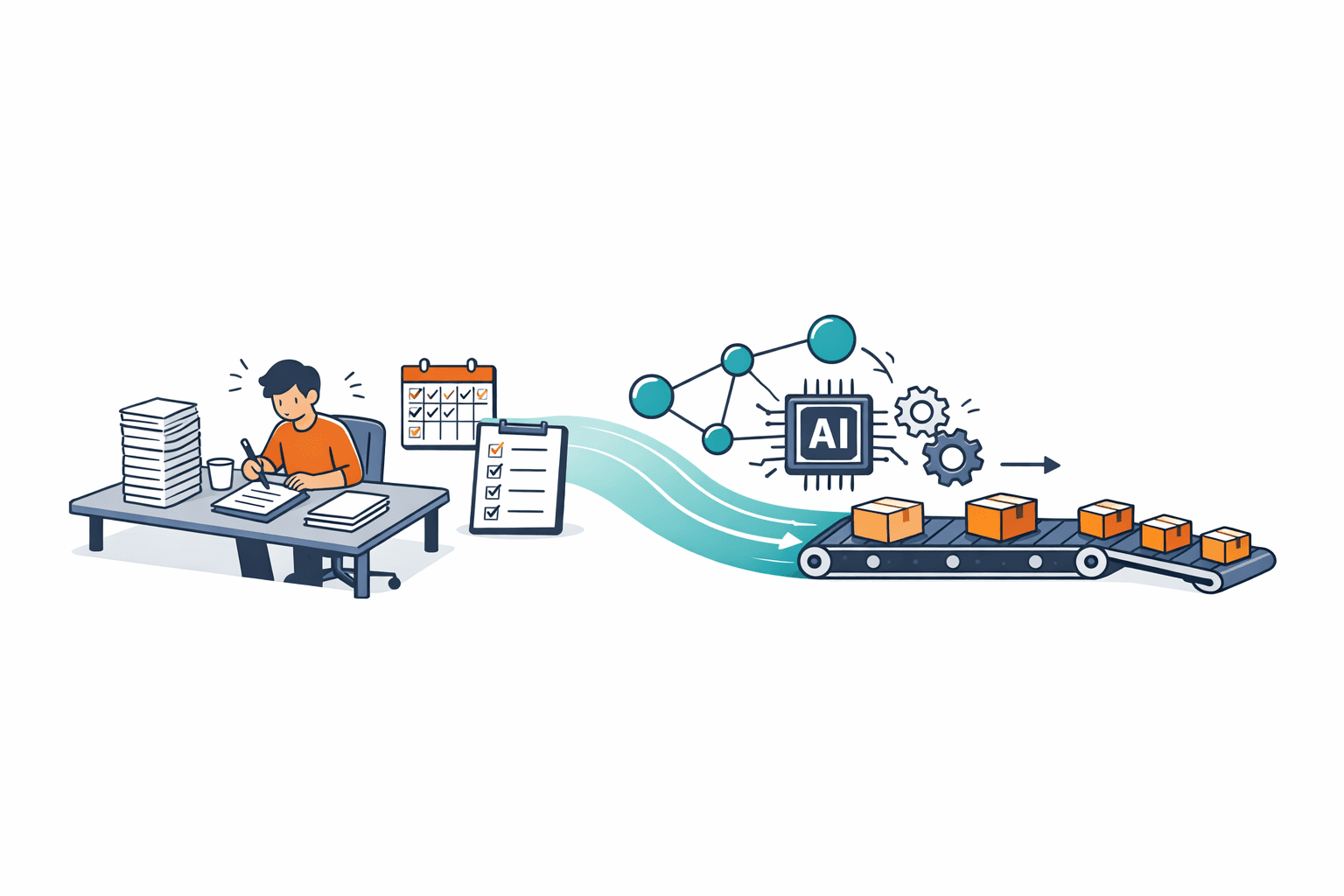
Most founders don’t have an automation problem. They have an imagination problem.
I’ll watch someone burn eight hours on a task they already did last week, and the week before that, and I can almost feel their brain treating it like the first time. Same proposal, same follow-up, same meeting notes clean-up, same “quick” project update that somehow eats the afternoon. And what’s wild is that the idea of automating it never even shows up.
The real barrier isn’t technical
When people say “I’m not technical enough for automation,” I get it. It’s an easy story to believe because it keeps the pain explainable.
But the truth is simpler: most of the time, you don’t need more skills. You need a new default question.
AI can already handle a lot of repetitive work better than we can, not because it’s “smarter,” but because it never gets bored, never forgets the format, and never needs to ramp up again. The tools are here. The ROI is obvious. Yet plenty of smart founders still do everything manually.
That’s why I call it a mindset gap.
The automation mindset is learned, not earned
Awareness is a skill on its own.
If nobody ever modeled curiosity for you, there are entire categories of opportunity you’ll never see. Not because you’re incapable, but because your brain doesn’t scan for them. You can walk past the same lever a hundred times and never think to pull it.
Automation works the same way. If you don’t naturally think, “Could this be automated?” you’ll keep paying the manual tax forever. And you’ll pay it in the worst currency: your attention.
Your business is a content machine (even if you don’t call it that)
Here’s the shift that changed everything for me: almost everything a company produces is content.
A sales proposal is content. A product spec is content. Meeting notes are content. A support answer is content. A project update is content. A newsletter is content. Social posts are content.
The overlap between them is massive. The same insight shows up in different outfits.
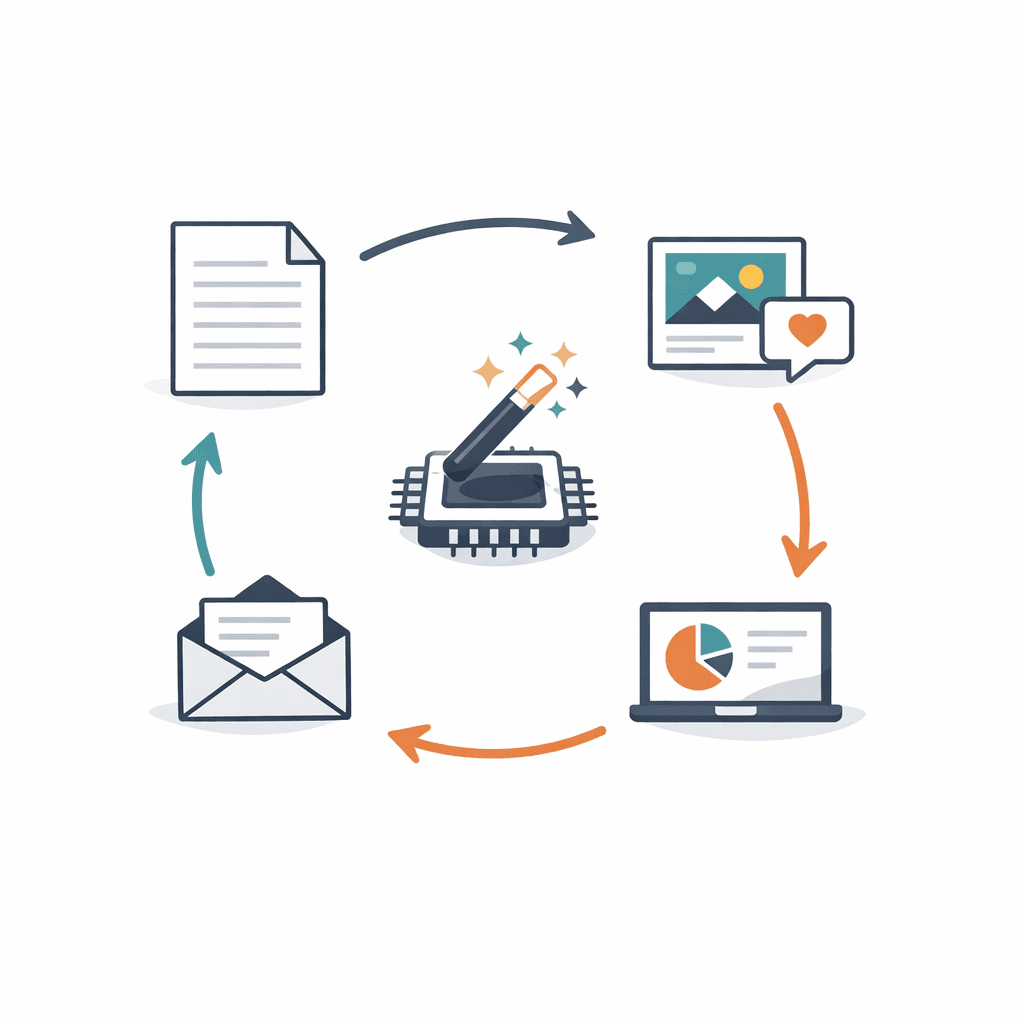
A client proposal contains problems, language, and outcomes that can become a blog post. A product spec contains decision-making and trade-offs that can become a thread. Meeting notes contain narrative and progress that can become a weekly update. Support tickets contain objections and confusion that can become documentation.
When you realize this, you stop treating each piece like a separate mountain to climb. You start seeing a system that can compound.
Where AI quietly wins
AI is incredible at transformation.
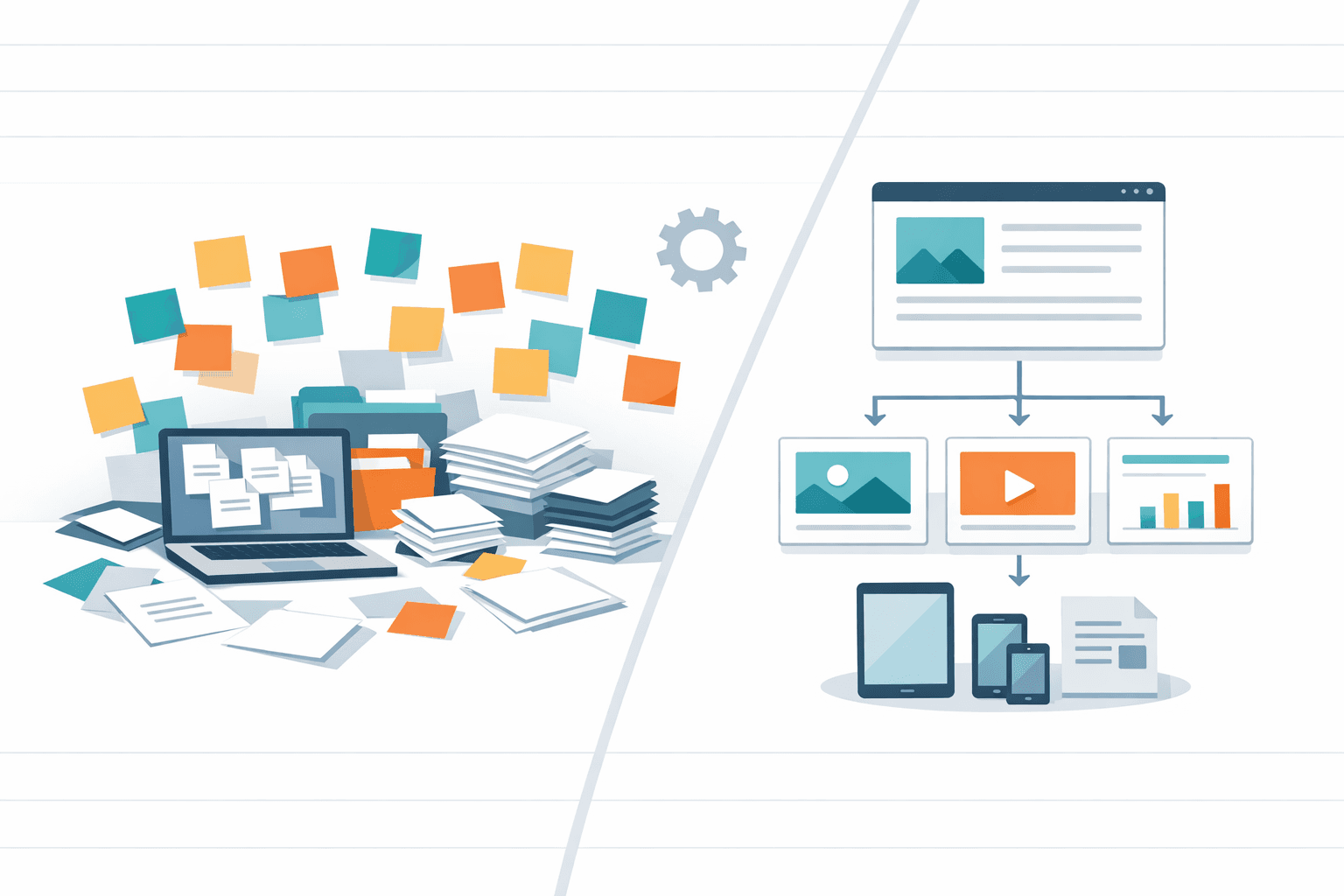
Give it raw, messy inputs and a clear target format, and it becomes the fastest “translator” you’ve ever hired. Notes into an update. A conversation into a proposal draft. A spec into a simple explanation. Three half-baked ideas into a coherent outline.
But AI can’t give you the pattern if you don’t see the pattern.
If you treat every output as a standalone project, you’ll keep starting from a blank page. That’s not a tool problem. That’s a mental model.
The compounding approach looks different. You capture what happens in the business once, then you reuse it everywhere.
The compounding loop (the part nobody tells you)
The best “automation” doesn’t feel like a robot doing your job. It feels like you finally stopped duplicating your own thinking.
It starts with one idea: the first version doesn’t need to be perfect. It needs to be reusable.
That means you stop optimizing for “finish this one thing.” You start optimizing for “turn this into an asset.” Templates, structured capture, consistent naming, a place where decisions live, and a way to turn raw inputs into outputs without restarting.
Once you build that loop, you’re no longer producing content. You’re producing a system that produces content.
The question that changes your week
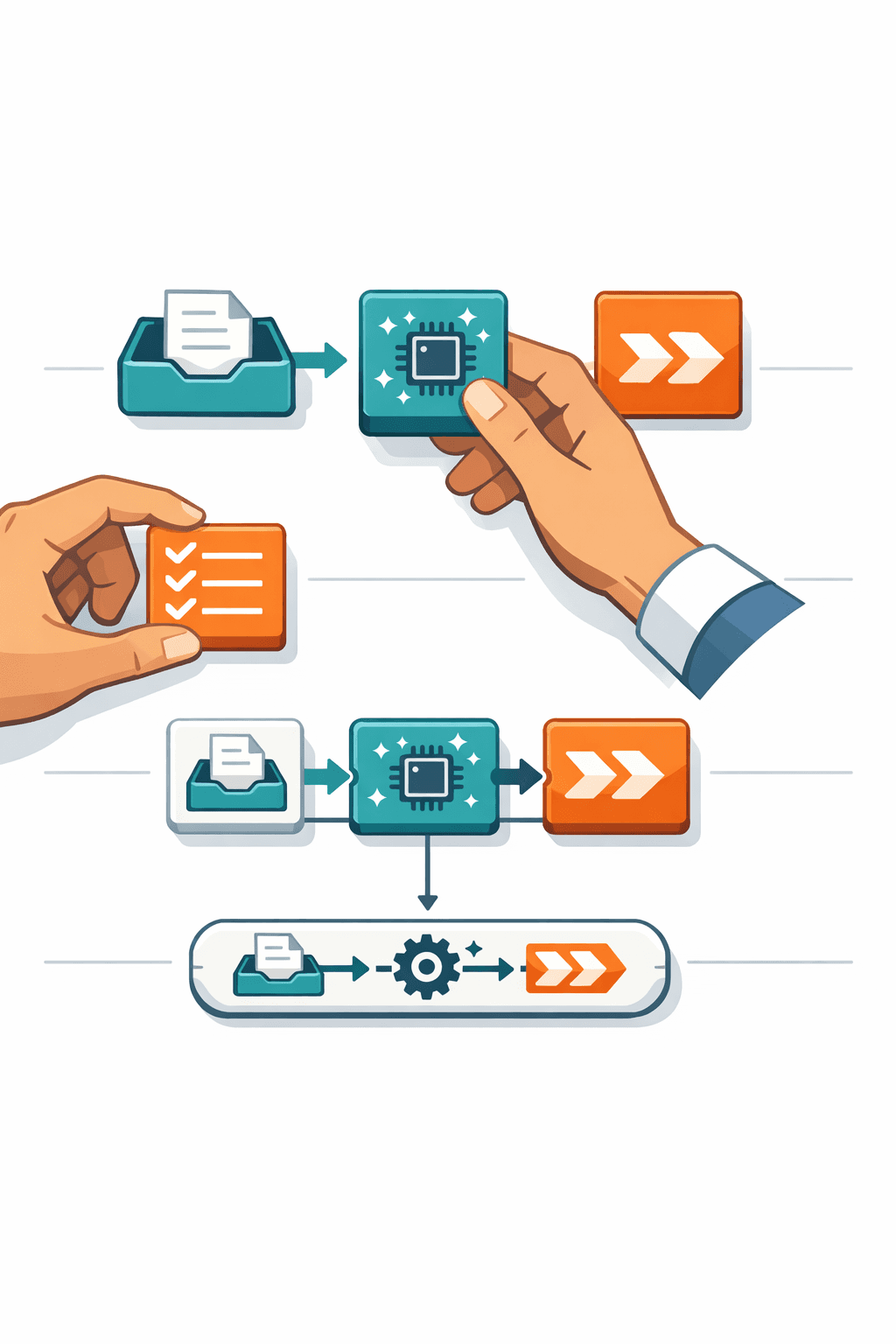
If there’s one habit I’d push on every founder, it’s this: whenever you do something for the second time, pause for five seconds and ask, “How could this be automated?”
Not “Should I automate this?” Not “Do I have time to automate this?” Just “How could this be automated?”
That question forces your brain to scan for leverage instead of effort.
And the funny part is that even when you don’t automate it immediately, you start capturing things differently. You write the email in a way that could become a template. You structure the notes so they’re easy to transform. You save the proposal language because you know you’ll want it again.
That’s how the mindset gap closes.
You don’t wake up one day with an automated business. You build it one repeated task at a time, by refusing to pay the manual tax twice.

Flo is the founder of Mind the Flo, an Agentic Studio specialized into messaging and voice agents.