Content
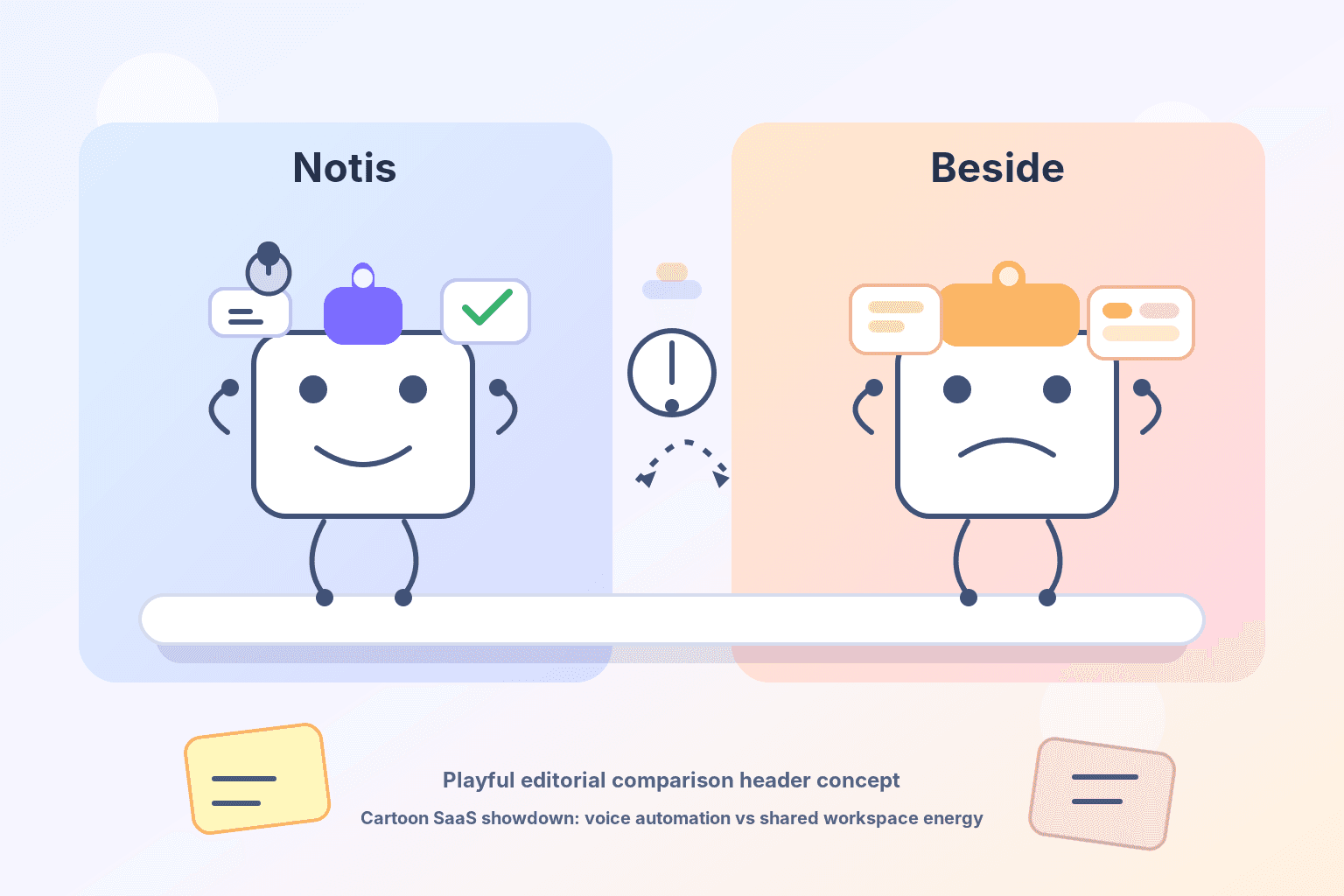
Notis vs. Beside: Which AI Assistant Fits Your Workflow Best? (1)
Quick Take
Notis and Beside both promise to reduce busywork, but they start from different entry points. Beside is best understood as a business phone system with an AI receptionist layer for handling calls, booking, and follow-up around customer conversations. Notis is broader: it is a message-first AI assistant that captures voice notes, organizes work inside Notion, manages tasks and reminders, runs research, and powers automations across tools. If your center of gravity is inbound calls, Beside has a clearer fit. If your workflow lives in voice notes, chat, Notion, and cross-tool execution, Notis is the more complete operating layer.
Product Overviews
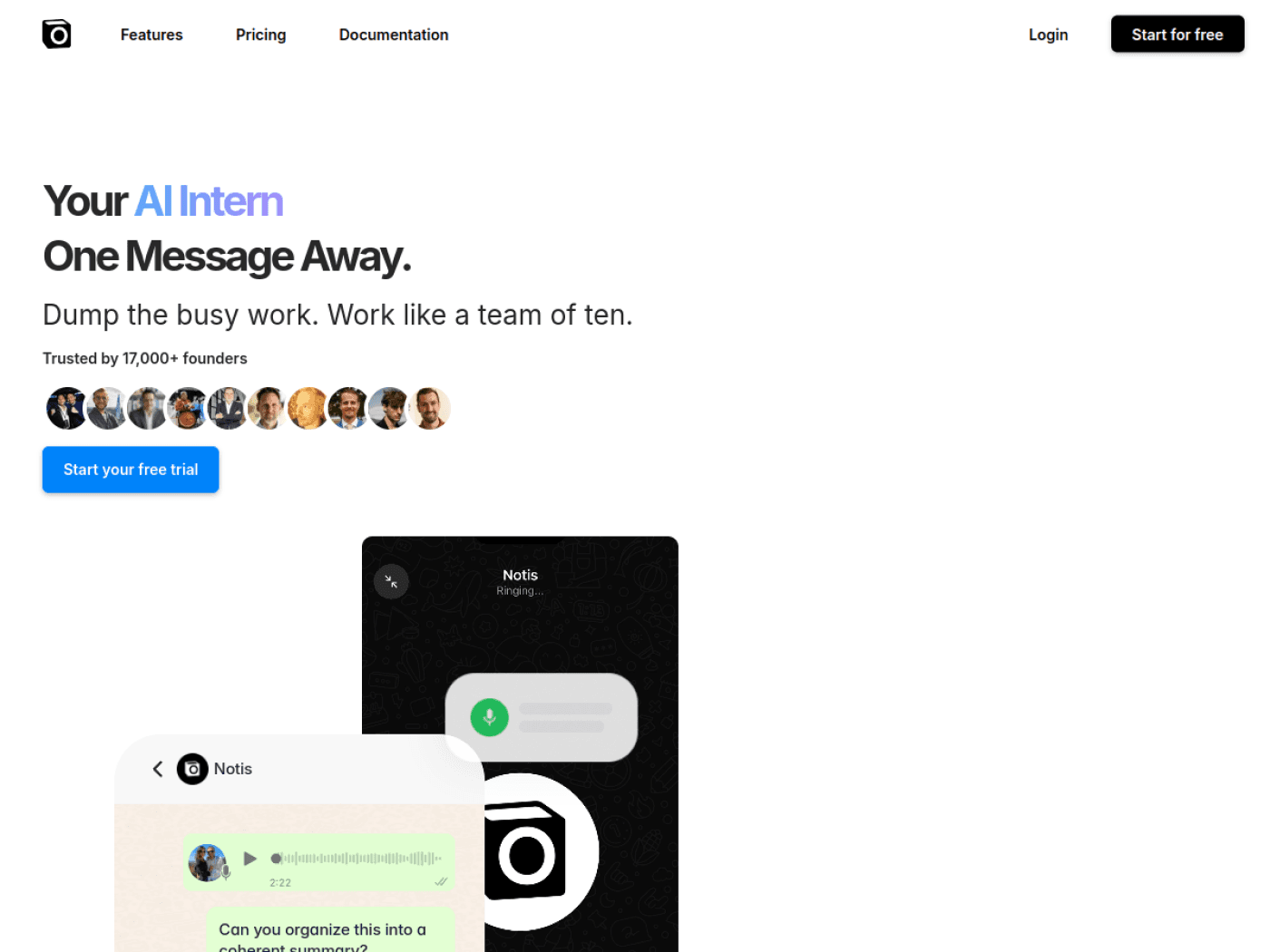
Notis homepage hero — Your AI Intern. One Message Away.
Notis
Notis is an AI assistant built for founders, operators, and teams who want to delegate work through the channels they already use, including WhatsApp, Telegram, iMessage, and email. Its differentiator is not just answering questions, but turning voice notes, messages, files, and requests into structured output across Notion, tasks, reminders, research, and automations.
In practice, Notis behaves less like a single-purpose assistant and more like a lightweight operating system for execution. It can capture ideas, organize them into a Notion workspace, trigger follow-up actions, and keep ongoing work connected across projects, meetings, and content workflows.
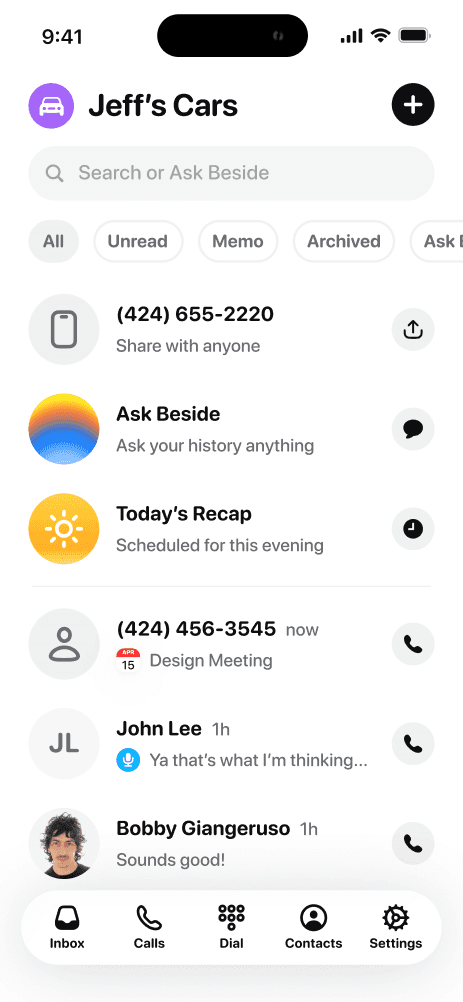
Beside homepage hero visual
Beside
Beside is a business phone and AI receptionist product designed for individuals and teams that need a more professional front door for inbound communication. Its value proposition centers on handling calls, summarizing conversations, helping with scheduling, and plugging phone activity into downstream workflows through integrations such as Zapier and CRM tools.
That makes Beside especially relevant for service businesses, operators, and small teams where missed calls translate directly into lost revenue or slower response times. It appears more specialized than Notis, with a tighter focus on telephony and reception rather than broader knowledge work, research, and Notion-native execution.
Head-to-Head Table
Category | Notis | Beside |
|---|---|---|
Voice capture (WhatsApp/Telegram) | Strong fit. Built around message-first workflows and supports voice capture through channels such as WhatsApp and Telegram, plus iMessage and email. | Not positioned around WhatsApp or Telegram voice-note workflows. Its voice story is centered on phone calls and receptionist handling. |
Notion integration | Core strength. Deep Notion workflow support, including the Notis Second Brain and adapting to existing databases. | No clear evidence of deep native Notion integration as a product pillar. |
Task & reminders | Strong. Can create tasks, assign work, set reminders, and summarize workload from natural language. | Supports follow-up around calls and bookings, but appears lighter as a full task and reminder system. |
Web search & RAG | Broader knowledge-work scope with deep search, memory, and document/file search workflows. | Not a major product emphasis based on verified findings. |
Automations/follow-up | Strong. Supports scheduled and webhook automations across workflows and tools. | Good for call-driven follow-up and integrations, especially through Zapier, but narrower in scope. |
Pricing | Pro $20/mo, Pro+ $59/mo, Ultra $149/mo, with annual discounts. | Starter $29.99/mo and Business starting at $49.99/mo. |
Security & compliance | Publishes privacy and security guidance, GDPR-oriented practices, deletion policy, and statements about model training use. | Limited public detail visible on security and compliance compared with Notis. |

Beside product illustration
Key Differences Explained
The biggest difference is the starting point of the product. Beside begins with the phone: it is built to answer, summarize, and route customer conversations so a person or small team can look more responsive and operationally mature. That is valuable when calls are the main source of business activity. Notis begins with the broader problem of execution. It captures voice notes and requests from everyday channels, connects them to a structured workspace, and turns them into organized output across notes, tasks, reminders, and automations.
The second major difference is how each product handles knowledge and systems. Notis is much more clearly designed to live inside a Notion-centric operating environment. That matters for teams that want ideas, documents, tasks, and context to accumulate in one place instead of being trapped inside a call workflow. Beside, by contrast, appears more specialized and transactional. It helps you manage conversations and the actions immediately around them, but it does not present the same depth in workspace organization, search, or knowledge capture.
The third difference is automation breadth. Beside offers useful call-related integrations and downstream actions, especially for booking and CRM handoff. Notis goes wider. Its scheduled and webhook automations make it easier to build recurring reports, follow-up systems, content workflows, and operational routines that extend well beyond a receptionist use case. For a buyer who wants an AI front desk, Beside is focused. For a buyer who wants an AI execution layer across the business, Notis has the broader ceiling.
Which One Should You Choose?
For solo professionals, clinics, agencies, and service-led businesses that live and die by inbound calls, Beside will likely feel more immediately relevant. If your pain is missed calls, inconsistent reception, basic booking, or making a small team sound more available than it is, its business-phone-first approach is easy to understand and operationally practical.
For founders, consultants, operators, and knowledge workers who capture ideas constantly and need those ideas to turn into organized work, Notis is the better fit. It is especially compelling for people already using Notion as a home base and wanting one assistant that can handle voice capture, task creation, reminders, research, and automations without forcing everything through a phone-system metaphor.
Engineers and technical teams may also find the distinction important. Beside can help operationally at the edge of customer communication, but Notis is better aligned with multi-tool workflows, structured documentation, and automations that sit closer to how modern teams actually run projects. For voice-to-Notion workflows in particular, Notis feels much more native and complete.
Wrap-Up
Beside and Notis are both useful, but they solve different layers of the workflow stack. Beside helps businesses handle conversations more professionally at the phone layer, while Notis helps founders and teams turn conversations, ideas, and context into organized execution. If you want the strongest fit for voice-to-Notion work, cross-tool follow-up, and a broader AI operating layer, Notis is the more versatile choice.
If you are evaluating AI assistants for your team, this is the key question to ask: do you need a better receptionist, or do you need a better system for turning raw input into action? That answer will usually make the right choice obvious.

Flo is the founder of Mind the Flo, an Agentic Studio specialized into messaging and voice agents.