Content
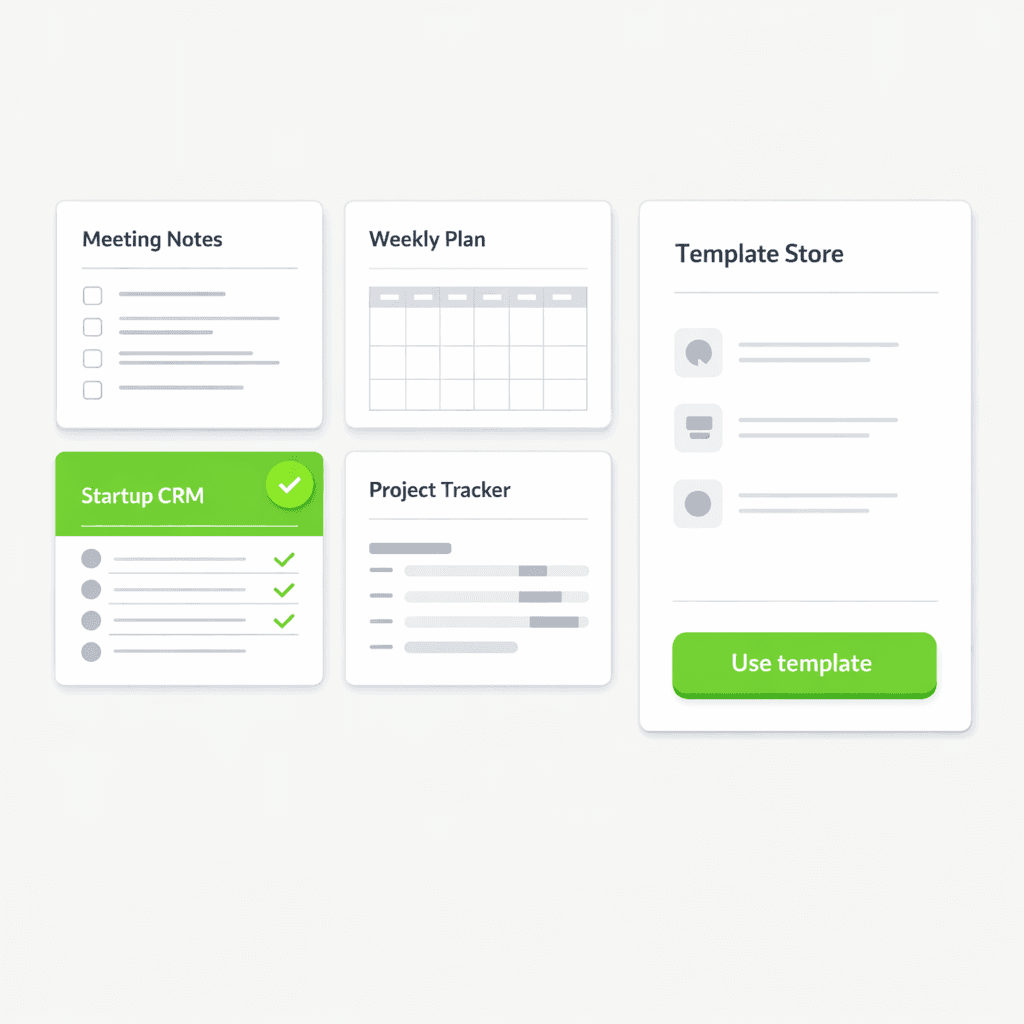
Notion is too complex. That’s why we built Notis.
The hardest part about building on top of Notion isn’t the tech. It’s accepting a simple truth: Notion is brilliant, and for a lot of people it’s still too hard.
I had a conversation recently that forced me to sharpen what Notis actually is. Not another “better Notion.” Not a new productivity religion. Something much simpler: the benefits of Notion, without the learning curve, the setup rabbit holes, and the constant context switching.
Notion is too complex, so we sell simplicity
Notion has become the default canvas for teams and individuals. But the moment you go beyond a blank page, you’re suddenly making structural decisions: databases, relations, views, formulas, permissions, naming conventions. For power users, that’s fun. For everyone else, it’s friction.
Notis is intentionally positioned as the layer that removes those complexity barriers while staying powered by Notion underneath. You keep the flexibility, the storage, and the ecosystem. You lose the “how do I even set this up?” tax.
In other words, the job-to-be-done isn’t “learn Notion faster.” It’s “get a second brain that works, right now.”
A second brain without the learning curve
When people say they want a second brain, they usually mean something practical: a place where ideas don’t get lost, tasks don’t slip, and knowledge becomes searchable. The tragedy is that many people bounce off Notion before they ever get those benefits.
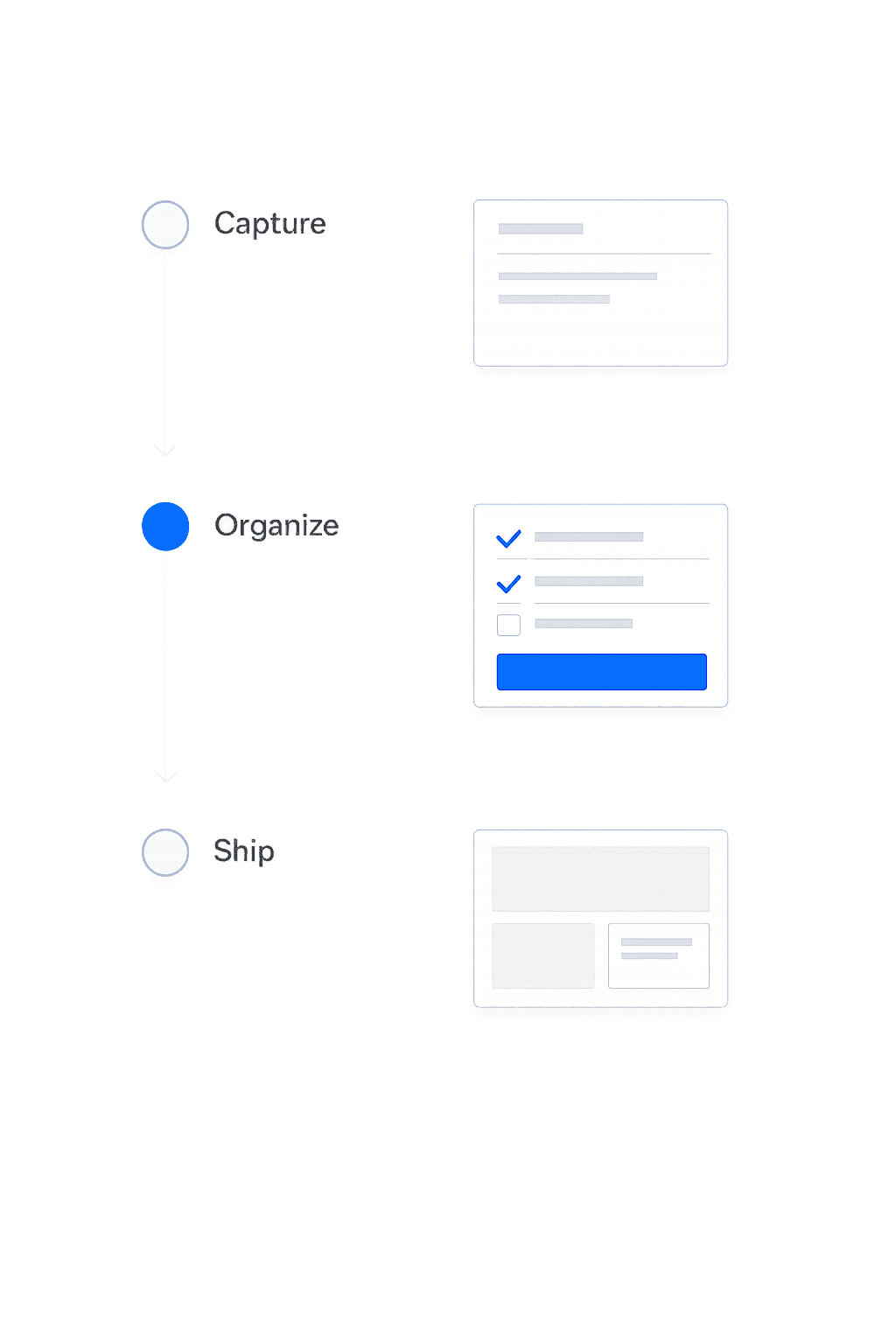
So the Notis onboarding is designed to be almost boring on purpose. The first experience focuses on the basics: creating notes, managing tasks, and picking a starting template. Not because we can’t do more, but because getting value quickly matters more than showing off capability.
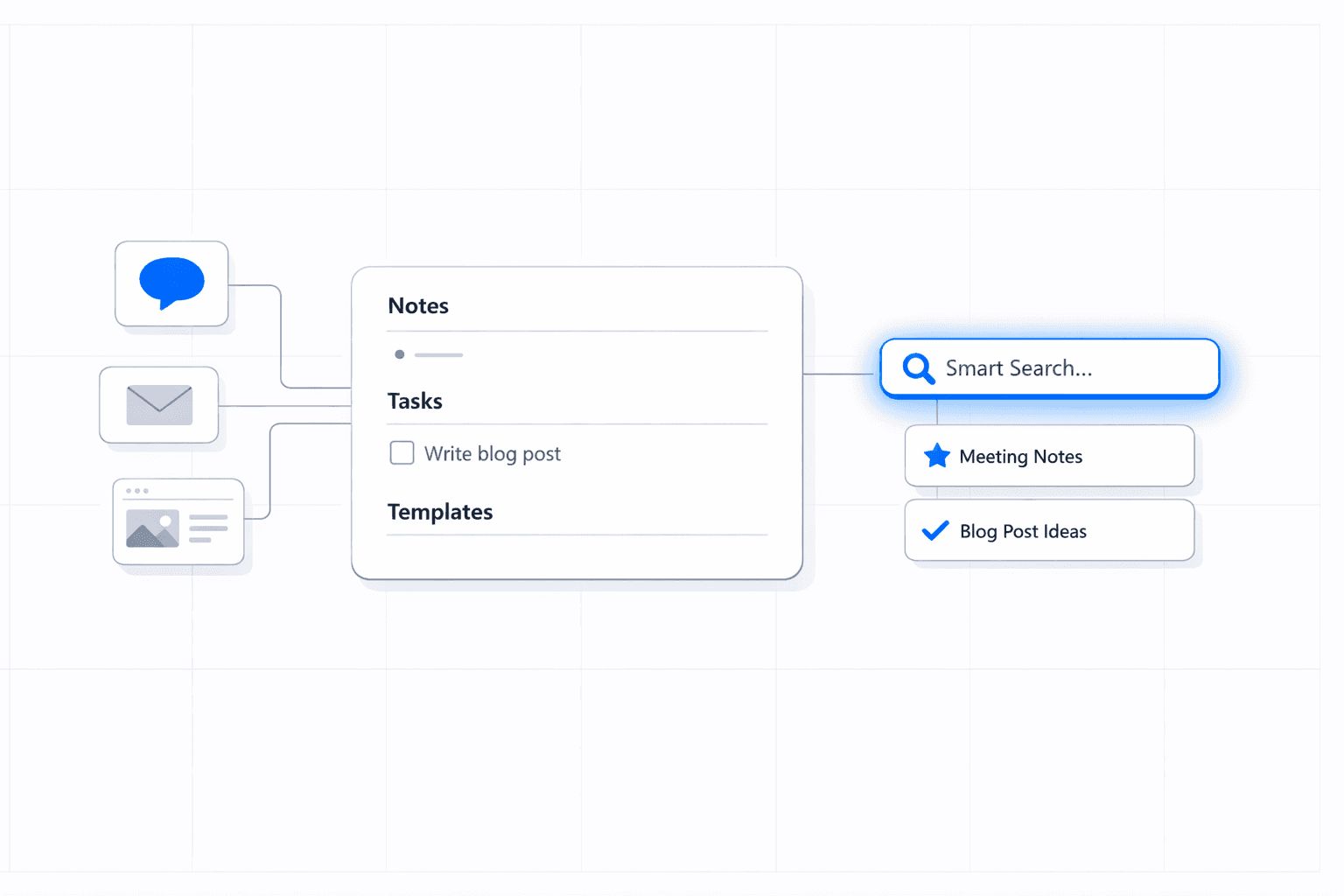
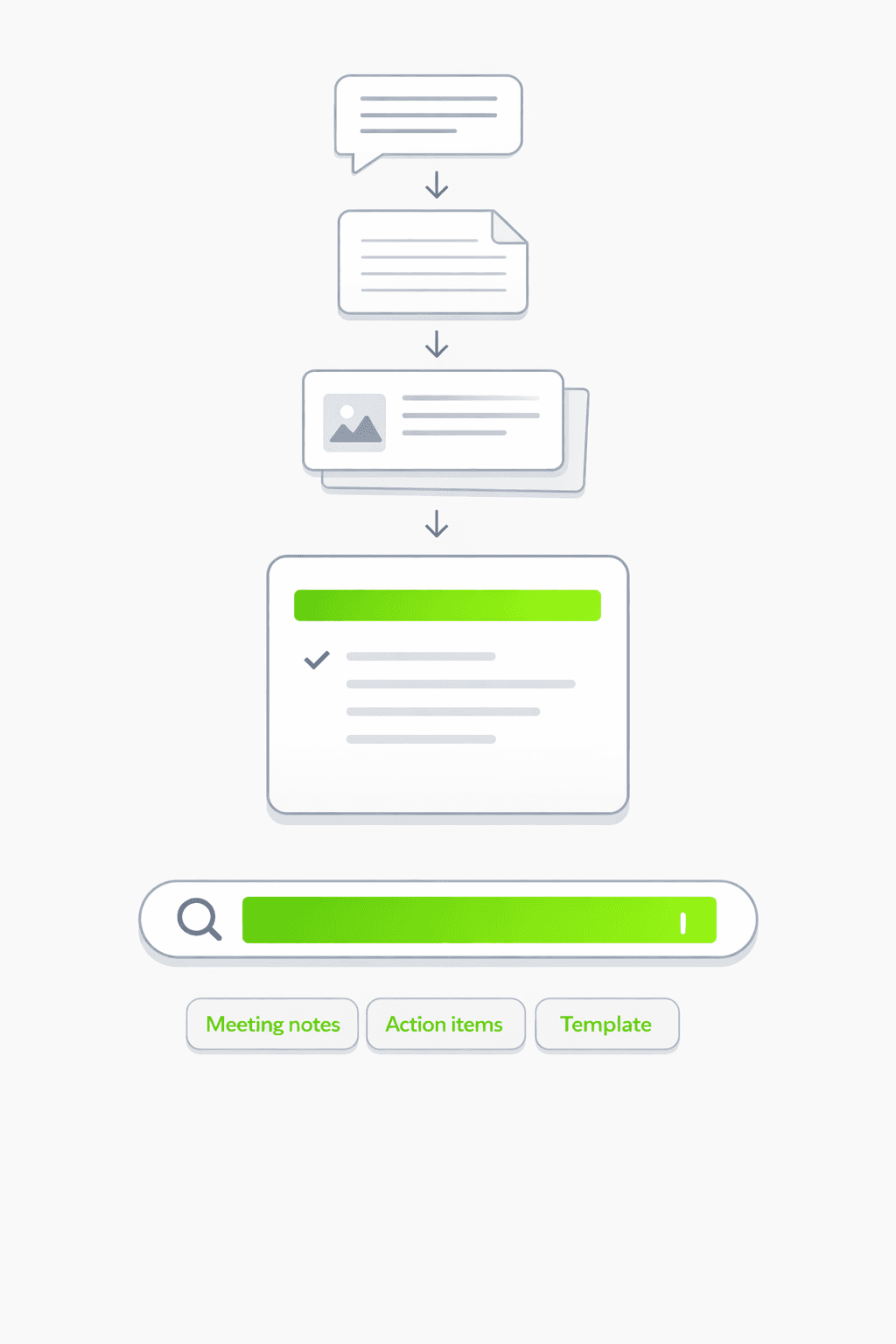
Once that foundation is in place, you can keep working the way you already work. You can capture from the tools you already use, and Notis takes care of turning that messy input into structured output.
AI that manages context, not just text
A lot of AI features in productivity tools stop at “generate” or “summarize.” That’s useful, but it’s not the real unlock.
The real unlock is context. Notis is built around context management and deep search: the ability to understand what exists in your workspace, retrieve what matters, and answer questions or execute changes without you hunting through pages and views.
That’s why query handling is a core capability, not an add-on. If you can ask, “What are the open action items from last week?” and get a reliable answer, you stop treating your system like a graveyard and start treating it like a living operating system.
Template compatibility is the wedge
One point that came through clearly is that we need to say this louder: Notis works with every Notion template.
That sounds like marketing fluff until you’ve lived the alternative. Most tools either ship their own system and ask you to migrate, or they integrate in a shallow way that breaks as soon as you customize.
Notis takes the opposite approach. It’s powered by Notion, but it’s designed to remove complexity, not add another layer of configuration. If you already have a second brain template you love, the goal isn’t to replace it. The goal is to make it usable when you’re busy, tired, or moving fast.
This is also why we’re thinking in components. Templates are often too big to adopt in one shot. Breaking them into smaller, manageable pieces makes it easier to start simple and expand only when it’s worth it.
And yes, a template store is on the roadmap. But the store only matters if it’s paired with an experience that makes templates feel effortless to use.
Low-click, high-efficiency: the interface should disappear
When I say “simplicity,” I don’t mean fewer features. I mean fewer moments where you have to stop what you’re doing to maintain your system.
That’s the bar: low-click, high-efficiency. Capture should be instant. Updates should be conversational. The interface should get out of the way.
A concept I keep coming back to is automatic moment capture. The best systems don’t rely on you remembering to organize. They assume you won’t, and they do it for you.
This is also where integrations matter. If we can connect the places people already think and communicate, we reduce the friction to almost zero. WhatsApp, Evernote, Apple Notes, and whatever comes next are less about “feature checklists” and more about meeting people where they are.
What we’re building next
A few concrete threads came out of the discussion.
One is video. It’s an obvious frontier for capture and knowledge, and also a messy one. If we can make video workflows feel as simple as dropping a thought into chat, that’s meaningful.
Another is tightening the feedback loop. When you’re building something that touches so many personal workflows, you don’t win by guessing. You win by shipping, watching how people actually use it, and iterating quickly.
And behind the scenes, a lot of the work is unsexy but essential: API integration for business logic, security considerations for messaging, and infrastructure choices that scale without making the product brittle.
The guiding principle stays the same, though. Notis should feel like a second brain that you can use without thinking about the tool. If Notion is the engine, Notis is the steering wheel: simple, direct, and always within reach.

Flo is the founder of Mind the Flo, an Agentic Studio specialized into messaging and voice agents.