Content
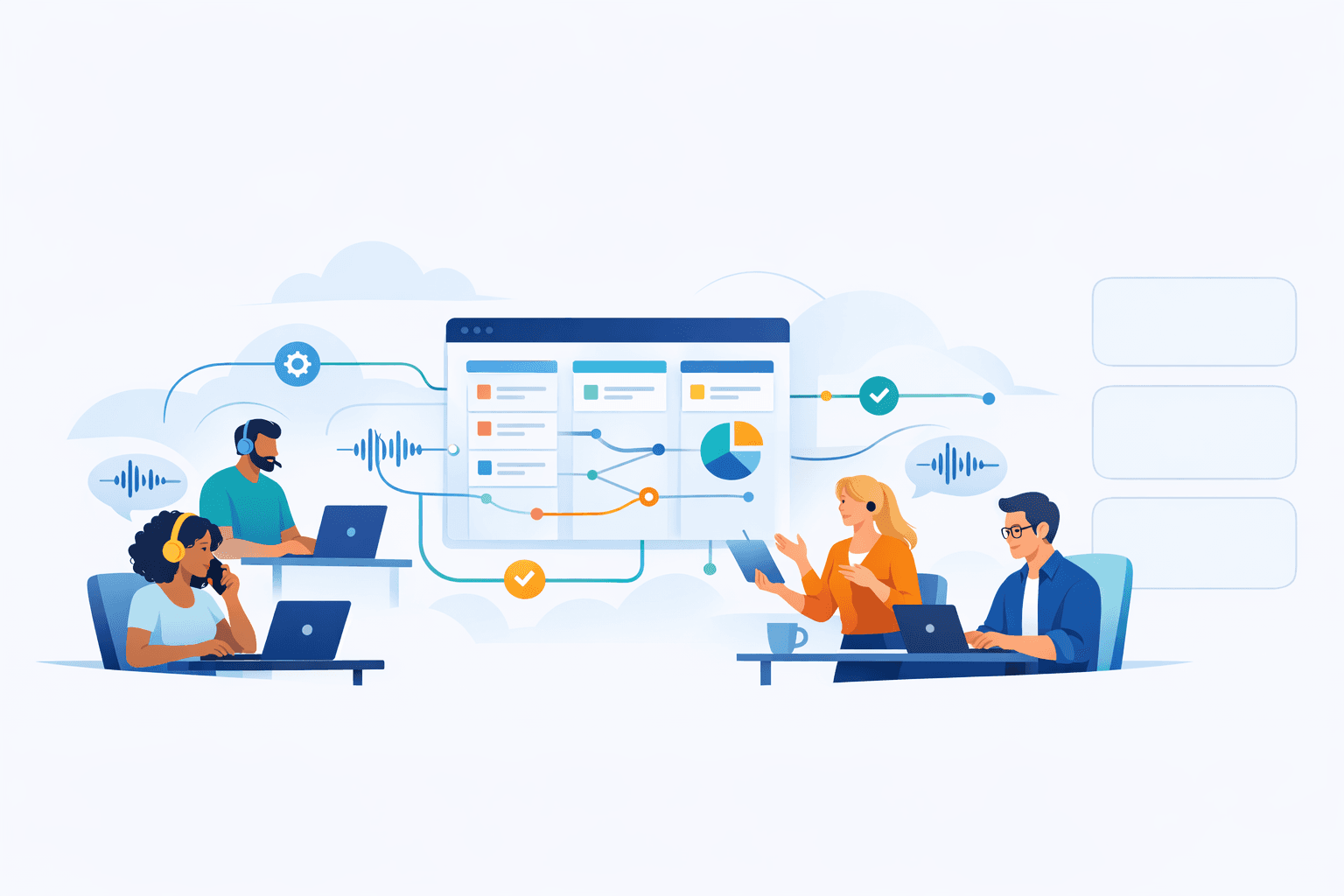
InsideRisk replaced stand-ups with weekly voice updates (and got their Mondays back)
InsideRisk’s problem wasn’t stand-ups. It was the overhead.
InsideRisk didn’t have a “bad stand-up.” They had the more common problem: a meeting that started as a lightweight coordination ritual and quietly became a recurring tax on focus. When a team is moving fast, the hidden cost isn’t only the thirty minutes on the calendar. It’s the context switching before and after, the tendency for status to drift into discussion, and the feeling that you have to be present to be “in the loop.”
That dynamic scales poorly. The bigger the team, the more tempting it becomes to pull everyone into the same room “just in case,” and suddenly you’re paying for alignment with the most expensive currency you have: uninterrupted work time.
Why meetings keep expanding (even when nobody likes them)
Most meetings don’t feel wasteful in the moment because they’re rationalized as coordination. The problem is that coordination is not a single activity. It’s a mix of sharing information, raising blockers, requesting help, and occasionally making a decision. When all of that is bundled into a live call, the default outcome is predictable: the meeting expands to fit the messiness.
InsideRisk wanted the benefits of a stand-up—visibility, accountability, early risk detection—without forcing everyone into the same time slot.
Why Slack isn’t the fix
Slack is great for quick back-and-forth, but it isn’t a reliable replacement for structured reporting. Threads get buried, updates become inconsistent, and the “important” information competes with everything else happening that day. Even when people share updates diligently, the team lead still ends up doing manual synthesis: scanning messages, chasing missing context, and turning scattered notes into priorities.
InsideRisk’s insight was simple: the issue wasn’t the channel. It was the lack of a repeatable workflow that makes updates easy to create, easy to consume, and hard to forget.
The principle that made the change acceptable
InsideRisk aligned around a cultural rule that makes meeting-minimization feel legitimate rather than antisocial. Elon Musk captured it well in a leaked internal Tesla email from April 2018: “Walk out of a meeting or drop off a call as soon as it is obvious you aren’t adding value. It is not rude to leave, it is rude to make someone stay and waste their time.”
InsideRisk didn’t use that idea to become harsh. They used it as permission to redesign the routine so value, not attendance, was the default.
The new ritual: weekly voice updates that feel human, but stay async
The experience InsideRisk wanted was straightforward: every employee records a weekly voice message that captures what matters without demanding a live meeting. Each update follows the same prompts: wins from last week, priorities for this week, risks, blockers, and asks for the rest of the team.
Because voice is faster than writing and carries nuance, it kept the “team pulse” that stand-ups are supposed to create, while letting people record on their own schedule.
Making it impossible to forget: the Monday 9am automation
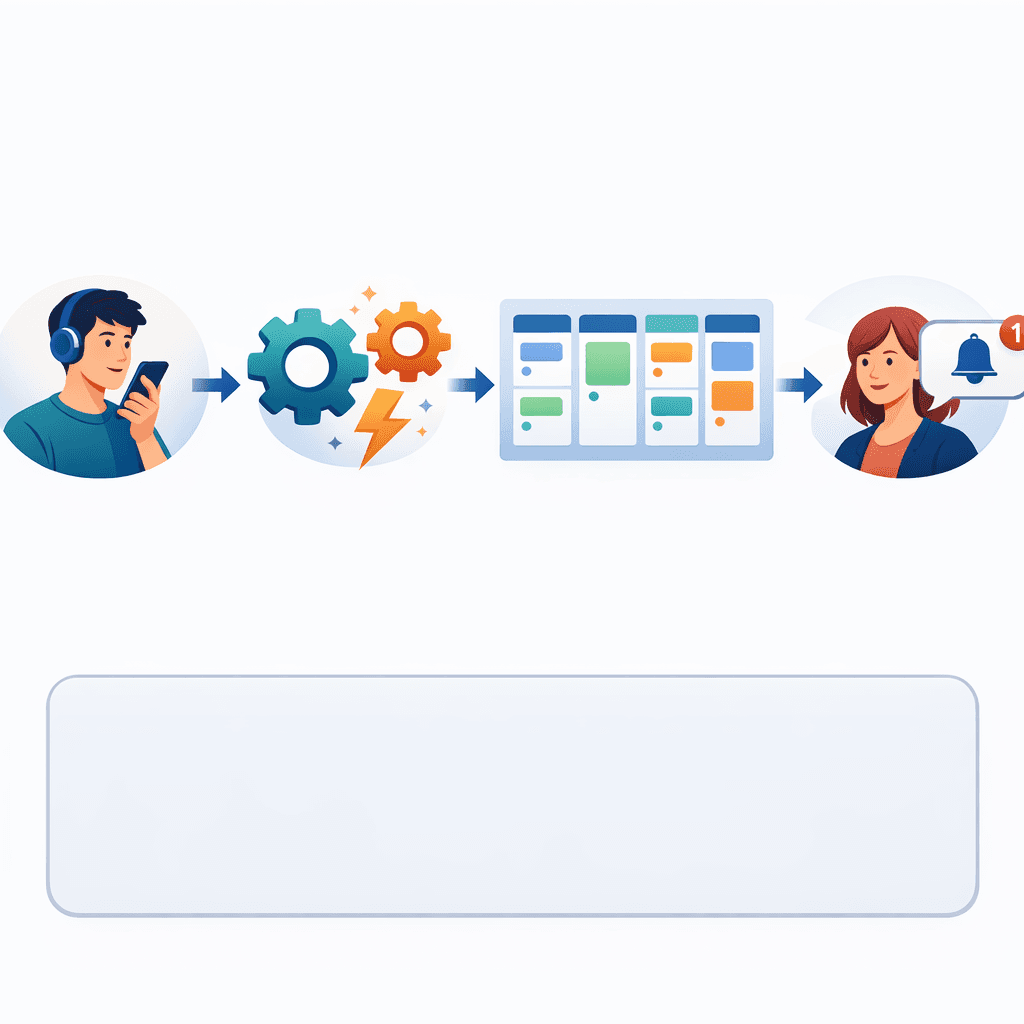
The first failure mode of any async process is inconsistency. If updates are optional, they don’t happen. InsideRisk solved this with a Notis automation that prompts each employee to record their voice message every Monday at 9am.
That small detail changed everything. The workflow stopped depending on motivation and started depending on the system.
Onboarding at company scale: provisioning, invites, and a clean first-run
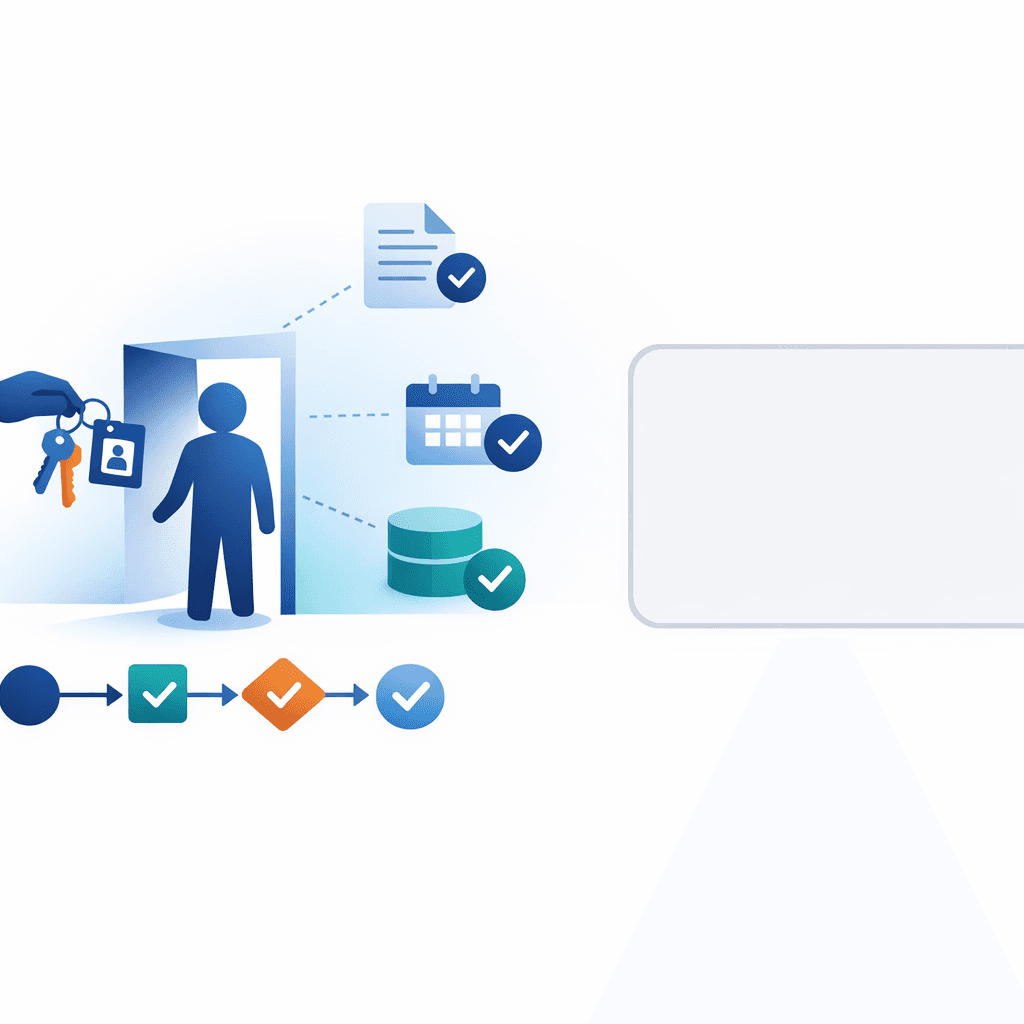
To make adoption painless, InsideRisk used Notis team features that let an admin provision licenses from a single account and invite users directly via text. New teammates simply complete the basic Notis onboarding by connecting their tools and granting access to the company Notion workspace.
The Notion database that turned voice updates into something you can actually use
A Notis consultant worked with InsideRisk to set up the workflow end-to-end. The role wasn’t just “support.” It was hands-on implementation: mapping the ritual to the business, setting up the automations, training the team, following up weekly, and making sure every workflow has an internal owner who is accountable for the output of their “AI intern.”
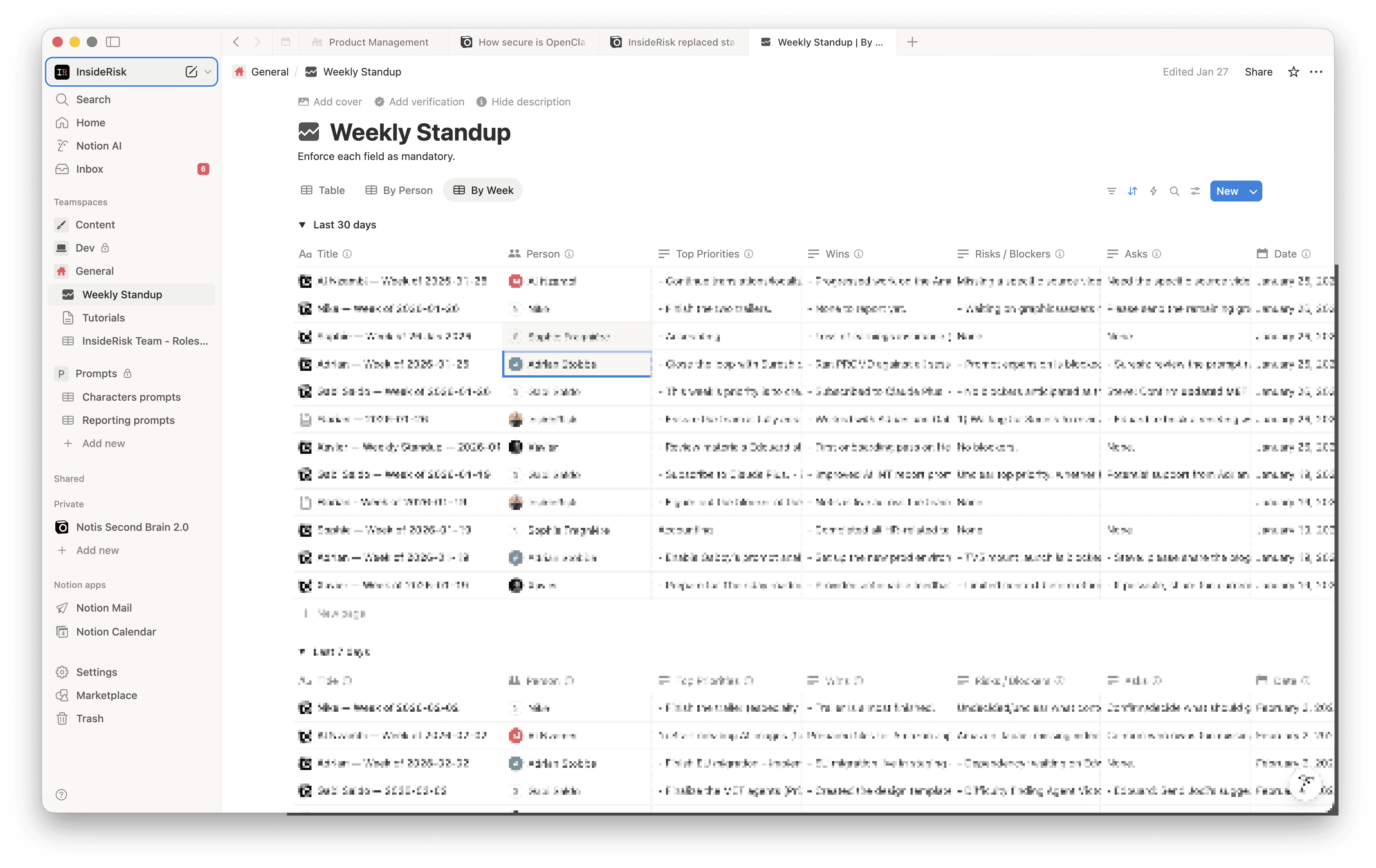
Together, they created a simple Notion database in InsideRisk’s general team space with the exact fields needed for the weekly recording, then shaped it into views that are easy to consume.
Closing the loop: the Monday end-of-day synthesis that moves information up and down
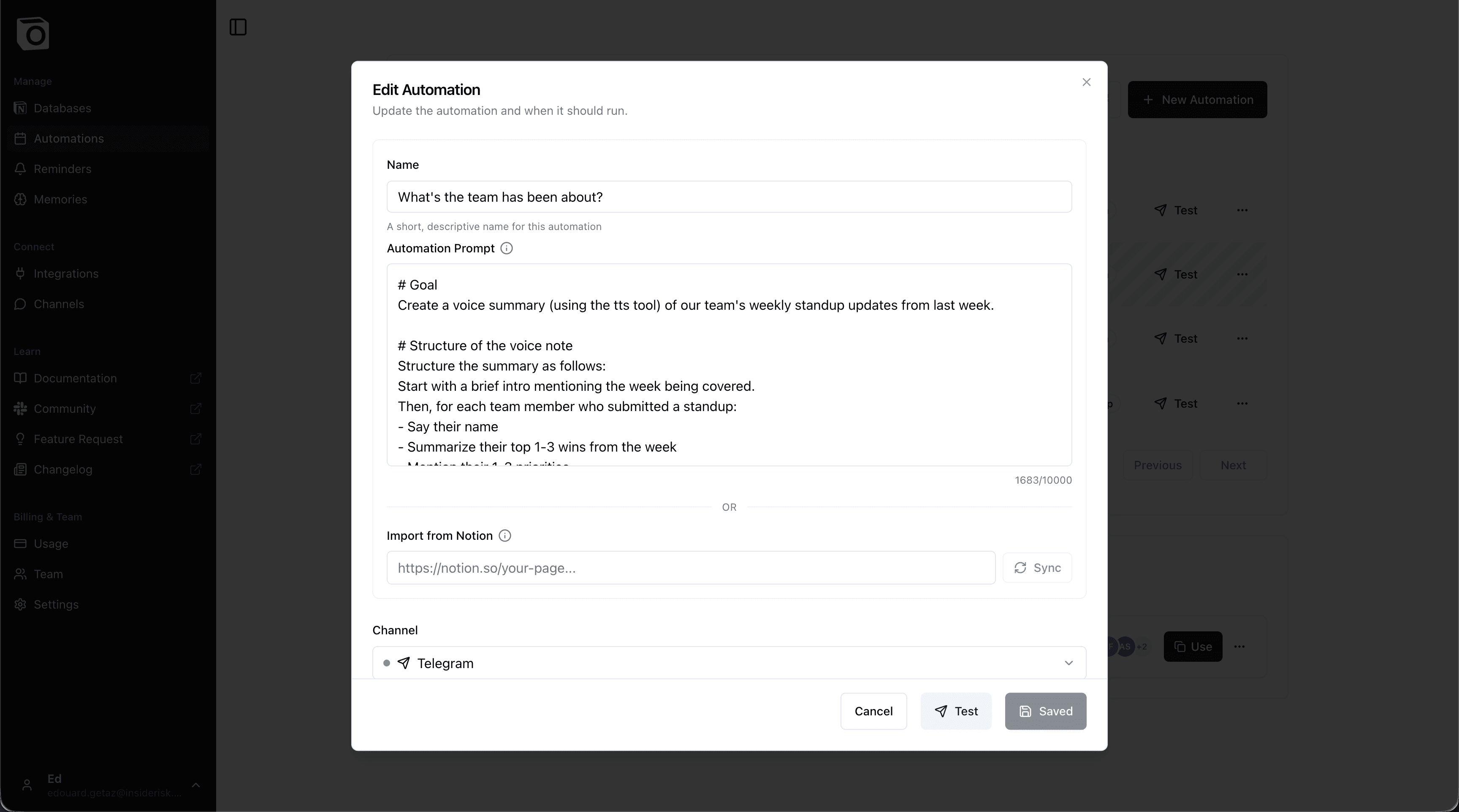
On the first week, everyone recorded their voice message. The next step was to make sure leadership didn’t have to manually stitch it all together. So InsideRisk added a second Notis automation that runs at the end of every Monday.
It summarizes the team’s entries, surfaces the challenges that need attention, and then sends a voice message to the team lead while drafting a message for their direct report. In practice, this closes the loop: the information flows up in a consistent format, then flows back down as clear direction.
Why automation templates mattered more than they expected
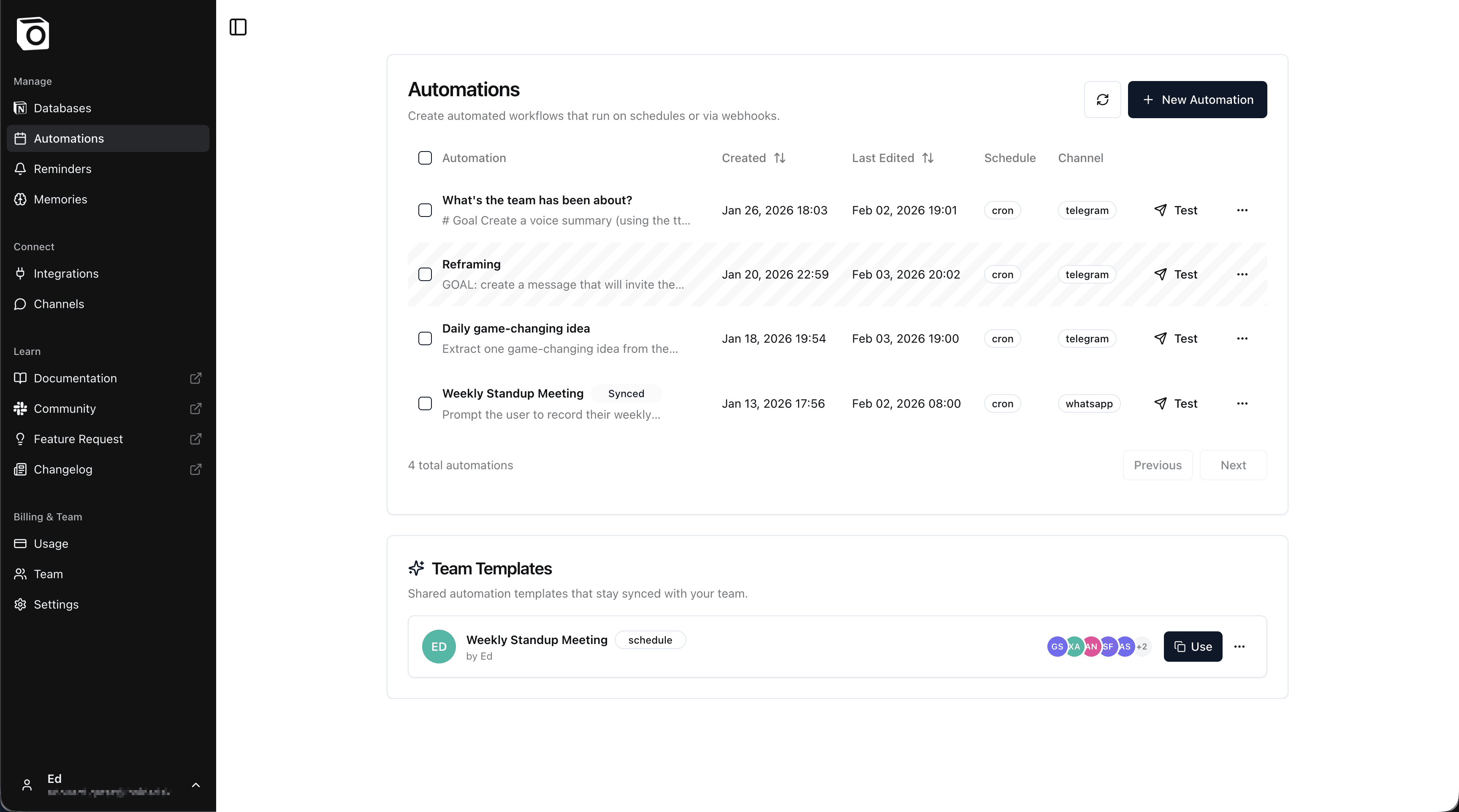
InsideRisk also used Notis automation templates for teams to avoid one-off setups. They created a single reminder automation, made it available for anyone in the team to install with one click, and ensured it stays updated if prompts evolve later.
That last part is what makes the process durable. When the workflow improves, the improvement propagates.
What changed for InsideRisk
InsideRisk replaced a recurring meeting with a repeatable system. The result was fewer interruptions, clearer visibility into wins and blockers, and a Monday rhythm that scales as the team grows.
This case study doesn’t pretend meetings are always wrong. It shows a practical rule: use real-time time for discussion and decisions, and use async rituals for predictable status and risk reporting.

Flo is the founder of Mind the Flo, an Agentic Studio specialized into messaging and voice agents.