Content
How to Turn Mental Chaos Into Deep Work Sessions (Founder's Brain Dump Method)
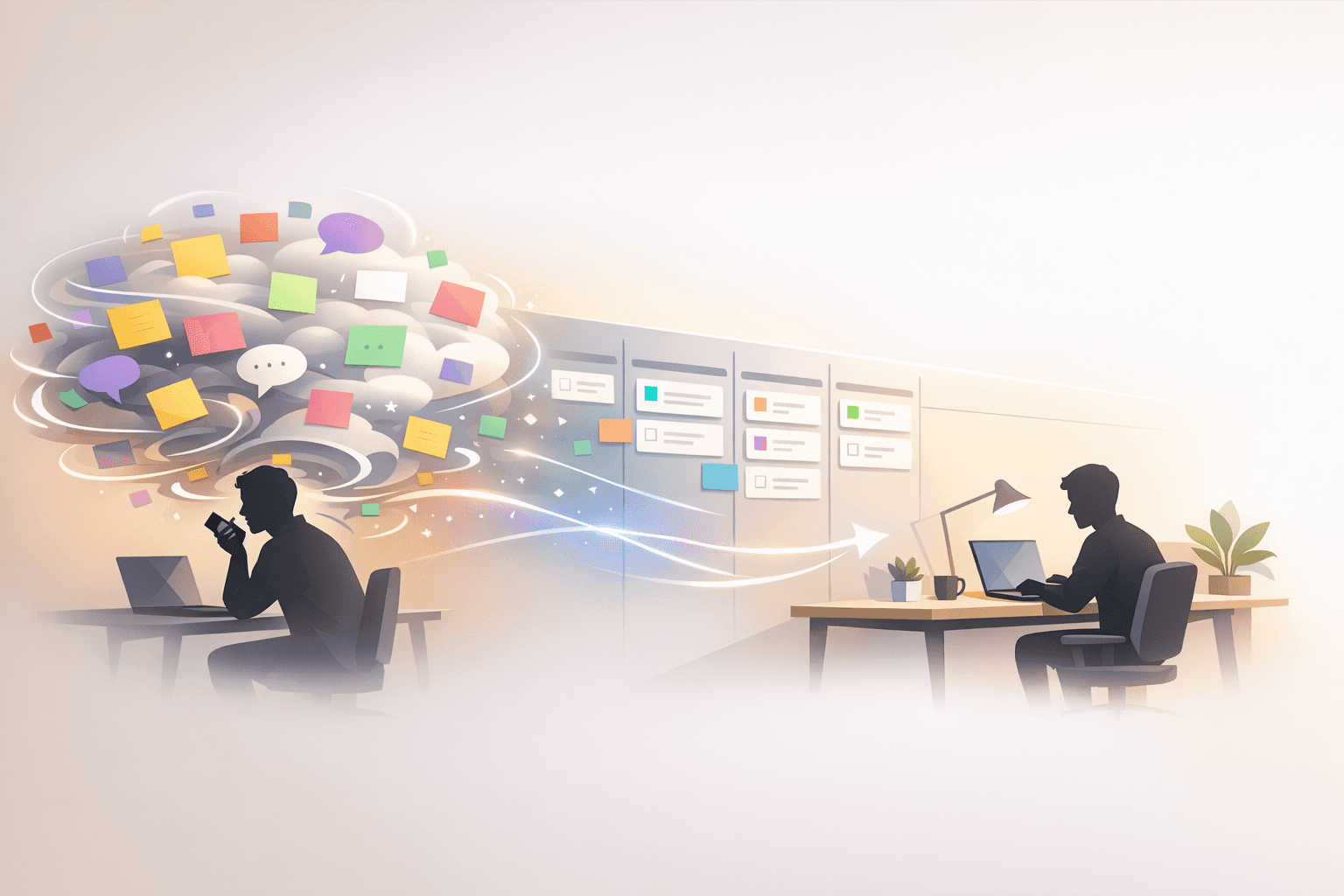
When your brain is in “idea machine” mode, it feels productive… right up until you sit down to work and realize you’ve got thirty tabs open in your head, none of them loading. That’s the founder paradox: we generate a ridiculous amount of signal, then we drown in it.
I built my day around one simple promise: I never try to hold my best thoughts in memory. I capture first, I organize later, and only then do I earn the right to go deep.
The real problem isn’t distraction. It’s uncontained thinking.
Most founders blame themselves for not focusing. But the thing that actually breaks focus is unresolved stuff. Half-formed ideas, “don’t forget” reminders, little business anxieties, and random sparks of inspiration all compete for the same tiny slice of mental bandwidth.
If you have ADHD tendencies, it’s even more brutal. The ideas come fast, the context switches come faster, and the moment you tell yourself “I’ll remember this later,” you’ve basically scheduled it to disappear.
Here’s the shift: your brain is not a storage device. It’s a generator. Treat it like one.
The Founder Brain Dump Method (the one that actually sticks)
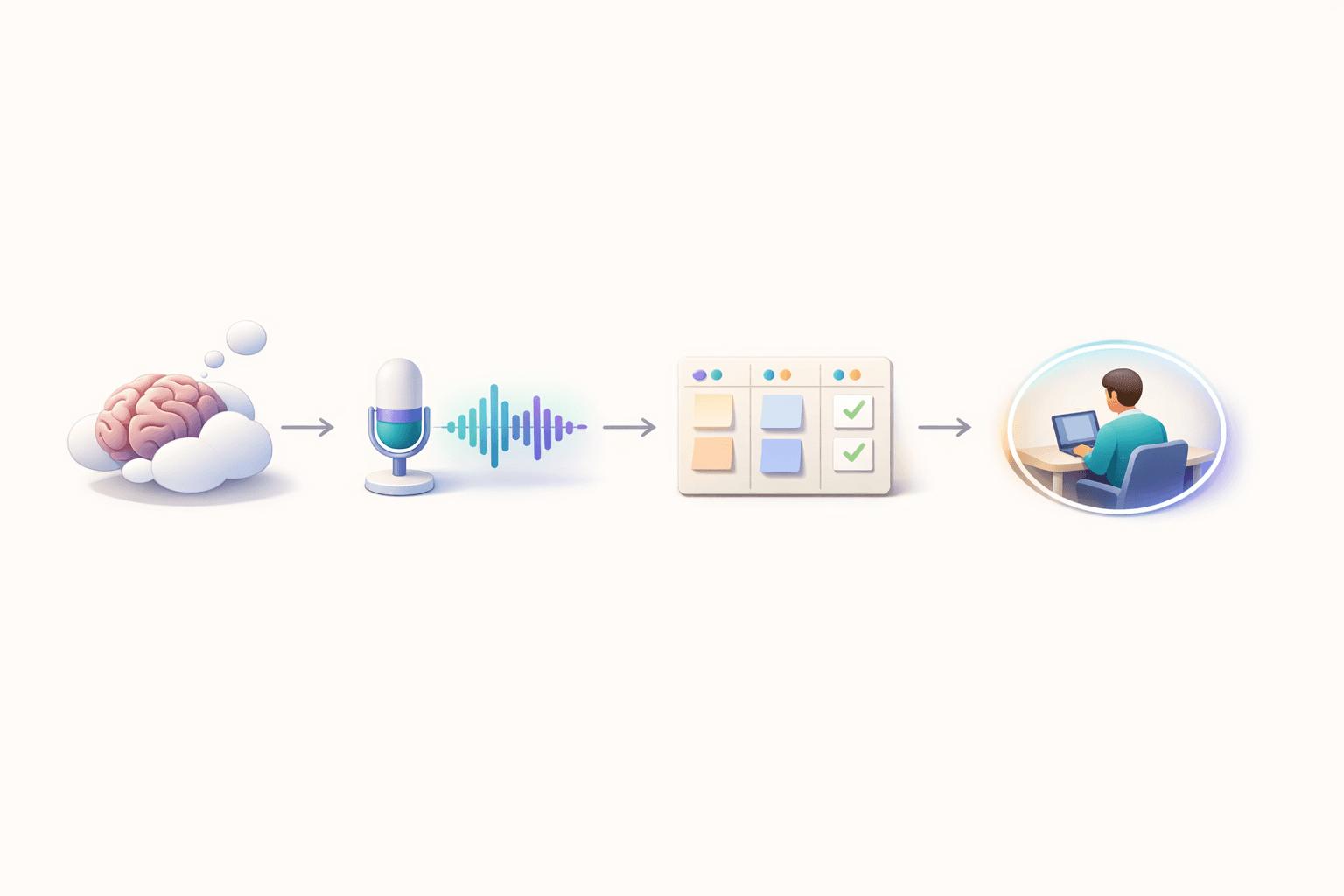
I call this a brain dump, but it’s really a two-phase system.
Phase one is messy on purpose. You’re not “planning.” You’re evacuating mental clutter into a place you trust.
Phase two is calm and structured. That’s where you turn raw thoughts into decisions and next actions, so your deep work session has a single target instead of a thousand competing whispers.
Phase 1: Capture everything, the moment it appears
If an idea shows up while you’re walking, commuting, cooking, or lying in bed, you don’t negotiate with it. You capture it.
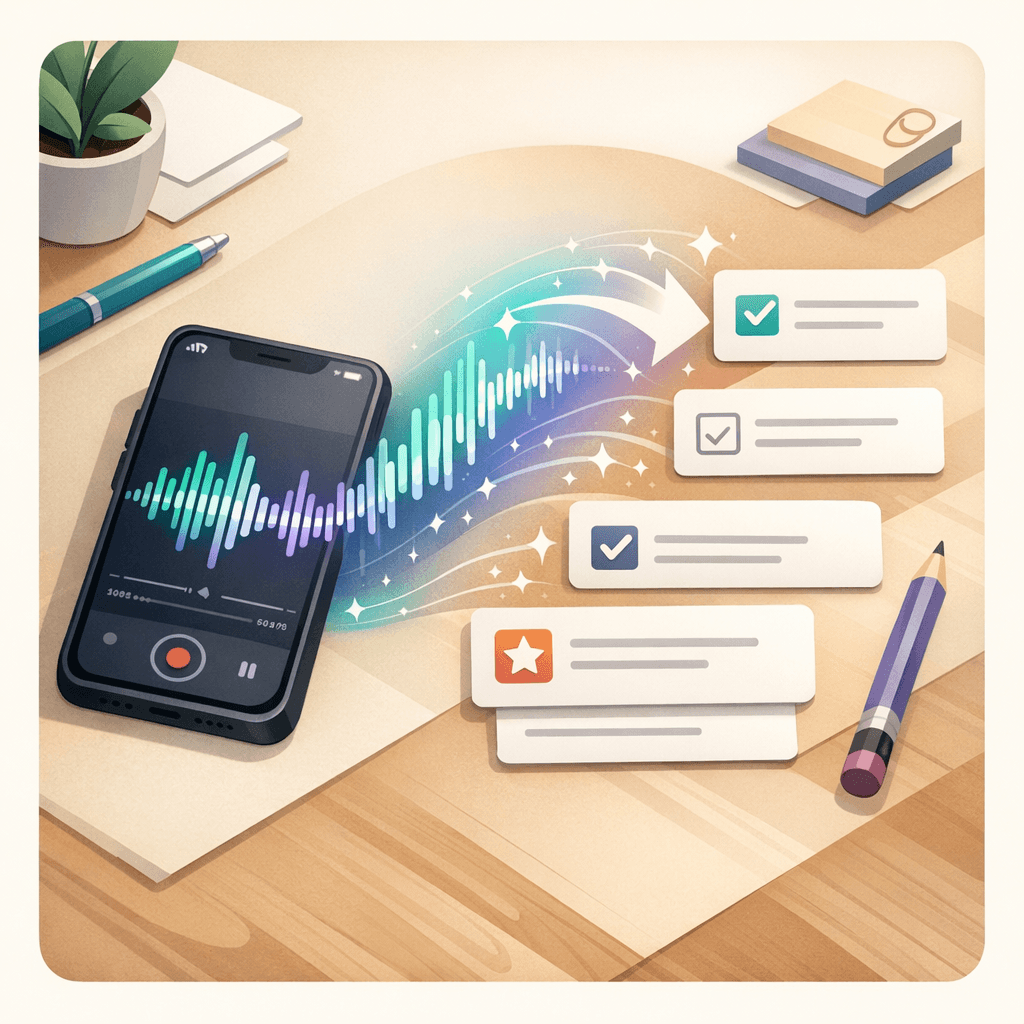
My default capture tool is voice, because typing forces you to be neat, and neat is the enemy of speed. Talking lets you grab the thought at the exact moment it’s alive.
The rule is simple: one inbox. Not three apps, not five half-used notebooks, not “I’ll text it to myself.” One place that becomes your external brain.
When you capture this way, you stop paying the “background anxiety tax” of trying to remember. You’re telling your brain: “I’ve got you. You can stop looping.”
Phase 2: Convert the dump into action (without turning it into a life project)
A brain dump is only powerful if you process it. Otherwise you just created a nicer graveyard for ideas.
So I do a quick “sorting pass” once or twice a day, and a longer cleanup once a week.
While sorting, I’m not trying to create the perfect system. I’m trying to answer one question for each item: what is this, really?
Sometimes it’s trash. Sometimes it’s a note I want to keep. Sometimes it’s a commitment. And when it’s a commitment, I force it into a next action that can actually be done.
A good next action is small enough that you can start it without bargaining. “Work on onboarding” is not a next action. “Write the first draft of the onboarding email” is.
This is where founders accidentally sabotage themselves: they keep tasks vague, then wonder why they procrastinate. Vague tasks are anxiety generators.
The bridge to deep work: pick one outcome, then time-block it
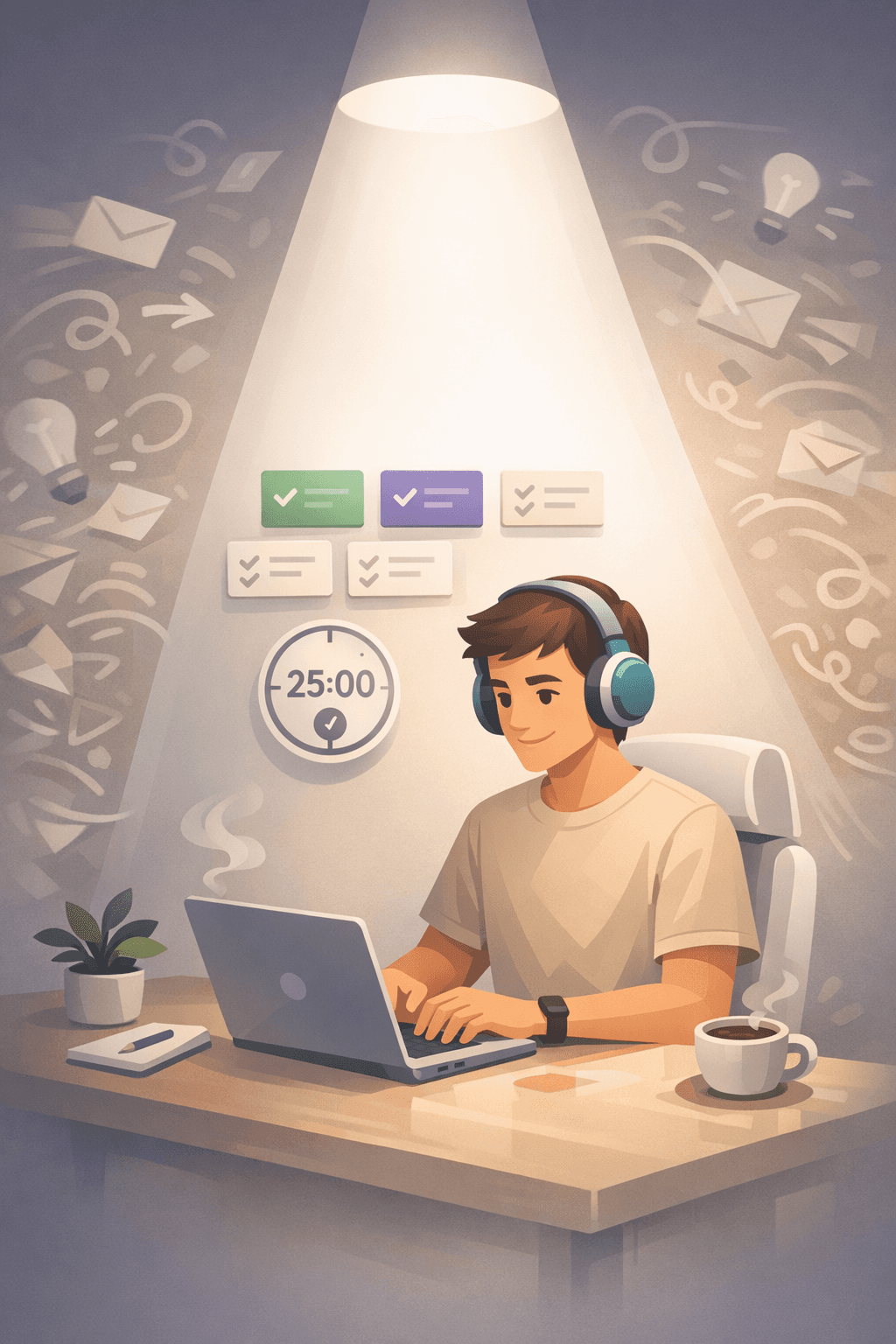
Deep work doesn’t start when you sit down. It starts when you’ve already decided what “done” looks like.
Once your brain dump is processed, you earn a clean slate for execution. Then you time-block a focused session around one meaningful outcome.
I’m ruthless here. If you try to do deep work while still carrying ten unresolved decisions, your attention will keep leaking.
This is also why “just focus harder” is terrible advice. A good deep work session is engineered. It has a clear target, a protected window, and as few escape hatches as possible.
How this looks on a real founder day
In the morning, I capture whatever comes up without judging it. During the day, I do quick processing passes so the inbox doesn’t turn into a monster. And when it’s time to execute, I open my list and I’m not confronted with chaos. I’m confronted with a single, clear next action.
That’s the whole game.
Your creativity stays wild, because you’re not suppressing it. But your execution becomes calm, because you’ve built a reliable path from thought to action.
The payoff: fewer lost ideas, less stress, more shipped work
The point of this method isn’t to become “organized.” It’s to stop wasting your best thinking on remembering and re-remembering.
When you trust your capture system, your mind quiets down. And when your mind quiets down, deep work becomes a default state instead of a rare event you chase.
If you’ve been feeling mentally overloaded, try this for a week: capture instantly, process daily, and protect one block of deep work with a single outcome. You don’t need more discipline. You need fewer open loops.

Flo is the founder of Mind the Flo, an Agentic Studio specialized into messaging and voice agents.