Content

How I Actually Use Notis as a Founder: From One-Off Prompts to Real Automations
You know that feeling when your brain is buzzing, tabs are everywhere, WhatsApp is pinging, and you can literally feel context slipping through your fingers?
That was my default state for years as a founder. Lots of tools, lots of effort, not a lot of leverage.
Then I did something very simple: I stopped treating AI like a cute chat toy and started treating it like a real member of my team.
In this post I want to show you what that shift looks like in practice, and how I actually use Notis as a founder to move from one-off prompts to real automations that run my day.
The founder problem: too many thoughts, not enough follow-through
Most founders do not struggle with ideas. We struggle with capture, structure, and follow-through.
You come out of a meeting with three product ideas, five follow-ups, and two people you should really introduce to each other. Twenty minutes later, half of that has evaporated into the chat abyss. The other half is frozen as vague tasks like “Follow up with Alice” or “Fix onboarding” that never get done because they are not concrete enough.
For a long time, I tried to solve this with more discipline. Tighter to-do lists. More time blocking. More tools.
It worked a little. But it never solved the real issue: every time I had a thought, I had to manually shepherd it across five different apps. That is not how leverage works.
Notis exists because I wanted to offload that entire layer of work.
Your voice is the interface, Notion is the brain, Notis is the operator
When people ask me what Notis actually is, I usually describe it as my digital brain.
My voice is the interface. I talk to Notis in WhatsApp, Telegram, iMessage, or a keyboard command. I stay where I already am.
Notion is the brain. That is where my tasks, projects, notes, hiring pipeline, CRM, content calendar, and meeting notes live. It is the single source of truth.
Notis is the operator that sits between the two. It listens to what I say, translates my messy stream of thought into structured objects, and then pushes those objects into the right databases, with the right properties, at the right time.

This is the moment where everything starts to “click”. I am not chatting with an AI for fun. I am delegating work to an operator that has direct access to my systems.
From disposable prompts to persistent workflows
The way most people use AI today is disposable. You open a chat, paste a prompt, get an answer, close the tab, and nothing in your actual workflow has changed.
When I built Notis, I wanted the opposite. I wanted the line between “I ask once” and “this happens every time” to be as thin as possible.
So I think about my work in two layers.
The first layer is bursts. I have an idea in the car, I drop a quick voice note to Notis. It turns that messy audio into clean tasks in my Notion task database, assigns owners, adds due dates, and groups similar items. I do not have to remember to “process my notes” later, because that part is already done.
The second layer is automations. Once I see that I am asking for the same thing over and over again, I turn that burst into a workflow that runs on its own. Instead of saying “Hey Notis, summarise this meeting and send everyone action items” every time, I teach Notis that whenever a new meeting note appears in a specific Notion database, it should automatically do the summarising and the follow-up.
The beauty is that the logic lives in Notion itself. I can open my meeting database, tweak the instructions in its description, and I have effectively edited an automation.
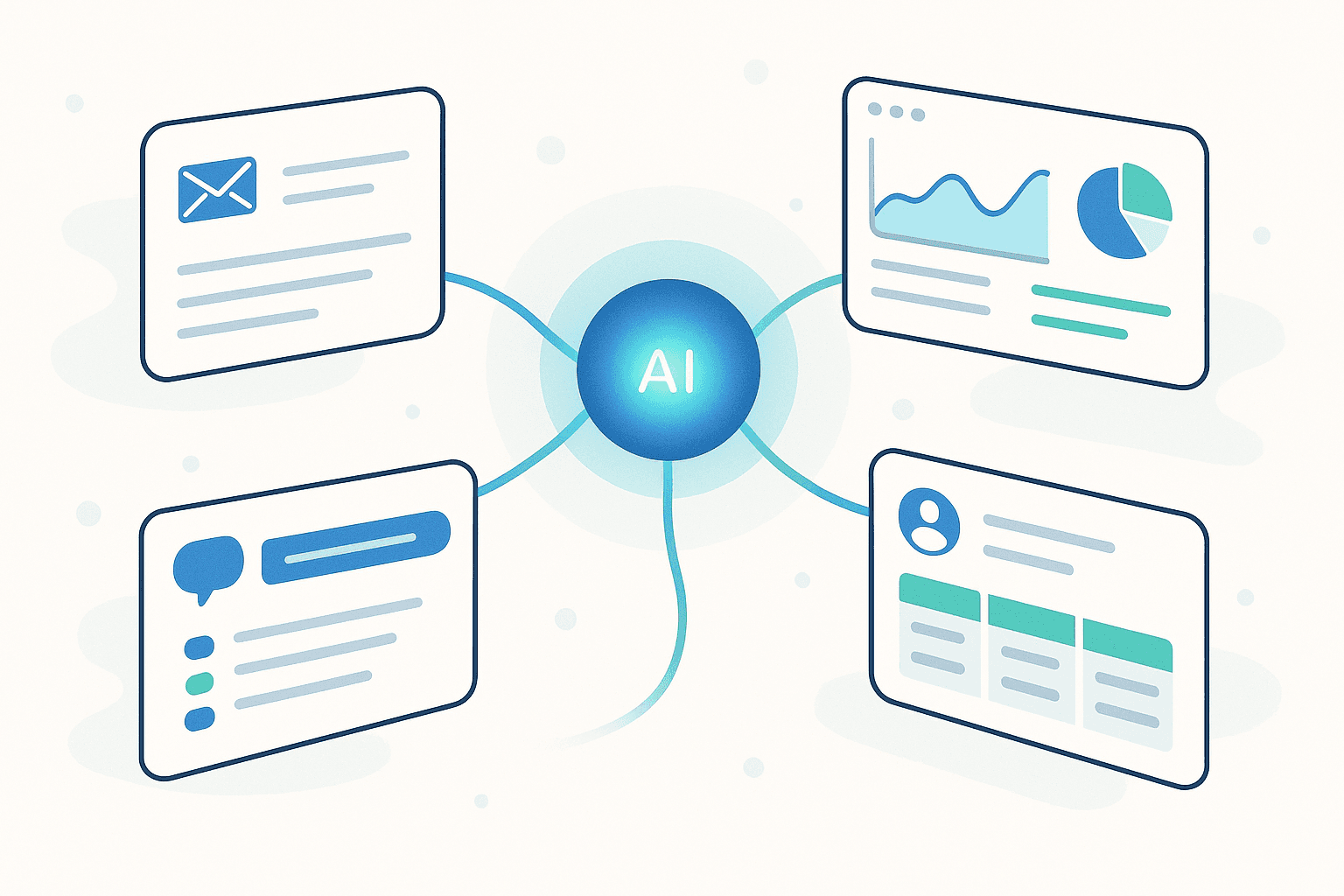
One-off prompts give you a hit of productivity. Persistent workflows quietly compound in the background.
What it feels like when Notis becomes your chief of staff
I will give you three very real founder scenarios where this shift changed my day.
The first is recruiting. When I started hiring, my inbox filled with candidate emails. Manually parsing CVs, copying details into Notion, tagging statuses, and following up was exactly the type of work that drains your brain without moving the company forward.
So I wired a simple workflow: whenever I forward a candidate email to Notis, it extracts the name, contact details, links, and key signals, and creates or updates a candidate record in my Notion hiring database. It tags where they came from, adds a status, and attaches the original email. I scroll through a structured pipeline instead of drowning in my inbox.
The second is meeting follow-up. After a product review or investor call, I used to end with a page full of messy notes and the vague intention to “clean it up later”. Now, I upload the transcript or forward the Zoom recording to Notis. It pulls out decisions, risks, and action items, assigns them to the right owners in Notion, and drafts follow-up emails I can send in seconds.
The third is content. When I riff on an idea for a blog post, I do not sit down in front of a blank editor. I record a voice note explaining the core idea, the examples I want to use, and the audience I am thinking about. Notis does the deep research, generates a custom hero image, drafts the article into my Notion Blog database, and even suggests social snippets I can use later.
All three scenarios started as one-off prompts. All three turned into repeatable automations once I realised how often I was asking for the same thing.
The real unlock: treating AI like a teammate, not a trick
There is a big mindset shift here, and it goes beyond Notis as a product.
If you treat AI like a magic trick, you will keep it in the toy box. You open it when you remember, you get a clever answer, and then you go back to doing most of the work yourself.
If you treat AI like a teammate, you start doing something very different. You ask questions like what can I stop touching entirely and what would I need to teach my assistant so they can reliably handle this forever.
That is exactly how I design workflows in Notis.
When I notice a pattern in my own behaviour, I document it once, in natural language, in Notion. I describe what I want Notis to look for, what to do when it finds it, where to write the output, and how often to run. Then I let it run for a week and adjust.
Over time, this creates a weird but wonderful feeling: there is a second version of me quietly working in the background. It never forgets to capture things. It never gets bored of formatting. It never skips follow-up because it is late and I am tired.

I still make the calls only I can make as a founder. But everything around those calls is orchestrated for me.
How to start building your own “Team of Me”
You do not need a huge setup to feel this shift. You just need to be intentional about the first few workflows you delegate.
I always recommend starting with the places where you already feel pain.
Look at your last week. Where did you manually copy information between tools more than twice. Where did you think “I really need to remember to do this every time” and then forget. Where did you leave calls or meetings with a sense that a lot of value was created, but very little of it was captured.
Now, for one of those, write down in plain language what a perfect assistant would do. Imagine you were onboarding a human chief of staff. You would not hand them a prompt. You would give them context, examples, and clear rules about where things should land.
That is exactly the level of detail you can give Notis. The only difference is that once you have written it once, you can wire it directly into your Notion databases and let it run on schedule.
You speak once. The work keeps routing itself.
The boring, compounding side of leverage
There is a lot of noise around AI right now. New tools every week. Impressive demos. It is easy to feel like you are already behind.
In my experience, the real compounding effect does not come from the most impressive demo. It comes from the boring workflows that run without you thinking about them.
The recruiting pipeline that is always up to date because every candidate email is quietly processed in the background.
The meeting notes that are always annotated, summarised, and turned into real tasks before the next day starts.
The content ideas that never die in your chat history because every riff gets turned into structured drafts and assets in your Notion workspace.
Once those pieces are in place, something interesting happens. Your calendar does not get lighter. But the cognitive load around everything on it gets much, much smaller.
That is the goal. Not to do more for the sake of more, but to free your head so that when you are in a product conversation, a hiring interview, or a strategy session, you are actually there.
Notis is my way of building that “Team of Me”. But whether you use Notis or another stack, the principle is the same.
Stop treating AI like a clever shortcut. Start treating it like the operator that keeps your entire system moving, so you can finally work on the parts of the company that only you can do.

Flo is the founder of Mind the Flo, an Agentic Studio specialized into messaging and voice agents.