Content
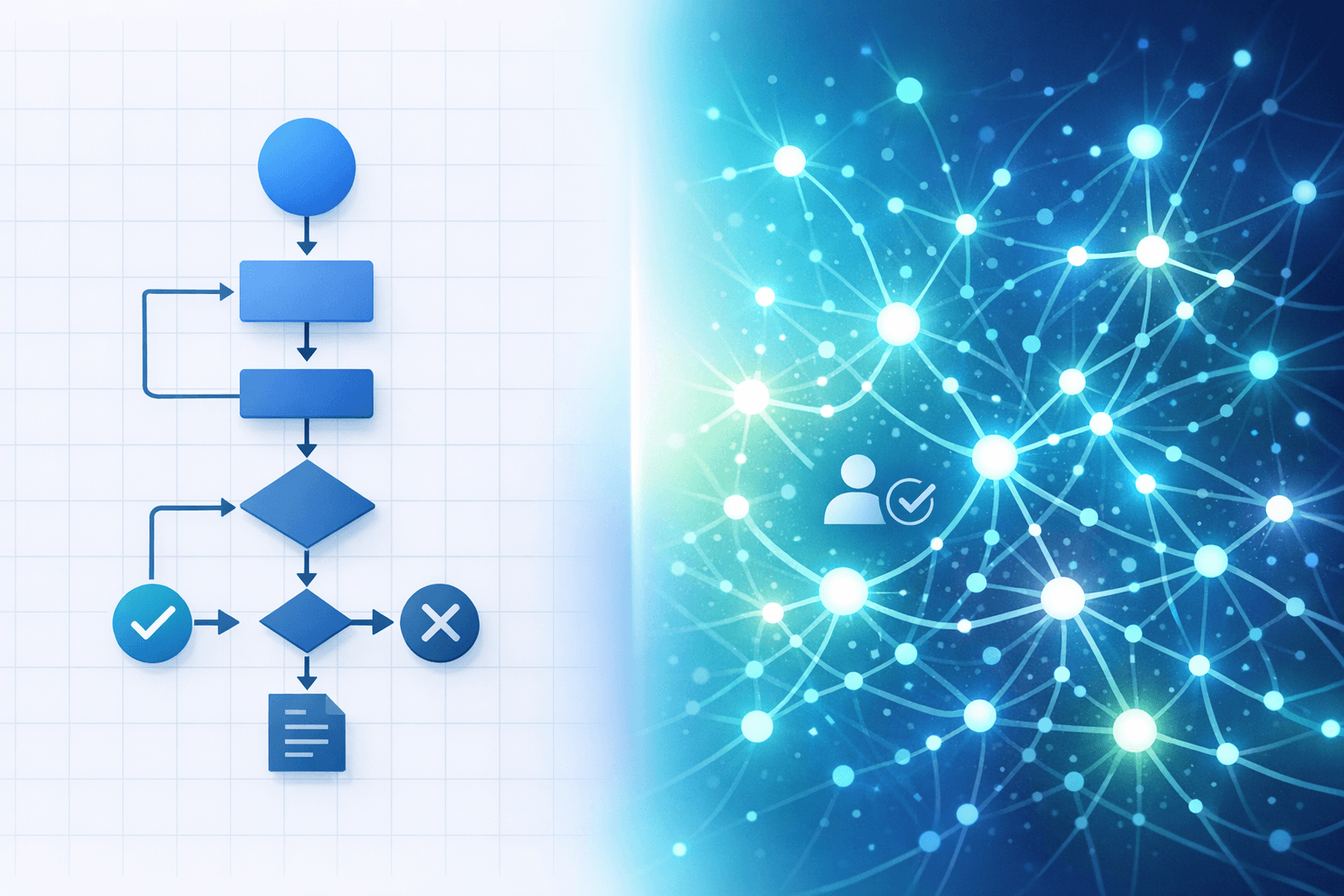
2 Types of AI Automation — Which One Should You Use?
Most people talk about “AI automation” like it’s one thing. It’s not. Under the hood there are two very different ways to automate with AI, and if you pick the wrong one you’ll either build something brittle that snaps the moment reality changes, or you’ll build something “smart” that occasionally does something dumb at the worst possible time.
The two types of AI automation
Type 1: Deterministic workflows (AI helps you build, then the workflow runs the same way)
This is the classic automation shape: you define steps, triggers, conditions, and outputs. AI can help you generate parts of the workflow faster, but once it’s deployed, it’s supposed to behave the same every run.
The upside is boring in the best way. You can predict what happens. You can debug it. You can explain it to someone else. When it breaks, it usually breaks “honestly”: a field changed name, an API returned a different schema, the website layout moved.
The downside is also boring. The real world changes. Someone tweaks a form. A teammate changes a naming convention. A tool updates its UI. Your deterministic workflow doesn’t adapt; it just fails.
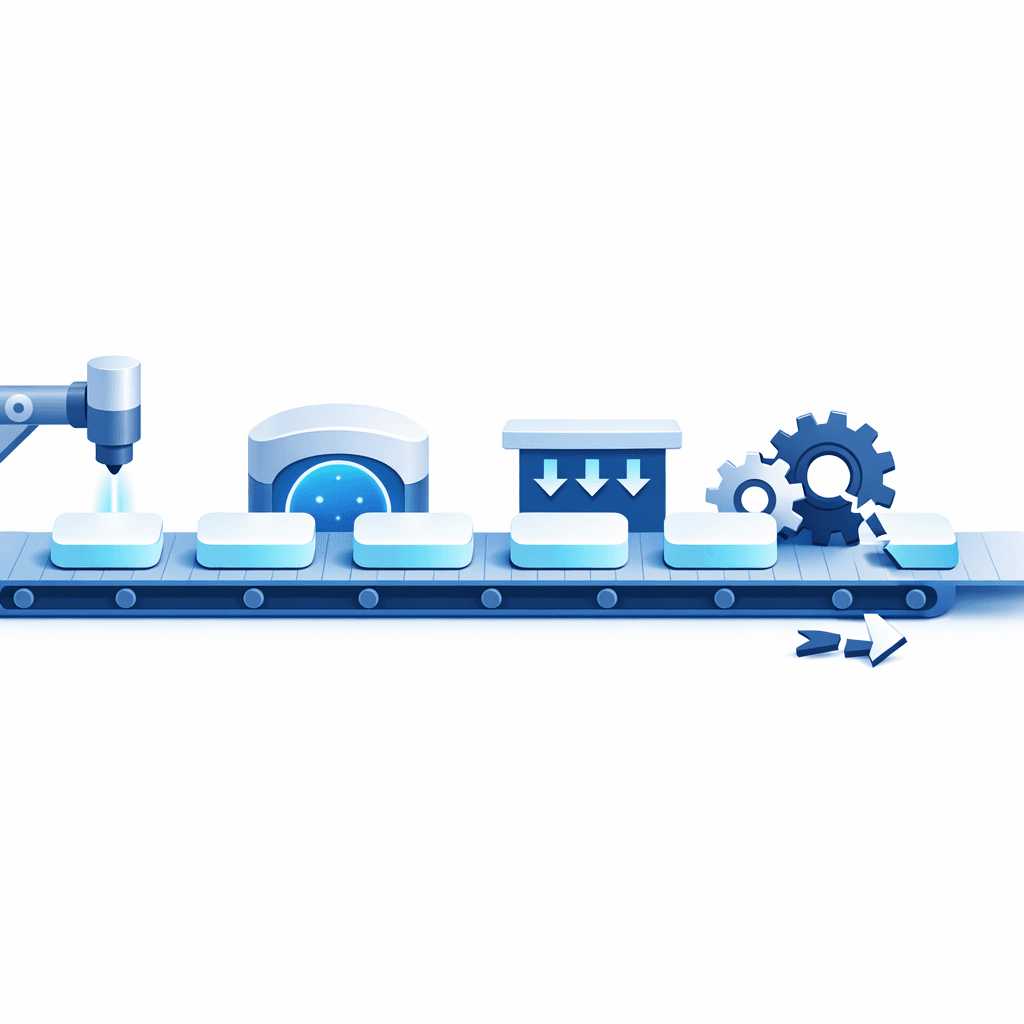
Type 2: Agentic runs (AI thinks every time)
Agentic automation is the opposite bet: instead of executing a fixed sequence, you let an AI agent plan and decide at runtime. The agent reads the context, picks tools, runs steps, and adapts if something is different.
This is why agents feel magical when they work. They’re not just following instructions. They’re pursuing a goal.
The tradeoff is that they can also fail in ways that are harder to anticipate. One recent security-focused overview put it bluntly: agentic systems can fail in “ways their creators never anticipated,” because they’re dynamically orchestrating actions rather than replaying a script.
The academic framing is similar: agentic AI is about systems that can autonomously pursue goals and coordinate multi-step actions, which is a different beast than a rules-based pipeline.

Which one should you use?
The simple heuristic is this: use deterministic workflows when you care about repeatability, and use agentic runs when you care about adaptability.
Choose deterministic workflows when…
You’re automating something that has a stable shape and a clear definition of “done.” Think: routing inbound leads, formatting notes into a template, syncing records between tools, generating a weekly report, enriching data from known sources.
If you can write down the steps as a checklist and you want the same checklist executed every time, deterministic wins.
Choose agentic runs when…
You’re automating something that changes constantly, requires interpretation, or involves messy inputs. Think: navigating websites that change, triaging long email threads, researching across unfamiliar sources, dealing with ambiguous customer requests, or handling exceptions that would explode a rules engine into 500 branches.
If you can describe the goal but you can’t confidently describe all the steps, agentic wins.
The real answer: use both, but put the risk where it belongs
Most good systems end up hybrid.
You let AI do what it’s good at: interpreting messy stuff, summarizing, proposing next steps, and handling edge cases. Then you lock in deterministic steps for everything that should be reliable: writing to your database, sending the email, updating the CRM, scheduling the meeting.
This hybrid design is also where “human in the loop” stops being a buzzword and becomes an actual product decision.
A recent enterprise survey reported that 89% of senior leaders believe agentic AI needs built-in human intervention. That matches what I see building automation products: the moment real money, real customers, or real reputation is on the line, you want explicit review points.
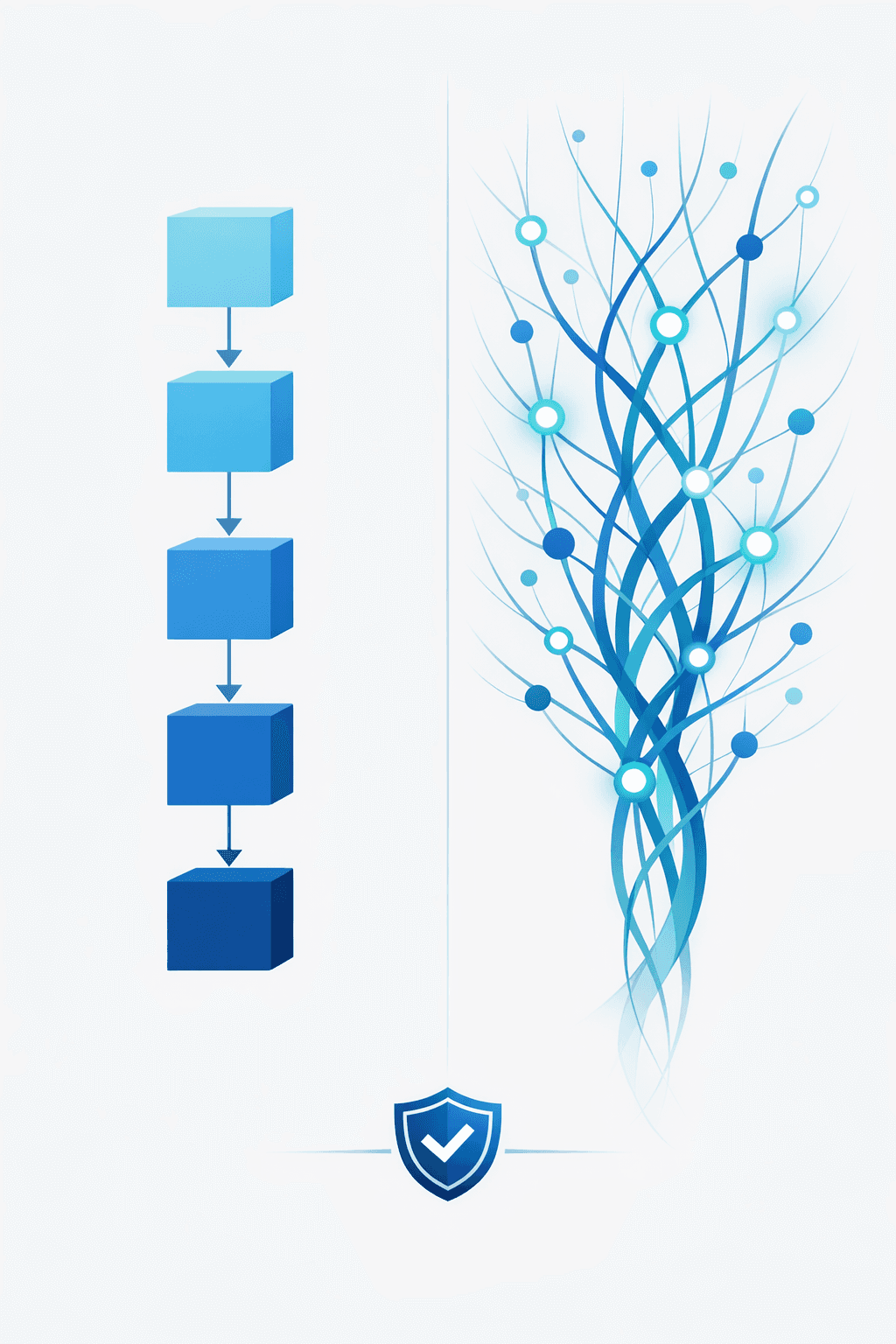
How to keep agentic automation from going off the rails
If you’re going to let AI make decisions every run, you need guardrails. The same guidance keeps coming up across security and reliability discussions:
Put humans at the checkpoints
Don’t ask a human to supervise everything. Ask them to approve the irreversible parts. For example: before sending an email, before issuing a refund, before changing permissions, before deleting data, before pushing code.
Limit what the agent can touch
Treat the agent like a junior teammate with strict permissions. Give it only the tools and data it needs for that one job. Security teams increasingly recommend strict access controls and full visibility into what the agent can access and do.
Log everything and evaluate continuously
With deterministic workflows you can reproduce runs easily. With agentic runs, you need to instrument: store tool calls, store intermediate reasoning or at least decision traces, track failure modes, and run evals. The emerging “AgentOps” idea is basically DevOps for agents: continuous monitoring, anomaly detection, and feedback loops for systems that are probabilistic by nature.
A quick way to decide in one sentence
If you need predictable execution, build a deterministic workflow.
If you need the system to adapt to a changing environment, use an agent.
If you need both, let the agent think, but make the workflow execute.

Flo is the founder of Mind the Flo, an Agentic Studio specialized into messaging and voice agents.