Content

Why Salespeople Hate CRMs & The Voice Message Solution That Actually Works
Salespeople don’t hate your CRM because they’re lazy. They hate it because it asks them to stop selling, context-switch into an admin tool, and then pretend they remember every detail of a conversation that just happened.
That’s the real reason your pipeline data is stale, your follow-ups are inconsistent, and your forecasting feels like guesswork. The problem isn’t “discipline”. The problem is the interface.
The CRM is the wrong place to do CRM work
Most CRMs were designed as databases first and workflows second. They’re great at storing information, but terrible at capturing it at the moment it’s created.
A rep walks out of a meeting with fresh context: what the prospect cares about, what objections came up, what the buying process looks like, who else is involved, what needs to happen next. And what do we ask them to do? Open HubSpot or Salesforce, find the record, click around, type notes, update fields, create tasks, and then write a follow-up email.
In that moment, the CRM feels like homework. And homework always gets postponed.
Voice is the interface people actually use
Here’s the shift that changed everything for a few of our clients: the CRM stops being the place where you do the work. It becomes the place where the work ends up.
Instead of pushing your team into the CRM UI, you pull the CRM into the channels they already live in. WhatsApp. Telegram. iMessage. Slack. Email.
And the most natural input method in those channels is voice.
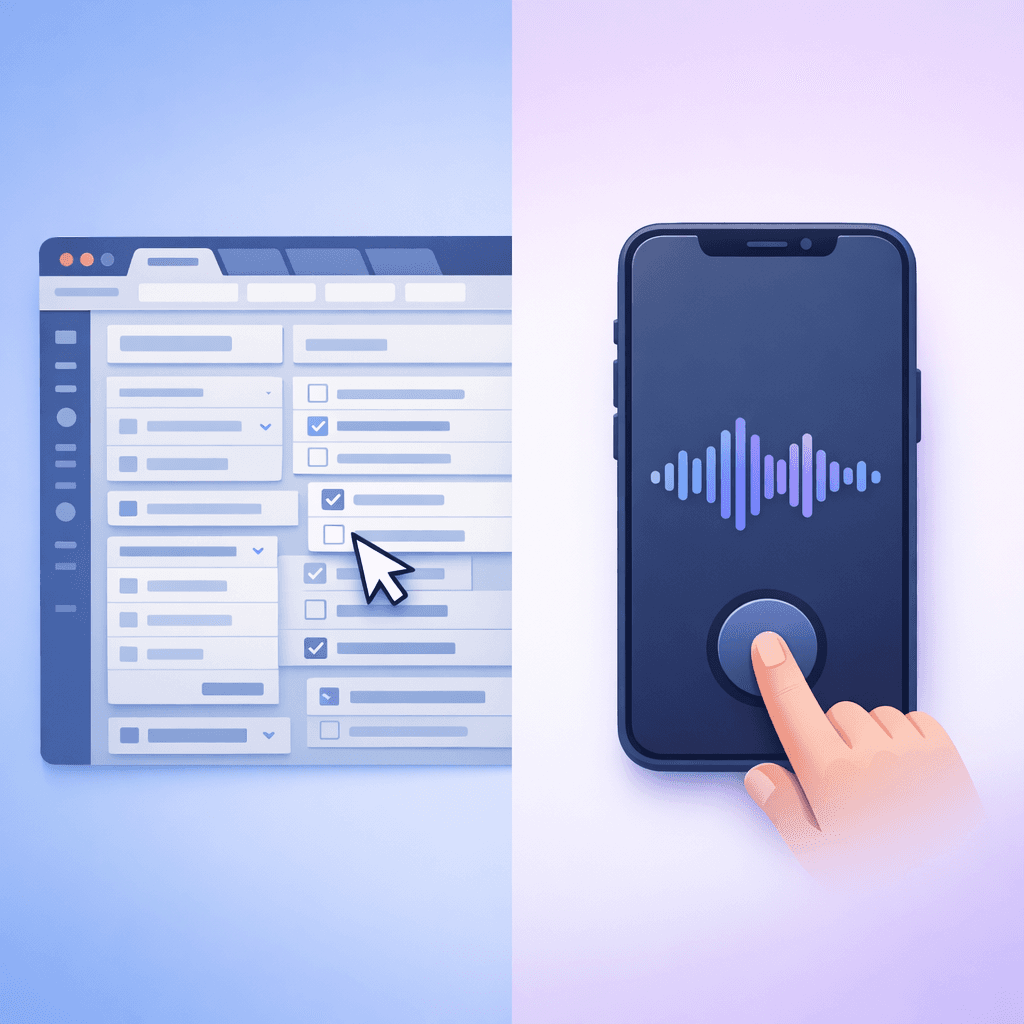
A voice message is fast, high-bandwidth, and doesn’t force a rep to “structure” their thoughts. They can simply dump what happened while it’s still fresh. That’s the gold.
What it looks like with Notis
The workflow is almost stupidly simple.
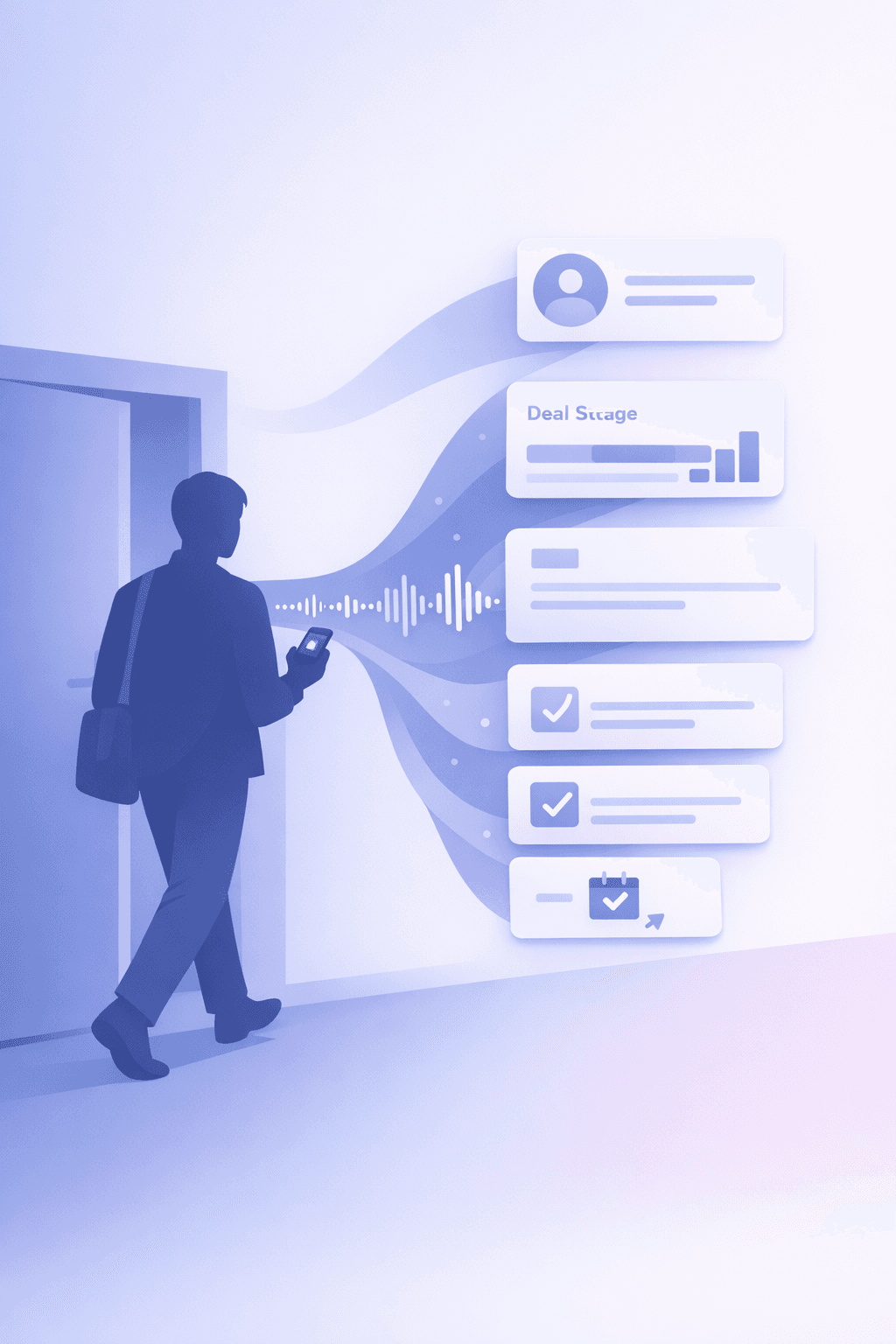
You walk out of a meeting, open the app you’re already using, and record a voice message. You say what happened, then you tell Notis what to do with it.
Notis takes that voice note and turns it into structured CRM updates. It can update the deal stage, add a meeting note, log the key objections, update next steps, and attach the summary to the right contact or company.
Then it goes one step further: it can create follow-up tasks from what you said, and it can draft the email you were going to write anyway.
At no point do you need to open HubSpot, Pipedrive, or Salesforce.

The CRM gets updated automatically, in the background, as a byproduct of doing real sales work.
Why this actually changes adoption
When you remove the clicks, you remove the resistance.
Reps don’t need to “remember to update the CRM later” because the update happens at the only moment it ever should: right after the interaction, when the context is still alive.
Managers stop chasing notes. Ops stops cleaning messy data. Founders stop getting surprised by deals that were “totally going to close” until they weren’t.
And the CRM finally becomes what it was supposed to be: a reliable system of record.
How to roll this out without it turning into chaos
The trick isn’t forcing a new process. It’s making the existing process effortless.
Start by defining the few CRM updates that actually matter for your business. The goal is not to capture everything. The goal is to capture the right things consistently.
Then make the voice workflow the default right after calls and meetings. Not as an extra step, but as the last step of the conversation: talk to the prospect, then talk to Notis.
Once that’s in place, you can layer in automation safely: consistent follow-up tasks, email drafts that match your tone, and notes that are structured the same way across the whole team.
The bigger idea: software should meet people where they already are
Most “productivity” tools fail because they demand a behavior change first.
I’m building Notis around the opposite assumption: people already have workflows that feel natural. Voice messages. Chat apps. Quick notes between meetings. The job of software is to translate that into structured execution.
If your CRM adoption is broken, don’t blame your team. Fix the interface.

Flo is the founder of Mind the Flo, an Agentic Studio specialized into messaging and voice agents.