Content
Why OpenAI Putting Codex Inside Claude Code Is a Distribution Masterstroke
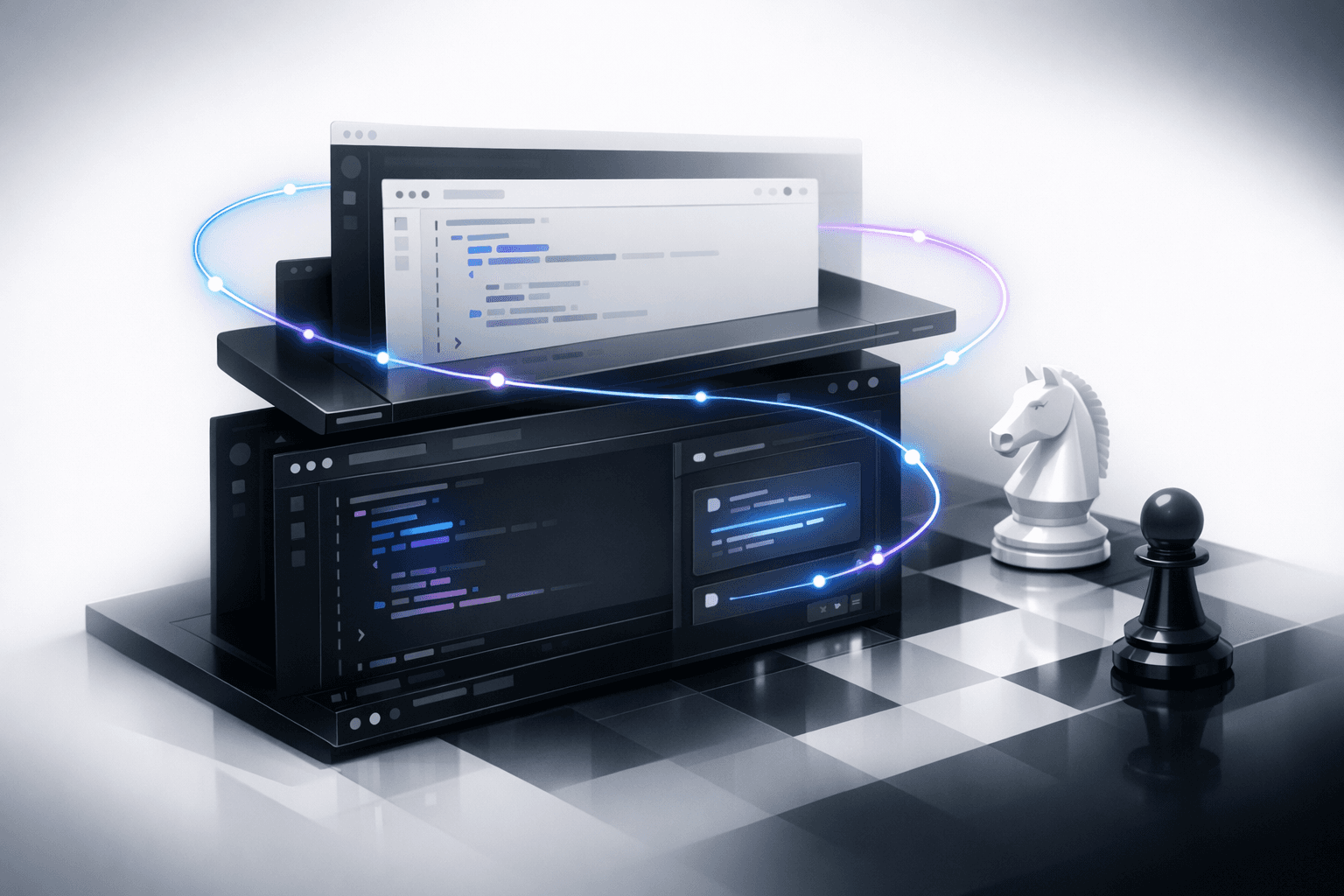
OpenAI putting Codex inside Claude Code is one of those moves that looks small if you only watch the product surface and huge if you understand distribution.
Most people will read the story as a model story. Better code generation. Better developer tooling. More competition in agentic coding. All true, but also incomplete. The more interesting layer is strategic. OpenAI is not just trying to build a better product. It is trying to get inside the place where developers already work.
If that framing is right, then this is not really about code assistance. It is about workflow capture. It is about showing up at the point of use. And in software, especially in AI software, the company that gets closest to the workflow usually gets the right to shape everything that comes after.
Distribution is the real product moat
Founders love to talk about product moats because product is tangible. You can demo it. You can benchmark it. You can compare latency, output quality, model context windows, agent reliability, and all the rest. Distribution is less sexy because it often looks invisible until it compounds.
But invisible things are often the ones that matter most.
A great product with weak distribution remains a nice idea. A strong product embedded in an existing workflow becomes a habit. And once something becomes a habit, it stops competing feature by feature and starts competing as infrastructure.
That is what makes this kind of move so smart. Instead of demanding that developers abandon the environment they already trust, OpenAI can benefit from the existing behavior loop. The user stays where they are. The usage still shifts.
This is one of the oldest truths in software. Winning is rarely about convincing people to restart from zero. It is about intercepting the current path and making the next step feel obvious.
Developers do not switch workflows lightly
Developers are not consumers casually trying a new photo app on a Sunday morning. Their workflow is part of how they think.
Their tools are not just utilities. They are cognitive infrastructure. The editor, terminal, extensions, prompts, shortcuts, memory, version control habits, and team conventions all stack together into something much bigger than a single product. When a developer changes tools, they are not just changing software. They are changing rhythm.
That is why pure superiority is often not enough.
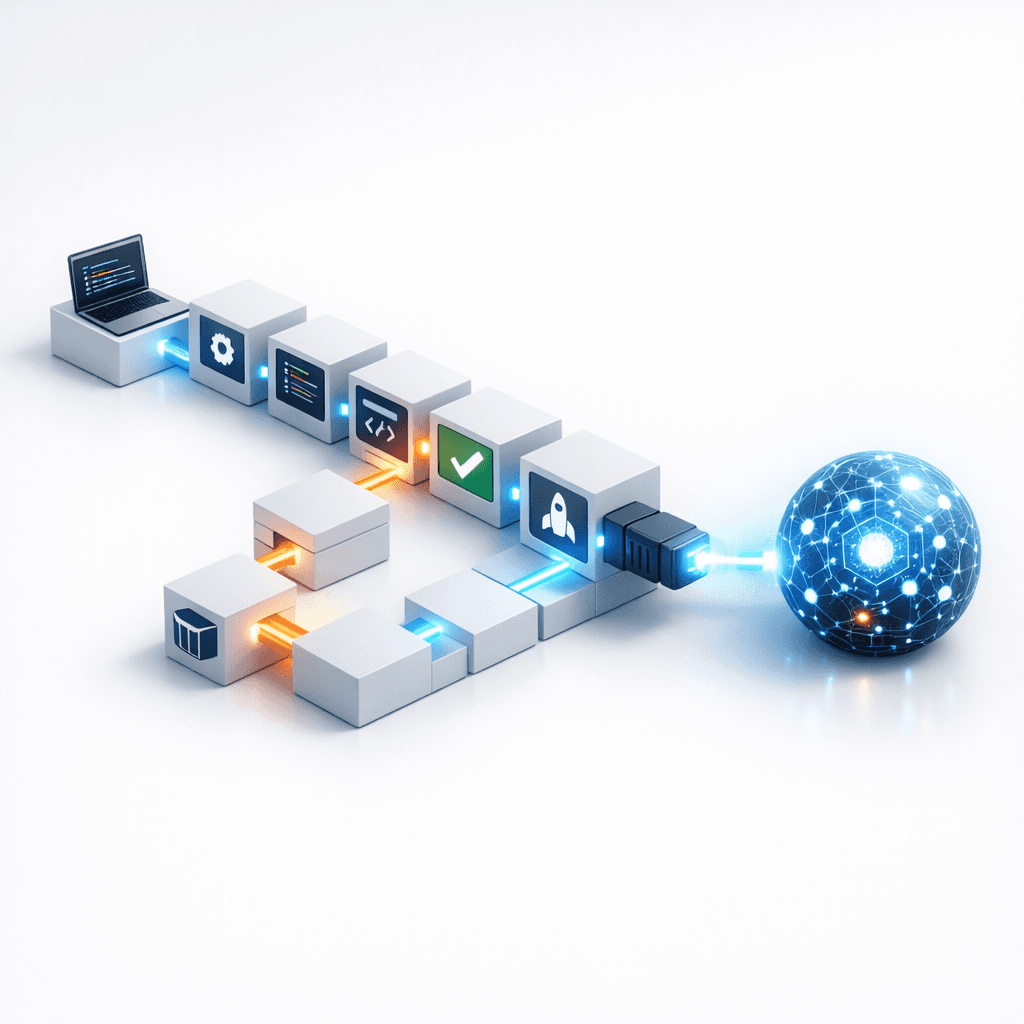
A better model does not automatically win if using it requires leaving the flow. A better agent does not automatically win if adopting it means friction, reconfiguration, or losing accumulated habits. In theory, developers are rational and will switch to the best tool. In practice, they switch when the best tool also respects the shape of their existing work.
This is why distribution in AI increasingly looks like proximity to workflow. The closer you are to the action, the cheaper it is for the user to say yes.
Embedding inside the interface changes the game
For years, software strategy was often explained through platform ownership. Own the operating system. Own the app store. Own the browser. Own the marketplace. Own the audience.
AI is adding a more fluid version of that idea.
Now the stack is splitting into layers. One company may own the interface. Another may own the model. Another may own the memory. Another may own orchestration. Another may own the action layer. And the winner is not always the one users see first. Sometimes the winner is the one that inserts itself into the decision loop without forcing a full migration.
That is why competing inside another company’s interface can be a masterstroke. It turns the interface from fortress into distribution channel. It lets you borrow trust, habit, and attention that someone else spent years building.
This does not mean interface ownership stops mattering. It means interface ownership is no longer enough on its own.
If the best models and best agent systems can increasingly travel across surfaces, then the market becomes less about who owns the shell and more about who captures the moment of value creation. In developer tools, that moment is not when someone reads a landing page. It is when they are in the middle of work and need the next useful action.
Mindshare follows usage more than branding
A lot of founders still overestimate announcements and underestimate embedded usage.
They think market leadership is created by narrative. In reality, narrative often follows behavior. The product people use in the flow becomes the product they talk about, recommend, defend, and justify. Mindshare is not just a media outcome. It is a usage outcome.
Once a tool sits inside the daily workflow, it earns tiny repeated exposures that compound into identity. It stops being evaluated like an outsider and starts being experienced like part of the environment.
That is the hidden power of distribution through placement. You do not need to convince users in a dramatic moment. You can win them gradually, in the middle of the job, one successful interaction at a time.
This is especially important in AI because so much value is probabilistic. Users do not only buy the promise. They calibrate trust through repeated contact. If your model is present where work already happens, you get more opportunities to become the default mental reference.
And once you become the default reference, even your failures are interpreted more generously than a challenger's successes.

The AI stack is getting unbundled
One of the big shifts happening right now is that the AI product stack is no longer vertically fixed.
The old assumption was simple. One company builds the model, wraps it in an interface, owns the relationship, and captures the value. But the more mature this market becomes, the more that assumption breaks.
Models can be swapped. Interfaces can call different providers. Agent layers can sit on top. Memory systems can live outside the core model provider. Actions can be routed through separate tools. This means the most important strategic question is no longer only, “Can we build the best AI?”
It is also, “Where do we sit in the workflow, and how expensive is it for the user to remove us?”
That is a much more ruthless question, and also a much more useful one.
Because if your company is easy to remove, then your quality advantage may not matter for long. If your company becomes part of the workflow fabric, then even a temporary quality gap can be survivable.
In other words, product excellence still matters. But the market is increasingly rewarding strategic placement just as much as raw capability.
What founders should learn from this
The most useful lesson here has nothing to do with coding agents specifically.
It is that founders should stop assuming users want a new destination. Most users want a better current path.
This changes how you build. It changes how you position. And it definitely changes how you distribute.
If you can plug into an existing workflow instead of demanding a new one, you reduce adoption cost. If you can live inside a tool people already open every day, you inherit frequency. If you can shorten the distance between need and value, you increase conversion without shouting louder.
The best startup wedge is often not “we are better.” It is “we fit where you already are.”
That sounds less romantic than disruption mythology, but it is usually more real.
This is also why founders should pay much more attention to interfaces they do not own. Too many teams think distribution means paid acquisition, content, SEO, partnerships, or virality. Those things matter, but workflow distribution is often stronger because it compounds at the product layer.
When your product becomes part of someone else’s routine, you are no longer fighting only for awareness. You are fighting for default status.
And default status is where markets quietly get decided.
Why this matters far beyond developer tools
It would be a mistake to read this as a niche story about engineers.
The same logic is spreading everywhere. Writing assistants embedded in docs. Meeting agents embedded in calendars and calls. Research agents embedded in browsers. AI operations embedded inside CRMs, inboxes, project tools, and internal dashboards.
The war is moving from standalone applications toward contextual insertion.

That should feel familiar to anyone building in AI productivity. The future will not belong only to the companies with the most impressive demo. It will belong to the companies that reduce the number of steps between intention and execution.
That is ultimately why distribution is becoming the real battlefield. In AI, every model will improve. Every benchmark will move. Every flashy feature will be copied. But where you live in the workflow determines whether you are sampled occasionally or trusted daily.
And daily trust is where the durable businesses get built.
The bigger strategic takeaway
If OpenAI is willing to compete inside another company’s interface, the signal is clear. The next phase of AI competition will not be won only by building the destination. It will be won by controlling the route.
That is a much more important lesson than any single feature announcement.
For founders, the takeaway is brutally practical. Do not just ask how to make your product better. Ask how to make it harder to avoid. Do not just ask how to acquire users. Ask how to sit where usage already happens. Do not just ask how to win attention. Ask how to become part of the work itself.
Because once you become part of the work, distribution stops being a campaign.
It becomes gravity.

Flo is the founder of Mind the Flo, an Agentic Studio specialized into messaging and voice agents.