Content

Why “AI Intern” Is the Best Metaphor for Agents (and Why the Next UI Is Generated, Not Clicked)
Every founder I know has the same guilty pleasure: buying yet another productivity tool and hoping this time it will finally “run the business for me.” And every founder I know has the same hangover: a mess of tabs, half‑filled databases, and a constant feeling of being busy without moving.
The problem isn’t that we don’t have enough software. The problem is that the software keeps asking us to switch context. Click here, configure that, choose a template, pick a view, update the CRM, log the bug, move the card, rewrite the same thing in three places. For brains that are already running hot—especially ADHD founder brains—those little switches are death by a thousand cuts.
That’s why I’ve started using a metaphor that’s both honest and surprisingly calming: your AI isn’t a magic autopilot. It’s an intern. And when you treat it like one, the whole “agents” conversation gets practical very quickly.
The onboarding mistake: expecting autopilot
Most people’s first interaction with an “agent” is basically a test: “Do my taxes,” “Fix my pipeline,” “Clean my inbox,” “Plan my quarter.” When the result is messy (or wrong), they conclude agents are overhyped.
But that’s the wrong mental model. We don’t hire a new intern and say “run finance,” then disappear for a week. We brief them. We give context. We define what good looks like. We review their work. We iterate.
When you expect autopilot, you’re measuring agents against a standard they can’t meet yet. When you expect an intern, you’re measuring them against something real: leverage that increases with every good brief and every correction.
Why “AI intern” is the best metaphor
An intern is weirdly powerful because they do two things at once: they execute, and they learn your way of working. The learning part is the compounding advantage. The execution part is the immediate relief.
That’s exactly how I think about Notis. If you don’t ask, it waits. If you ask vaguely, you’ll get vague output. If you brief it well, you’ll get work that feels like someone finally took a piece of the mental load off your shoulders.
Here’s the twist: the intern metaphor also forces you to respect the limits. You don’t outsource judgment. You outsource the busywork that steals your judgment.
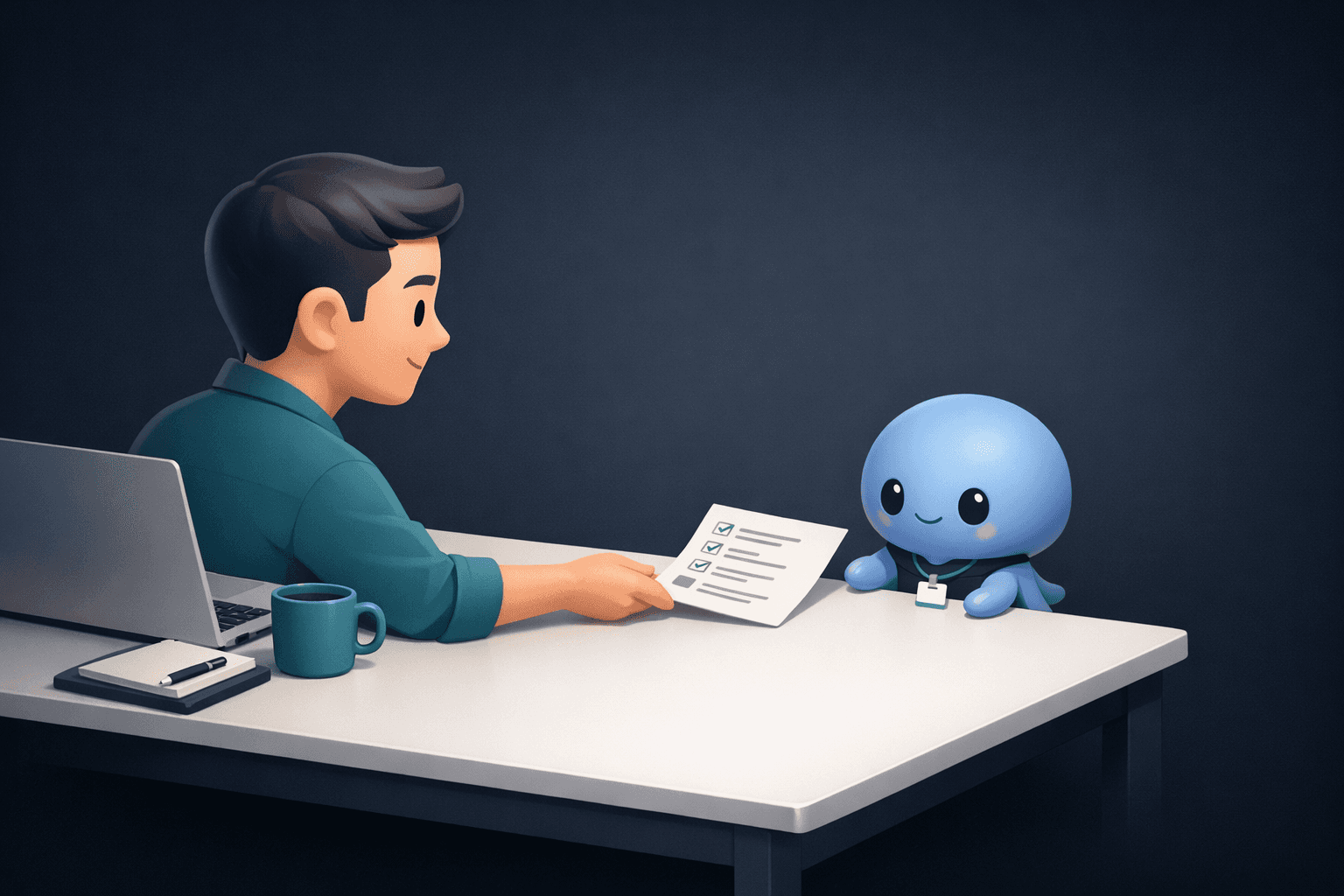
Low‑friction capture is not a feature. It’s the product.
If you want an intern to help you, you need a way to talk to them without scheduling a meeting every time. That’s what text‑first and voice‑first capture really is: a constant open channel to delegate without breaking flow.
Founders don’t fail at planning. They fail at capture. Not because they’re lazy—because capture has historically required ceremony. Open the right app. Put the idea in the right place. Choose the right structure. Decide whether it’s a task or a note. Now you’re five clicks deep and the original thought is gone.
So the bar has to be absurdly low. A voice dump while you’re walking. A message in a chat thread while you’re in the middle of shipping. A quick “remind me later” without leaving the page you’re working on.
The moment capture becomes frictionless, something psychological happens: you stop hoarding tasks in your head. You stop trying to be your own RAM. And that alone reduces anxiety more than any fancy dashboard ever will.
The real onboarding: delegate one dreaded thing first
If you want someone to believe in agentic work, don’t start with the most important workflow. Start with the most hated one.
Pick the app you avoid. The task you postpone. The thing that’s small but emotionally expensive. Updating a CRM after calls. Turning a messy bug report into something engineers can actually use. Writing the follow‑up email that you already know you should send but keep pushing to tomorrow.
That first delegation is where trust is built, because it creates a new sensation: you did not context switch, but the work still happened.

Once you feel that once, you stop thinking of AI as “a smarter search bar.” You start thinking of it as a teammate that can carry process weight.
This is also why the intern metaphor works so well. You don’t start an intern on strategy. You start them on a repeatable, slightly annoying process. Then you expand scope as reliability goes up.
From “AI on top of Notion” to “Notion without the buttons”
The first wave of AI productivity tools bolted a chatbot onto existing software. That was useful, but it kept the core problem intact: the UI still expects you to be a part‑time database administrator.
My bet is that the next wave flips it. You describe what you want, and the system generates the structure and the interface for you. Not a static template—an interface shaped around your workflow, your vocabulary, and your level of detail.
Imagine saying: “I need a lightweight cashflow and ad‑spend simulator for the next eight weeks. Pull actuals from my ad accounts, let me tweak assumptions, and show me runway.” You shouldn’t need to go hunt for the right Notion template. You should get an app—generated on the fly—that you can interact with immediately.
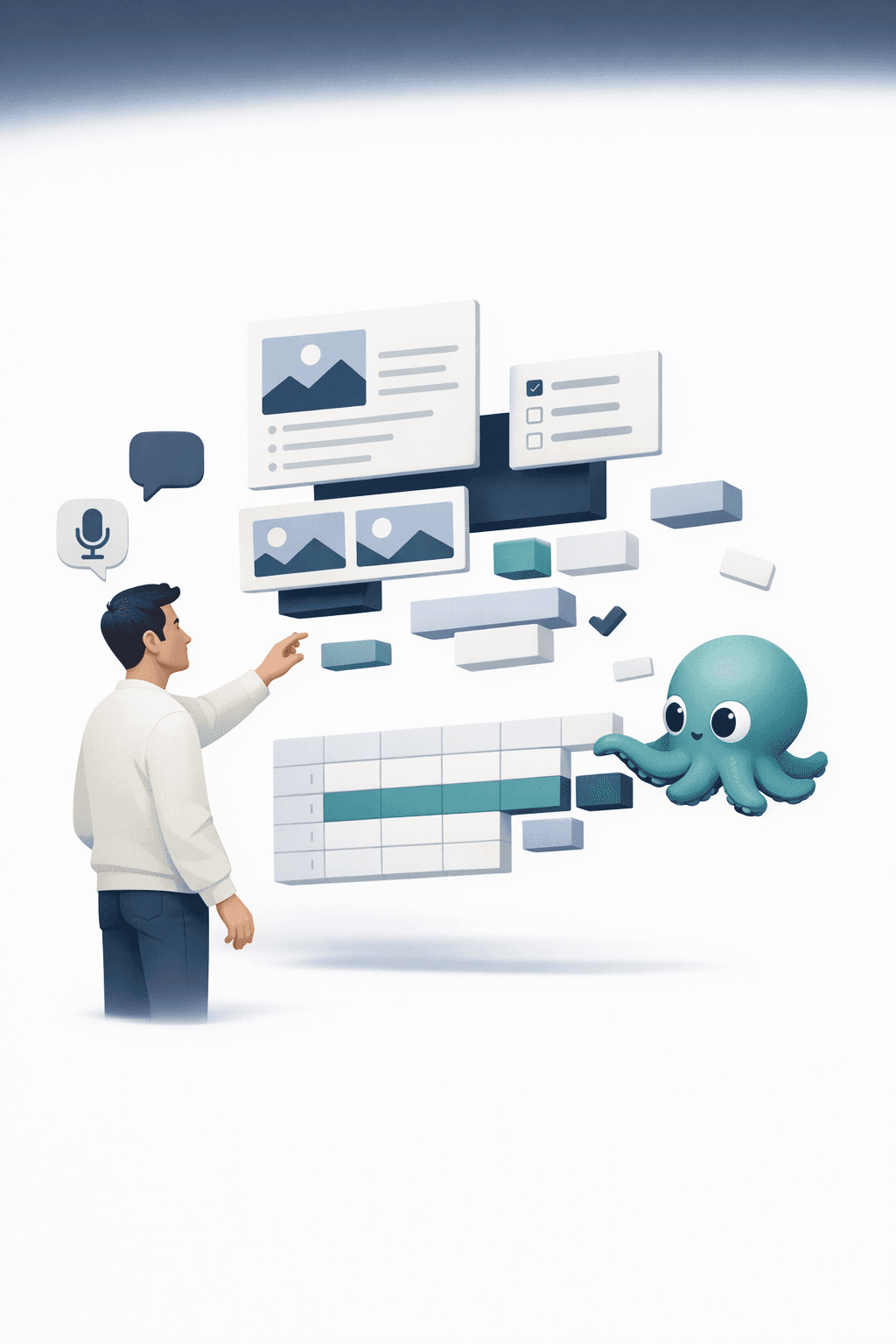
This is what I mean by “Notion without the buttons.” Notion proved something important: people want flexible tools. But flexibility came with a hidden tax: configuration. Generated UI is how we keep the flexibility and delete the tax.
The customization stack that actually matters
When people ask “how do you customize an agent,” they usually mean “how do I change the personality.” That’s the least interesting layer.
The real stack is operational. Long‑term memory that remembers your world and your preferences. Skills that encode how you like things done (the playbooks you’d hand to a new hire). Automations that define when to run those skills so you’re not constantly prompting. And on top of that, yes, a lightweight master prompt so the system speaks like you, not like a generic support bot.
This stack is what turns one‑off AI outputs into a system you can actually rely on. It’s the difference between “help me with this” and “this is how we work here.”
Proactivity: the honest version
Everyone wants a proactive agent. The reality is: most “proactivity” today is automation, and that’s fine. Automations are the bridge between where we are and where we want to go.
True proactivity would mean the system observes your behavior, understands your intent, and intervenes at the right moment without being annoying. That’s a product problem as much as it is a model problem. The fastest way to ruin trust is to be “helpful” at the wrong time.
So my philosophy is simple: earn the right to be proactive. Start with explicit triggers. Let users decide what should happen automatically. Then gradually introduce suggestions that feel like a quiet, competent teammate—not a pushy assistant begging for attention.
Where this is going
If you take nothing else from this, take this: treat your agent like an intern and your workflow like a system. Brief it. Start with one dreaded task. Keep capture frictionless. Let structure and UI be generated as a consequence of intent, not as a prerequisite for action.
That’s the shift I’m building Notis for. Not “more productivity.” Less switching. Less ceremony. More leverage.

Flo is the founder of Mind the Flo, an Agentic Studio specialized into messaging and voice agents.