Content
We’re Living in Don’t Look Up—Except the Comet Is AI Infrastructure
If you want the shortest possible version of what’s happening right now, it’s this: we are building the most power-hungry infrastructure in modern computing just as the climate conversation has fallen out of fashion.
That doesn’t mean humanity is doomed tomorrow. It means there is now a non-zero risk curve that keeps bending in the wrong direction while most people still talk about AI as if it were just a software product with a slick interface. It isn’t. AI is also concrete, turbines, cooling systems, land use, transmission constraints, and very old energy trade-offs wearing a futuristic hoodie.
The part everyone wants to skip
What unsettles me is not only the technology itself. It’s the social response to it. The vibe is pure Don’t Look Up: not because a comet is definitely about to hit us, but because an uncomfortable possibility is sitting in plain sight and the dominant reaction is still distraction, denial, or blind optimism.
We have somehow entered a moment where people are simultaneously saying AI will reinvent the economy while barely acknowledging the physical systems required to run it. The cloud is still somebody else’s factory. We just renamed the smokestack.
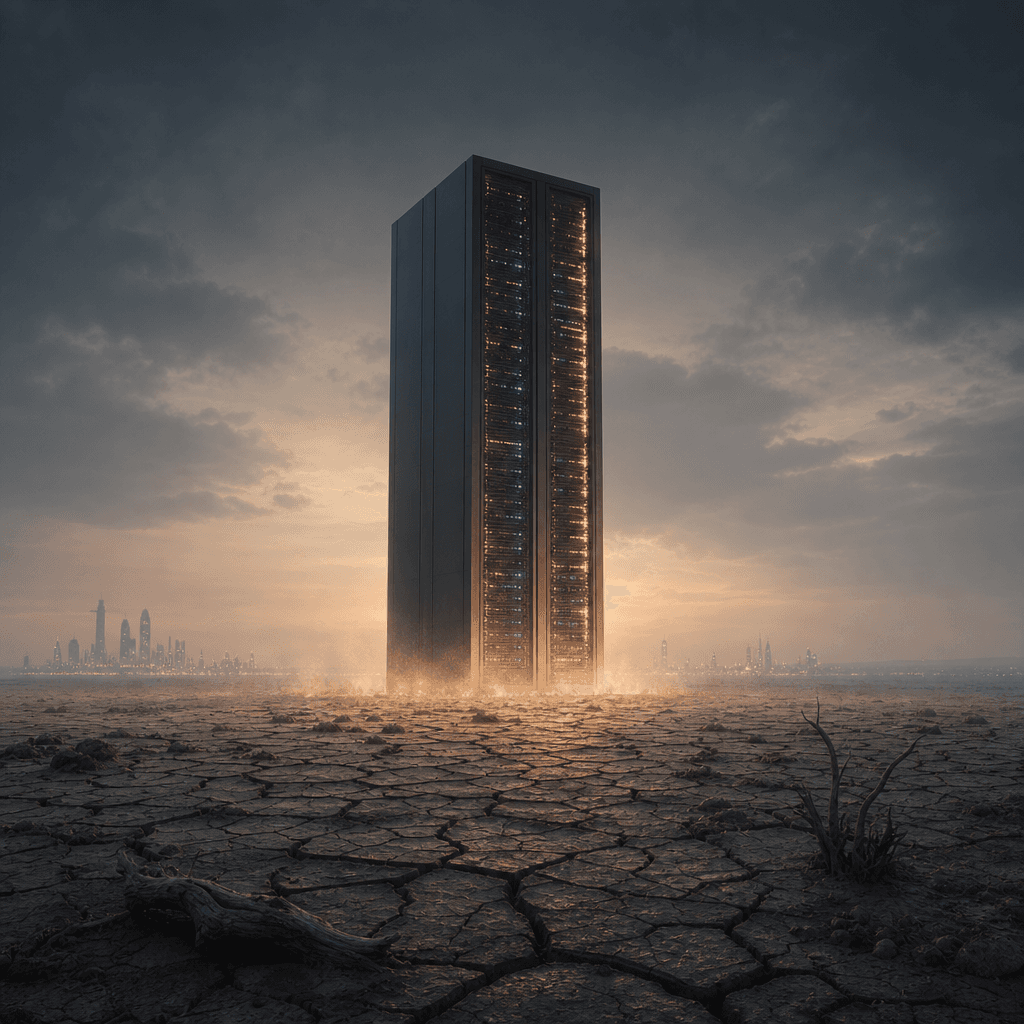
AI doesn’t float above the real world
One of the dumbest habits in tech is talking about software as if it exists outside material reality. Every breakthrough model is backed by data centers that need astonishing amounts of electricity, cooling, networking gear, backup systems, land, and water or heat-rejection infrastructure.
The International Energy Agency recently estimated that data centers used roughly 415 terawatt-hours of electricity in 2024, around 1.5% of global electricity demand, with AI set to push that much higher. That number matters less as trivia than as a reminder: every new leap in capability has a physical footprint.
And because grid capacity doesn’t magically appear on command, the short-term answer in many places is not some utopian clean-energy ramp. It’s often a messy mix of whatever can be deployed fast enough, including natural gas. In plain English: the AI race is colliding with energy constraints, and fossil infrastructure is one of the fastest ways operators think they can bridge the gap.
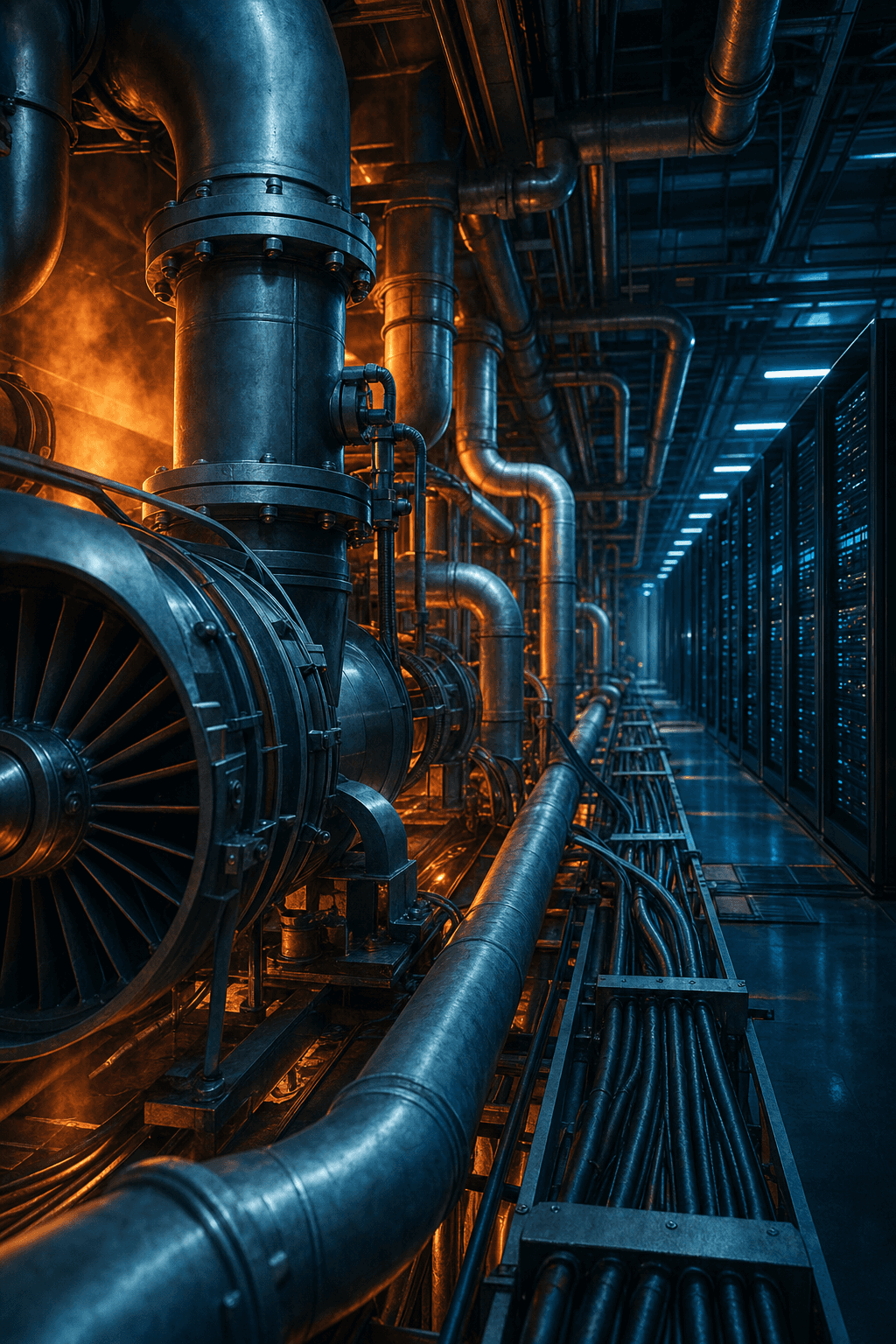
Natural gas is not a rounding error here
There’s a very convenient story people like to tell: yes, AI uses energy, but eventually clean power will catch up, so don’t worry about the middle. Maybe. I hope so. But the middle is where we live.
Right now, new data-center demand is already forcing hard decisions about how to supply power reliably. In some cases that means leaning on gas-fired generation directly or indirectly through the grid. The International Energy Agency itself has noted that natural gas is expected to be one of the major sources meeting near-term data-center electricity growth alongside renewables.
That should make everyone at least mildly uncomfortable. We spent years talking about decarbonization, and now some of the most celebrated infrastructure of the future is being justified with the same old fuel logic of the past: we need it fast, we need it stable, and we’ll clean it up later.
The missing conversation about heat
There’s another layer people barely talk about: heat. Data centers don’t just consume electricity. They turn a remarkable amount of that energy into heat that has to go somewhere. That means large cooling systems, thermal rejection, water stress in some regions, and very real local infrastructure consequences.
Now, I want to be careful here. Claims that an entire region will warm by five or six degrees because of a single data center should be treated carefully. That’s the kind of line that can be emotionally true in spirit while still needing much tighter scientific framing. But the broader point absolutely stands: these facilities can create serious local stress, especially when concentrated in already constrained environments.
The hidden issue is not just one building running hot. It’s the cumulative effect of many facilities, clustered demand, upgraded substations, backup generation, industrial cooling, and communities discovering that the future has a noise profile, a water profile, a land profile, and an emissions profile.
We are making a civilizational bet while pretending it’s just product velocity
This is the part that really gets me. We are not only accelerating AI capabilities. We are accelerating dependence on a stack we do not fully understand, cannot fully align, and are now incentivized to scale as fast as markets will tolerate.
That would already be a bold bet. But we’re making it while normalizing the idea that any caution is somehow anti-progress. It’s not anti-progress to ask whether the infrastructure race is being built on assumptions that collapse the moment energy, water, politics, or climate constraints start biting harder.
It is entirely possible that AI delivers extraordinary gains in science, medicine, productivity, and education. I’m not arguing otherwise. I work in AI. I’m one of the people building with it every day. But that’s exactly why the delusion is so dangerous. Proximity to the upside does not cancel the downside.
If your definition of intelligence ignores second-order effects, it’s not intelligence. It’s acceleration.
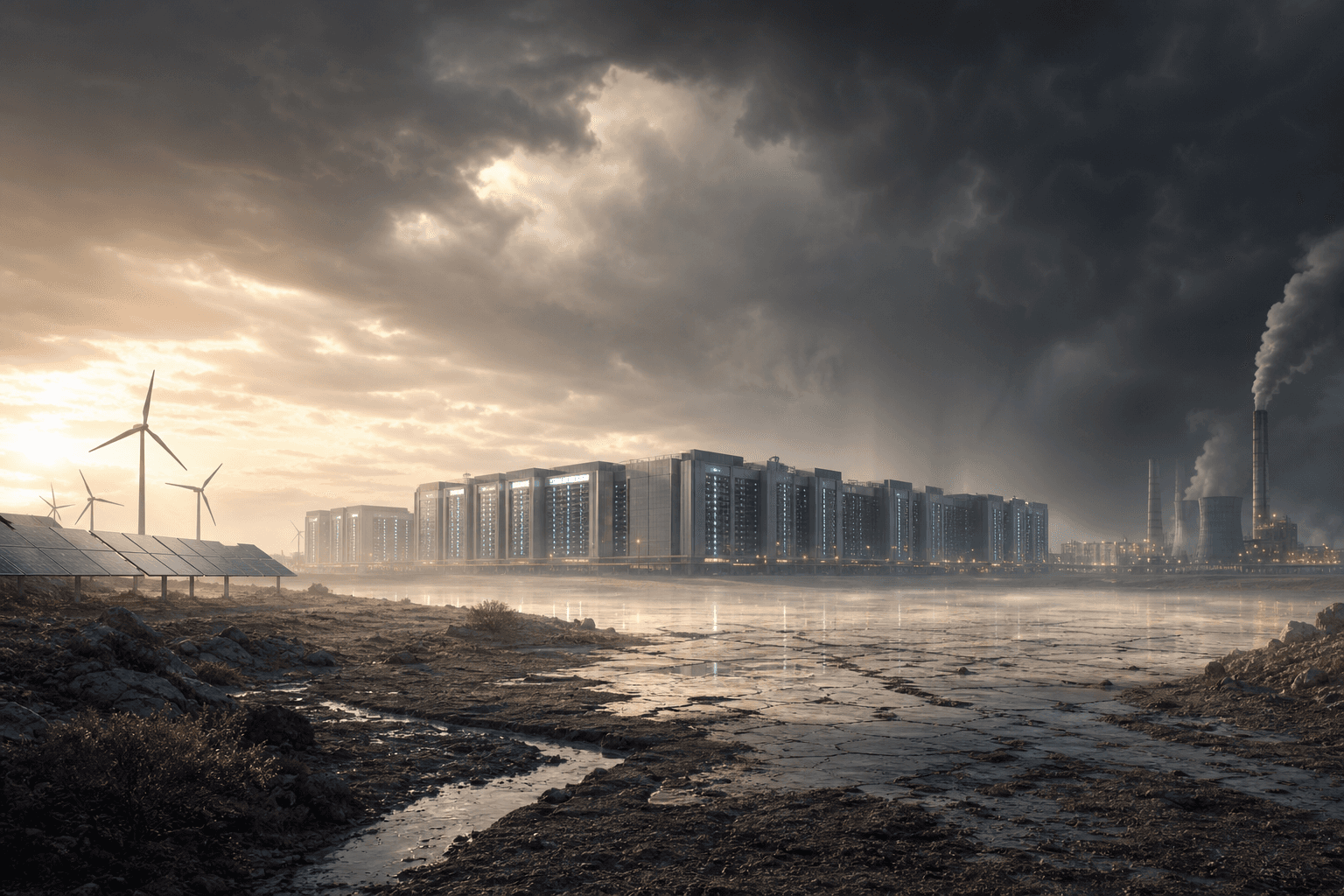
The real problem is psychological
The strangest part is how small the circle of concern still feels. You can hear serious people in the field openly describe how little attention these structural risks receive compared with the magnitude of the change underway. And still, the broader public conversation keeps snapping back to demos, valuations, and consumer features.
That’s why the Don’t Look Up metaphor works. Not because it predicts a guaranteed ending, but because it captures a very human pattern: we are astonishingly good at metabolizing existential signals into entertainment, tribal argument, or background noise.
Global warming didn’t disappear. We just buried it under a newer obsession.
What honesty would look like
Honesty would mean admitting several things at once. AI can be transformative. AI infrastructure has real environmental and social costs. The near-term energy bridge may be dirtier than the marketing implies. And the fact that something might save us in one domain does not mean it gets a moral free pass everywhere else.
If we want AI to be a genuine civilizational upgrade, we need to stop speaking about it as if the only variables that matter are model benchmarks and product adoption. The energy system matters. The climate matters. The local consequences matter. The trade-offs matter.
Otherwise we’re not building the future consciously. We’re sleepwalking into it.
My actual point
So no, my point is not that extinction is guaranteed. My point is that there is now a non-null possibility of outcomes we are nowhere near mature enough to handle, and almost nobody behaves like that should influence the speed, seriousness, or honesty of the conversation.
That should bother us much more than it does.
Because once an entire economy starts depending on infrastructure this hungry, this strategic, and this politically protected, looking up gets harder. And by then, the bill is already in the mail.

Flo is the founder of Mind the Flo, an Agentic Studio specialized into messaging and voice agents.