Content

Turn Your 10-Person Team Into 20 With AI Agents
If you’re leading a small team, you know the math doesn’t math.
A 10-person team isn’t competing with other 10-person teams. You’re competing with companies that have entire departments for things you’re doing “when you have time”: ops, content, recruiting, customer success, internal tooling, you name it.
The obvious answer is to hire.
The useful answer in 2026 is different: learn to use agentic AI so your team stops spending its best hours doing admin cosplay.
The real bottleneck isn’t effort. It’s throughput.
Most teams don’t have a motivation problem. They have a systems problem.
When your coordination happens across scattered docs, half-finished tasks, meeting notes nobody reads, and a dozen tools that don’t talk to each other, your team’s output gets capped. Not because people aren’t working, but because the work keeps resetting.
That’s the quiet killer in small teams: every week you burn energy reloading context instead of building momentum.
Agents don’t magically fix that.
But they can remove the worst parts of it—if you introduce them the right way.
Why most teams fail with agents: you handed them a blank page
Here’s what I see over and over.
A founder gets excited about “AI agents,” buys a tool, and tells the team: “Use it.”
And then… nothing.
Because the tool feels like a blank page.
People don’t just need new tools. They need the imagination to use them. And imagination is not a checkbox you can assign in Asana.
So adoption stalls. The tool becomes “that thing we tried.” And everyone goes back to the old way—more meetings, more pings, more context switching, more hiring requests.
If you want a 10-person team to feel like 15 or 20, you need a tool—and an approach—that removes the blank-page problem.
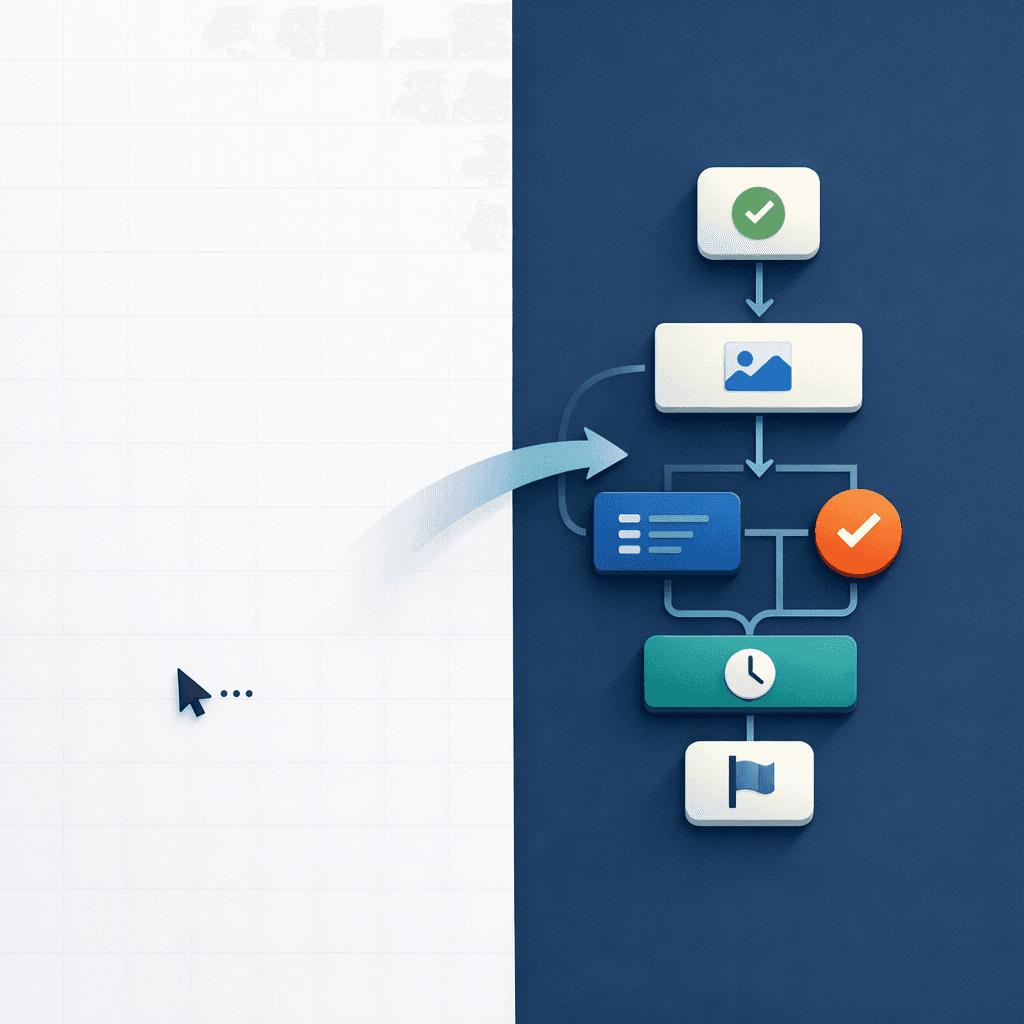
The 2026 playbook: a two-step adoption loop
This is the simplest rollout I’ve found that actually sticks.
Step one: give your team a tool that comes with well-defined use cases they can deploy tomorrow.
Step two: once people rely on those workflows, they naturally understand how agents work and start proposing their own.
That’s it.
Not because teams are lazy. Because real adoption doesn’t come from education. It comes from dependence.
When a workflow becomes part of someone’s week, they stop asking “Should I use this?” and start asking “What else can I offload?”
Step 1: ship ready-to-use workflows (not a blank canvas)
If you want your team to feel bigger, don’t start with an abstract concept like “agents.” Start with outcomes.
Pick a handful of workflows where the before-and-after is obvious. The goal isn’t to impress anyone with a demo. The goal is to remove recurring friction.
Think about the work your team does every week that nobody is proud of: turning meetings into follow-ups, turning decisions into tasks, turning messy thoughts into something shippable, turning a pile of requests into a prioritized plan.
Your first workflows should feel like relief. Not like homework.
And here’s the trick: don’t ask people to “learn agents.” Ask them to use one workflow that makes their Tuesday easier. Agents will sneak in through the side door.
Step 2: let reliance create imagination
Once the first workflows are in place, something predictable happens.
People stop thinking of AI as a chatbot and start thinking of it as a teammate.
They notice patterns. They notice handoffs. They notice the same questions coming up. They notice how often they’re re-explaining the same context.
That’s the moment the “imagination problem” disappears.
Because now they’re not inventing use cases from scratch. They’re extending something they already trust.
If you want to accelerate this, use a simple pairing model: one person sets up or configures the workflow, another person owns the outcome and gives feedback. Keep the loop tight. Agents get better when they’re inside a real operating cadence.
What “10 feels like 20” looks like in practice
The “extra headcount” doesn’t show up as one giant time savings. It shows up as fewer restarts.
When your notes automatically become follow-ups, when projects don’t lose decisions, when updates don’t require meetings, when drafts don’t begin with a blank page, your team gets a weird superpower: continuity.
And continuity compounds.
That’s how a 10-person team starts behaving like a 15- or 20-person team. Not because everyone works longer. Because you stop paying the coordination tax over and over.
Hiring adds capacity linearly.
Systems—and agentic workflows—can add capacity without adding noise.

A simple 14-day rollout (so this doesn’t stay theoretical)
Week one is about shipping the first “relief” workflows. Pick two. One should be team-wide. One should be role-specific.
Week two is about feedback and expansion. Keep what people actually used. Kill what they ignored. Then add one workflow that connects two parts of the system that used to be manual.
The point isn’t to build the perfect AI strategy deck.
The point is to get your team to the moment where they say, unprompted: “Can we make it do this too?”
When you hear that, you’re no longer rolling out a tool.
You’re scaling a team.

Flo is the founder of Mind the Flo, an Agentic Studio specialized into messaging and voice agents.