


Try OpenClaw? Sure. But Here’s Why I’d Still Choose Notis
A founder’s take on why agentic AI tools like OpenClaw feel magical—until security, collaboration, and setup time make a secure 5‑minute alternative like Notis the smarter choice.
There’s one compelling reason you should try OpenClaw, and three reasons you probably shouldn’t.
I’m saying this as someone who genuinely loves agentic AI. I’ve been using “do things on my behalf” systems for about a year and a half, and even today, they still manage to surprise me. The first time you watch an agent plan, click, read, decide, and execute end‑to‑end, it’s hard not to feel like the future just arrived early.
The one reason you should try it
Agentic AI changes your intuition about what software can do. Instead of you learning a tool, the tool learns enough context to operate like a junior operator: it follows a goal, navigates the messy reality of your apps, and keeps moving until something is done.
That shift is important to experience firsthand, because it resets the bar for productivity. Once you’ve seen it, you’ll start asking a different question every time you open a SaaS product: why am I still doing the clicks?
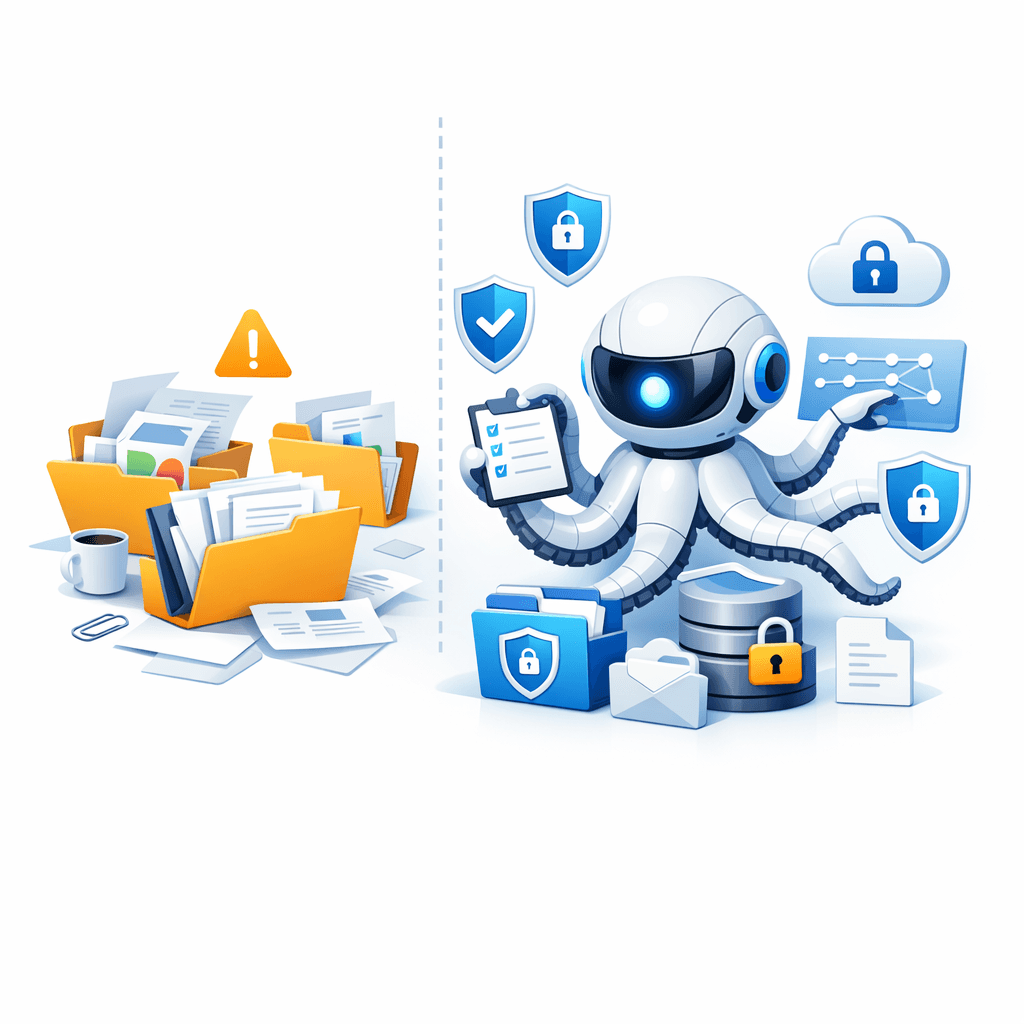
Reason one not to: it’s a security nightmare
The moment you give an agent access to your browser, your inbox, your docs, your internal tools, and your credentials, you’ve created an attack surface that is very different from “a tool with permissions.”
It’s not just about whether the model is “safe.” It’s about how secrets are stored, what gets logged, what gets sent to third parties, and what a misconfigured connector can accidentally expose. With agentic systems, one small mistake doesn’t leak a single file—it can leak a workflow.

Reason two: it’s not built for teams
Most of these setups are designed for one power user. They assume “your context” is one person’s files, one person’s habits, one person’s shortcuts.
The second you bring a team into the picture, you run into all the unsexy questions: which folders are shared, which ones absolutely aren’t, which processes should stay private, what the agent is allowed to see for each person, and how you prevent it from casually surfacing something that never should have left a corner of the company.
Reason three: you’ll lose a weekend, then a few weeks
Here’s the part nobody advertises: the demo is fast, but the “make it reliable” phase is slow. You’ll spend a weekend wiring it up. Then you’ll discover it needs careful prompts, guardrails, tool permissions, and endless edge‑case handling to actually fit your use case.
If you enjoy tinkering, that can be fun. If you just want outcomes—content shipped, tasks closed, meetings summarized, decisions documented—it’s friction you’ll feel every time you onboard someone new.
Reason four: it can get expensive—fast
With agentic setups, you are not paying for a single chat reply. You are paying for a chain of steps: planning, browsing, retries, tool calls, and long context windows. In community write-ups, people describe hitting roughly $100–$200/day in API usage when they run OpenClaw heavily (for example, leaving it on, iterating on workflows, and letting it take lots of web/browser actions). The tricky part is that it does not feel expensive at first. It becomes expensive right when you start relying on it—because “more useful” usually means “more steps,” and more steps means more tokens.
So what would I do instead?
I’d still taste OpenClaw, just to internalize what agentic AI feels like. Then I’d choose the boring‑but‑correct path for day‑to‑day work: something secure, team‑aware, and set up in minutes—not days.
That’s exactly why I built Notis. You get the “agentic” outcome—turn messy inputs into structured work and real execution—without turning your company into an experiment. Secure by design, ready for teams, and you can be up and running in about five minutes.
Which would you rather do?

Flo is the founder of Mind the Flo, an Agentic Studio specialized into messaging and voice agents.
Related posts
Notis vs Cofounder.ai: Which AI assistant fits your workflow?
Compare Notis and Cofounder.ai to find the best AI assistant for your workflow. Notis excels in capturing thoughts and tasks via messaging apps, while Cofounder.ai focuses on automating multi-step workflows across various tools, including web research. Choose Notis for a streamlined voice-to-Notion experience, or Cofounder for complex operations and integrations.
Notis vs Poke vs Memorae vs Zapia vs The Librarian: which messaging-native AI assistant actually feels good to use?
This article compares five messaging-native AI assistants—Notis, Poke, Memorae, Zapia, and The Librarian—highlighting their unique features and positioning. Notis excels in task execution, Poke focuses on a seamless chat experience, Memorae acts as a memory aid, Zapia serves real-world tasks in Latin America, and The Librarian offers a classic executive assistant package. Choose based on where you want to reduce friction in your workflow.
Notis vs Tanka.ai: AI Intern for Notion vs AI Cofounder with Org Memory
Notis and Tanka AI serve as AI teammates but target different needs; Notis focuses on seamless integration with Notion for task management via voice and chat, whereas Tanka AI offers organizational memory across multiple tools with an emphasis on fundraising workflows. Choose Notis for day-to-day execution in Notion, or Tanka AI for long-term memory and fundraising support.