Content

The Best AI Business Idea Is Boring: Become a One-Person Operator
Everyone wants an AI business idea. I get it. Lists are addictive. AI content agency. AI receptionist. AI research service. AI CRM cleaner. AI social media studio. AI inbox assistant. Pick one, wrap it in a landing page, add a gradient, and suddenly you are apparently three weeks away from a SaaS empire.
The less glamorous truth is that the best AI business idea for most solo founders is not the idea. It is the operating model. The winners will not be the people with the longest list of possible micro-SaaS concepts. They will be the people who can run a small business with the coordination power of a team and the overhead of one slightly over-caffeinated human.
The real bottleneck is operations, not ideation
AI has made ideation cheap. It can draft positioning, generate outreach lists, create mockups, summarize research, and produce decent first-pass content. That is useful, but it also means everyone gets the same pile of ideas. The bottleneck moves to execution: replying to leads, booking meetings, sending follow-ups, updating CRM records, drafting proposals, checking invoices, turning notes into tasks, and keeping the tiny machine from falling apart.
That is where solo founders quietly lose hours. Not because they are bad at strategy, but because the business creates a thousand small administrative cuts. One missed follow-up. One lead sitting in the inbox. One meeting with no action items. One customer note that never makes it into the CRM. None of these feels dramatic. Together, they become a tax on momentum.
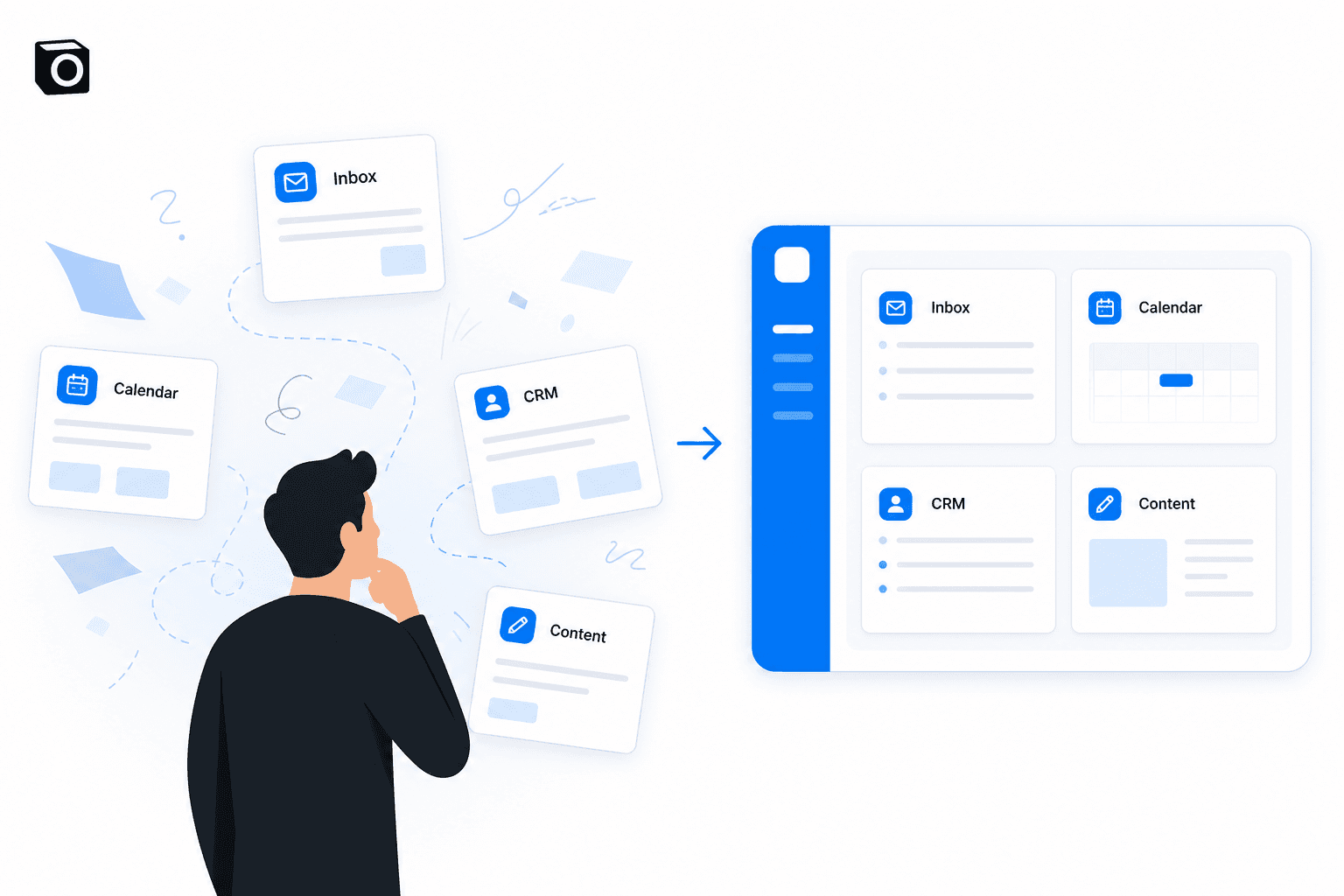
A one-person business needs an AI operator
An AI operator is different from an AI idea generator. It sits close to the work. It reads the messy input, understands the desired outcome, and pushes the next step through the right system. An inbound email becomes a draft reply and a CRM update. A meeting transcript becomes action items and a follow-up. A voice note becomes a Notion page, a reminder, or a content draft. A random thought at 11:42 becomes something your future self can actually use.
This is why messaging-native matters. If your AI operator lives in another app you need to remember to open, it becomes part of the problem. Notis is designed around the place founders already ask for things: chat. You send the request from WhatsApp, Telegram, iMessage, Slack, or email, and the AI intern handles the surrounding work across your connected tools.
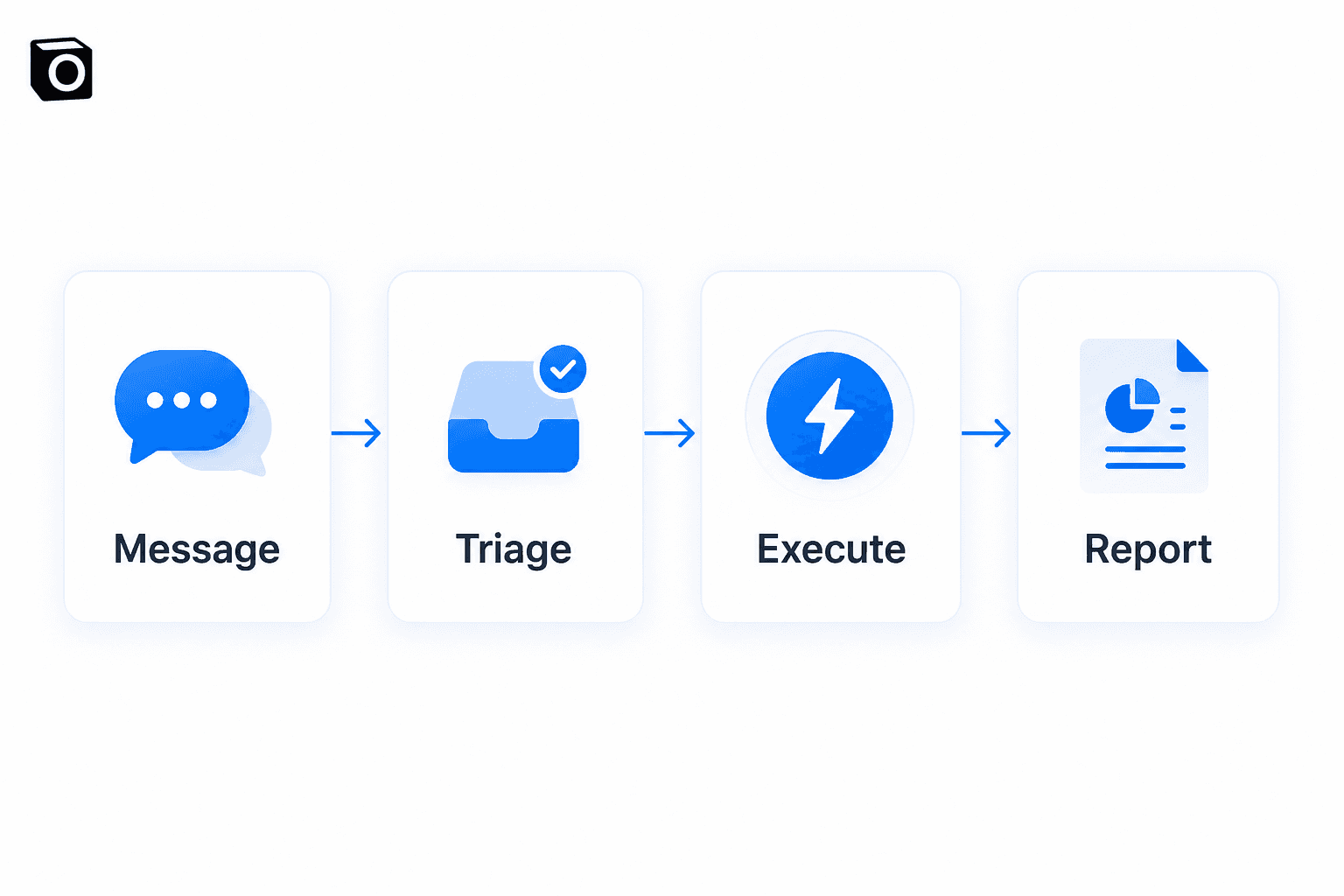
The boring business stack that compounds
The most valuable AI-enabled solo business stack is not exotic. It is inbox, calendar, CRM, notes, tasks, documents, content, and reminders. That is the operational layer behind almost every service business, agency, consultancy, creator business, and early SaaS. When those systems talk to one assistant, the founder gets leverage without building a custom internal platform.
Current tooling already points in this direction. Email assistants triage and draft. Scheduling tools coordinate availability. CRM systems store contacts and deals. Meeting tools create summaries. Notion and similar workspaces organize knowledge. The gap is that founders still have to stitch the pieces together manually. Notis fills that gap by letting the message become the command layer and the integrations become the execution layer.
A practical blueprint for the first week
Start with the work that repeats and hurts. Connect your inbox and calendar. Decide where notes and tasks should live. Pick one CRM or pipeline database. Then use your AI intern for the small handoffs you normally postpone: “Draft a reply to this lead and suggest three times next week,” “Turn this meeting recap into tasks,” “Save this customer feedback under the right account,” “Remind me Friday if I have not sent the proposal,” “Turn this voice note into a blog outline.”
The goal is not to automate the whole company on day one. That is how founders build fragile Rube Goldberg machines and then call it productivity. The goal is to remove the repetitive handoffs that break flow. Once those are reliable, you add deeper workflows: weekly reporting, content production, CRM hygiene, finance reminders, customer follow-up, and research briefs.
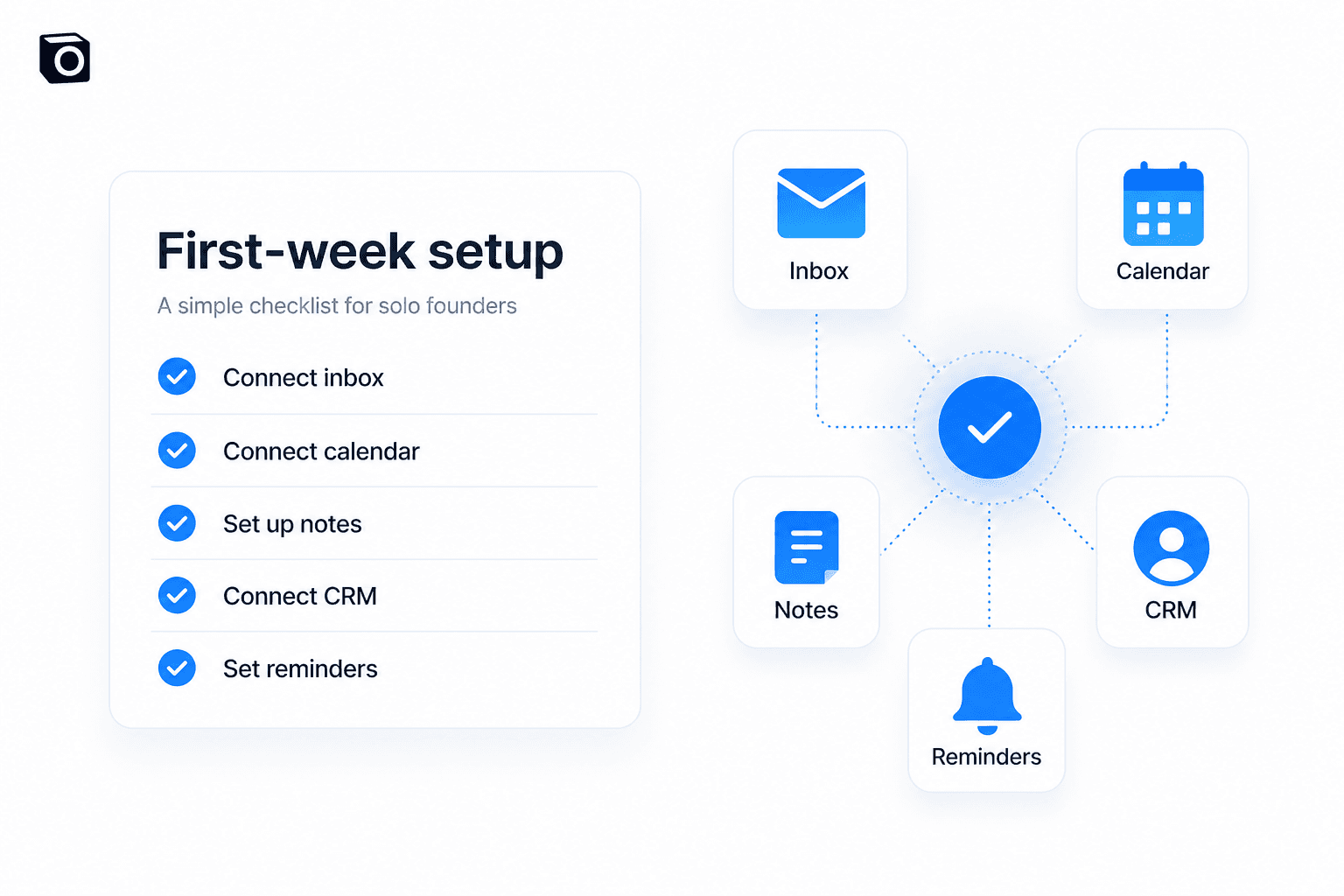
Where Notis fits in the AI business stack
The Notis help center describes the broad capability set: messaging channels, notes, tasks, CRM updates, meeting management, content generation, automations, and integrations. The important part is not the number of features. The important part is that a solo founder can delegate from the channel they are already using and let Notis route the work.
Notis also supports voice-first delegation. With Voice Mode, you can talk through a request, search context, and hand off work that continues after the call. That is a very different experience from opening five tools because a simple idea turned into admin soup.
The better question to ask
Instead of asking, “What AI business should I start?” ask, “What business could I run if the admin layer stopped eating my day?” That question is less sexy, but it is more useful. It points you toward services you can deliver faster, customers you can follow up with better, content you can publish consistently, and operations you can trust without hiring too early.
AI will create plenty of new business categories. Fine. But the immediate opportunity for most founders is much simpler: become a one-person operator with a messaging-native AI intern behind you. The boring work is where businesses are won. The trick is not doing all of it yourself.

Flo is the founder of Mind the Flo, an Agentic Studio specialized into messaging and voice agents.