Content
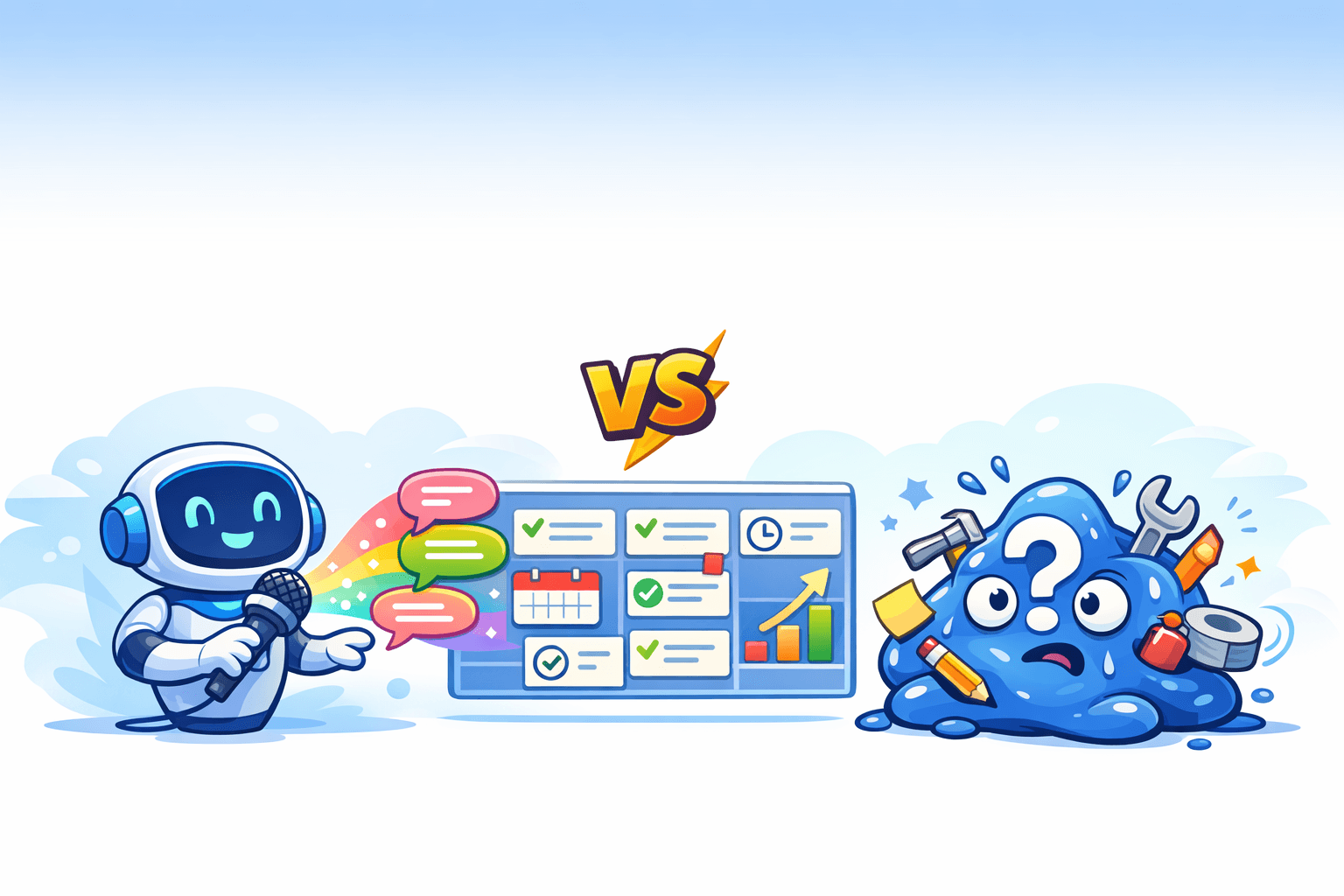
Notis vs Anything: Which Assistant Actually Gets Work Done?
Quick Take
Notis and Anything both aim to remove busywork, but they take different routes: Notis is a voice-first AI operator designed to push your messages into Notion and the rest of your tool stack, while Anything is a WhatsApp-first AI plus human assistant that executes real-world and admin tasks for you. If your priority is turning voice into structured work inside Notion, Notis is the tighter fit; if you want to outsource errands and scheduling with human follow-through, Anything is closer to a classic executive assistant.
Product Overviews
Notis
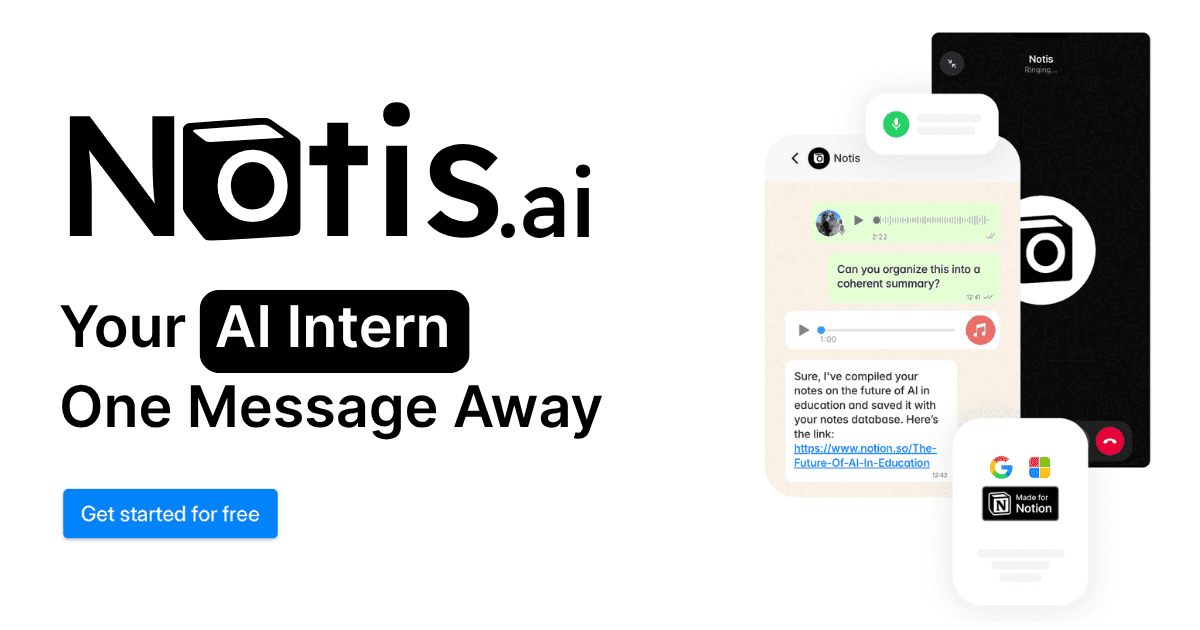
Notis is a messaging-based AI “intern” you can talk to from WhatsApp, Telegram, iMessage, or email, designed to turn voice and chat into structured outputs. Its differentiator is deep Notion-first execution: capturing notes, generating content, updating databases, creating tasks and reminders, and running automations across connected tools.

Anything
Anything is an AI plus human assistant that lives primarily on WhatsApp and focuses on getting tasks done end-to-end. It scans signals like email and calendar for actionable items, lets you delegate quickly, and uses human assistants where needed to complete scheduling, booking, purchases, and other administrative work.
Head-to-Head Table
Category | Notis | Anything |
|---|---|---|
Voice capture (WhatsApp/Telegram) | Supports WhatsApp and Telegram, plus iMessage and email; optimized for voice notes and turning them into structured work. | WhatsApp-first; public materials emphasize WhatsApp and proactive detection from inbox/calendar, with no clear Telegram/iMessage positioning. |
Notion integration | Deep, Notion-centric workflows designed to write into databases and operate inside your Notion system. | No public Notion integration described; primarily centered on WhatsApp plus email/calendar-driven delegation. |
Task & reminders | Converts voice/chats/emails into tasks, supports reminders, and can route tasks into Notion or other connected apps. | Offers task suggestions and reminders; some scheduling and meeting features are indicated as “soon” on its plan descriptions. |
Web search & RAG | Includes web scraping and “deep research” style reports, plus retrieval over your connected context. | Not positioned around research/search; public docs focus on execution and delegation rather than web research. |
Automations/follow-up | Strong automation layer (scheduled, webhook/integration-triggered) with follow-up workflows that can update multiple systems. | Automation exists in the sense of proactive detection plus assistant execution; less about user-configurable workflows and more about delegated completion. |
Pricing | Subscription tiers roughly from $29/month (annual discount available) up to higher tiers for more usage and advanced capabilities. | Freemium entry; paid plan starts at €99/month for 5 hours/month of human assistant support, with a higher custom “Dedicated” tier. |
Security & compliance | Emphasizes privacy and encryption practices in its policies; designed around integrating with your tools while limiting access. | EU-based company; privacy policy states user data from connected systems is not used to train generalized models and emphasizes secure handling; detailed certifications are not publicly specified. |
Key Differences Explained
Notion-first execution vs WhatsApp-first delegation
The biggest difference is where the work ultimately lands. Notis is built to transform messy inputs into structured artifacts inside Notion, meaning the output is not just a chat response but an update to your operating system: a database row, a meeting note, a task with a due date, or a draft ready for review. Anything leans in the opposite direction: you delegate in WhatsApp, and the value is in completion, often by a human assistant, even if the result never becomes a neatly structured knowledge base.
Configurable automations vs “assistant does it” operations
Notis behaves like a system you can program: recurring instructions, triggered workflows, and follow-ups that run across many tools. That matters if you want repeatable processes like meeting-prep briefs, weekly reports, or content pipelines that reliably land in the right Notion databases. Anything is closer to operations outsourcing: it can be extremely effective when the task is ambiguous or real-world, but the automation surface is less about you designing workflows and more about the service deciding how to execute.
Research and knowledge workflows vs execution-heavy admin
If your work involves synthesizing information, turning it into docs, and keeping your knowledge system updated, Notis’s web research and Notion retrieval capabilities are a practical advantage. Anything is optimized for getting things done that typically require coordination and follow-through, such as booking, scheduling, purchasing, or handling personal logistics, where human involvement can be the differentiator.

Which One Should You Choose?
If you are an executive, operator, or founder who primarily wants a reliable way to offload personal and administrative tasks and you value human follow-through, Anything will feel familiar: you delegate in WhatsApp and someone completes the work. If you are a consultant, content lead, or anyone who lives in documentation and needs voice-to-structure on the go, Notis is a better fit because it turns raw inputs into clean artifacts that land directly in Notion and stay connected to the rest of your system. If you are an engineer or product team member, Notis also tends to win when you want repeatable workflows, automations, and structured outputs that integrate with your existing tools and databases. For voice-to-Notion workflows specifically, Notis is the more natural choice because the product is designed around writing, organizing, and automating inside Notion rather than simply completing tasks in a chat.
Wrap-Up
Anything and Notis both reduce busywork, but they optimize for different outcomes: delegation-to-completion versus voice-to-structured systems. If your day is won or lost by whether your thoughts, meetings, and tasks end up cleanly organized in Notion, start with Notis and build from there. Try Notis, send it a messy voice note, and see how quickly it turns into a usable page or database update.

Flo is the founder of Mind the Flo, an Agentic Studio specialized into messaging and voice agents.