

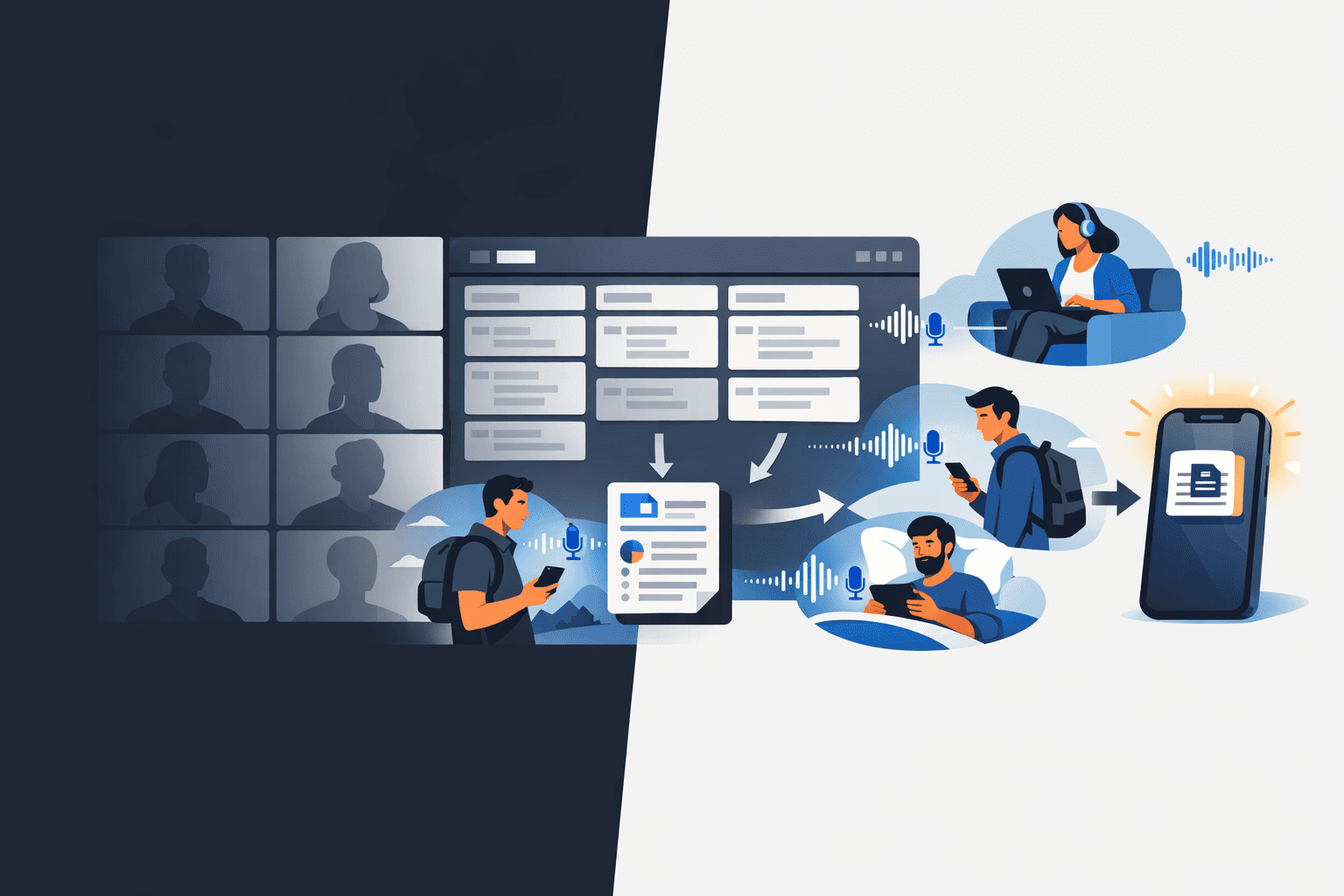
How To Replace Wasteful Standup Meetings With Async Voice Messages (Complete System)
Learn how to replace ineffective standup meetings with an asynchronous voice message system that enhances communication and accountability in remote teams. This guide outlines a simple setup using Notion, automated reminders, and concise summaries, ensuring efficient updates without the need for time-consuming meetings.
Most standups don’t fail because people are lazy. They fail because you’re forcing ten brains into the same time slot, every week, to produce information that could have been captured in two minutes and consumed asynchronously.
“If you think your company's standups are productive, you're the problem. And I'm gonna show you why.”
When we built this for a 10-person remote team, the owner had the classic problem: zero visibility, constant context switching, and a growing feeling that the weekly standup was more ritual than signal. We replaced the meeting with async voice messages, kept the accountability, and actually improved the quality of updates.
Why standups become wasteful (even when everyone means well)
A synchronous standup optimizes for attendance, not clarity. The quiet people contribute less, the talkers fill space, and the most important details show up in the last thirty seconds when everyone’s already checking Slack.
Async flips the constraint. Instead of “everyone talk now”, it becomes “everyone think, then report”. That tiny shift forces better signal: what’s blocked, what’s risky, what actually moved, and what needs attention next.
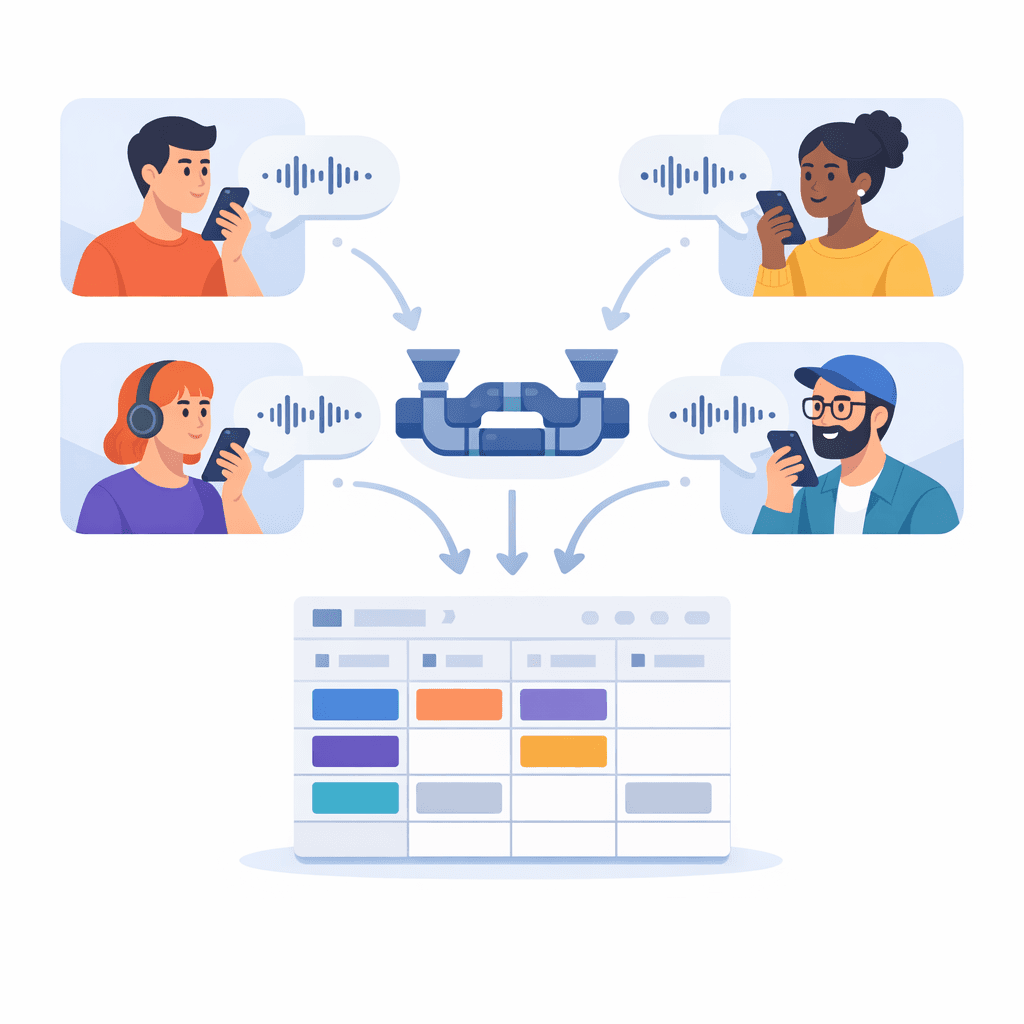
The complete async standup system (what we implemented)
The system has one job: collect crisp weekly updates with almost zero friction for the team, then turn them into something the owner can consume fast and broadcast back to close the loop.
There are only three moving parts: a Notion database, a reminder automation, and a summary-and-broadcast automation.
Part 1: The Notion database (your single source of truth)
We kept the database dead simple because complexity is where adoption goes to die. Each weekly update is one entry, tied to one person and one week.
Inside the entry, you capture the few fields that actually matter. You want a place for the risk for the week, the blocker, the win from last week, and the priorities for this week. You also want to track who completed their update and which week it belongs to, so you can answer the only question that matters on Monday: who’s missing.
That’s it. No templates that look like a management consultant’s résumé. No ten-step forms. If it takes more than a couple of minutes, people will skip it.
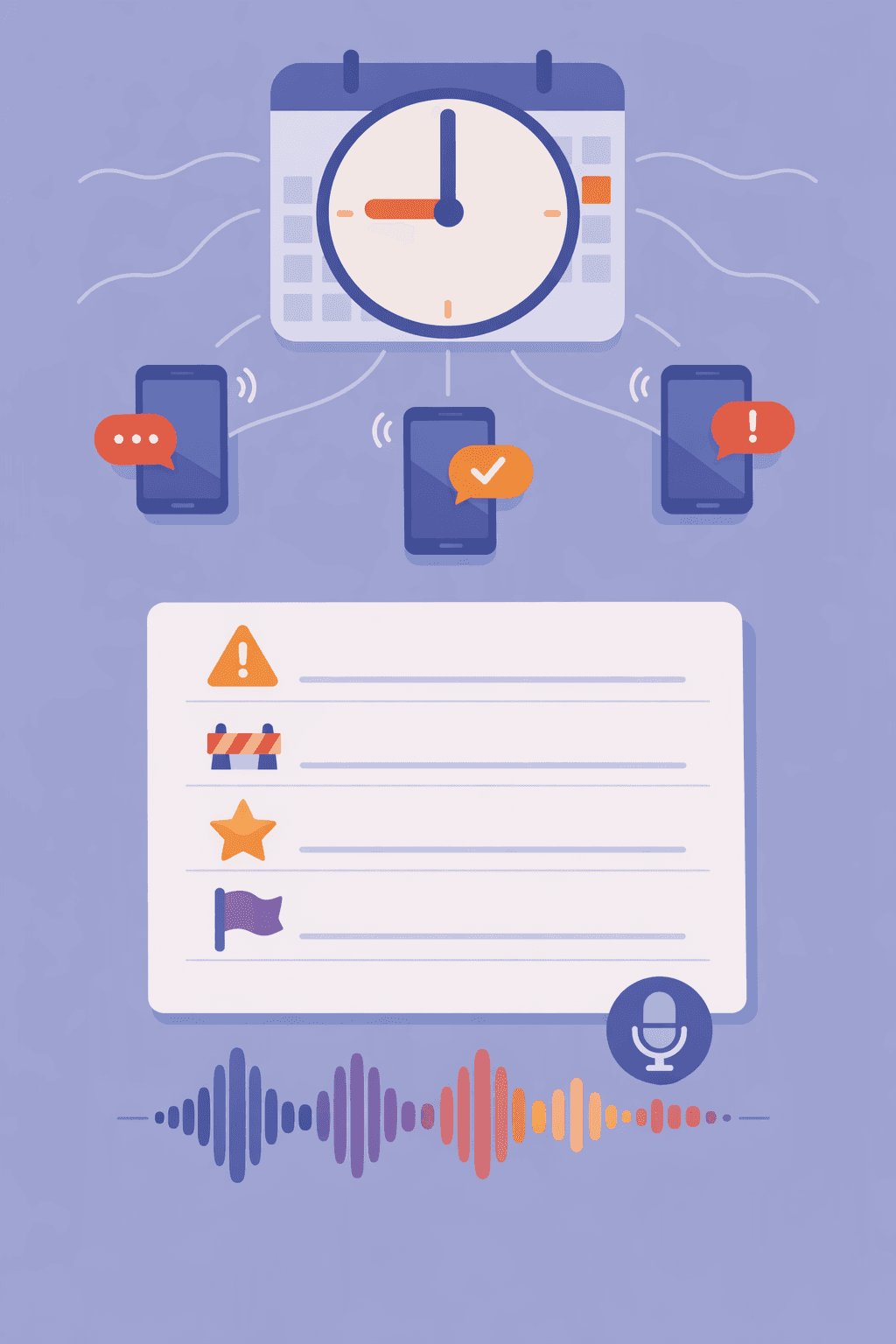
Part 2: The Monday 09:00 reminder (make it impossible to “forget”)
Every Monday at 09:00, Notis sends each person a reminder to record a voice message that answers the database prompts. Voice is key here because it’s the lowest-friction input. People don’t need to open Notion, hunt a page, or switch mental gears into “writing mode”. They just talk.
And yes, the reminder loops. If someone doesn’t complete the update properly, it comes back to them. The system isn’t polite. It’s reliable.
Part 3: The owner summary (visibility without a meeting)
At the end of the day, a second automation runs for the owner. Notis compiles all updates, extracts the dynamic of the week, and generates a concise voice message summary.
The owner receives that summary directly in their messaging app, alongside a draft message they can send to the whole team. This is the piece most companies miss: you don’t just collect updates, you broadcast back what you heard.
That’s how you close the loop and keep trust high without dragging people into another call.
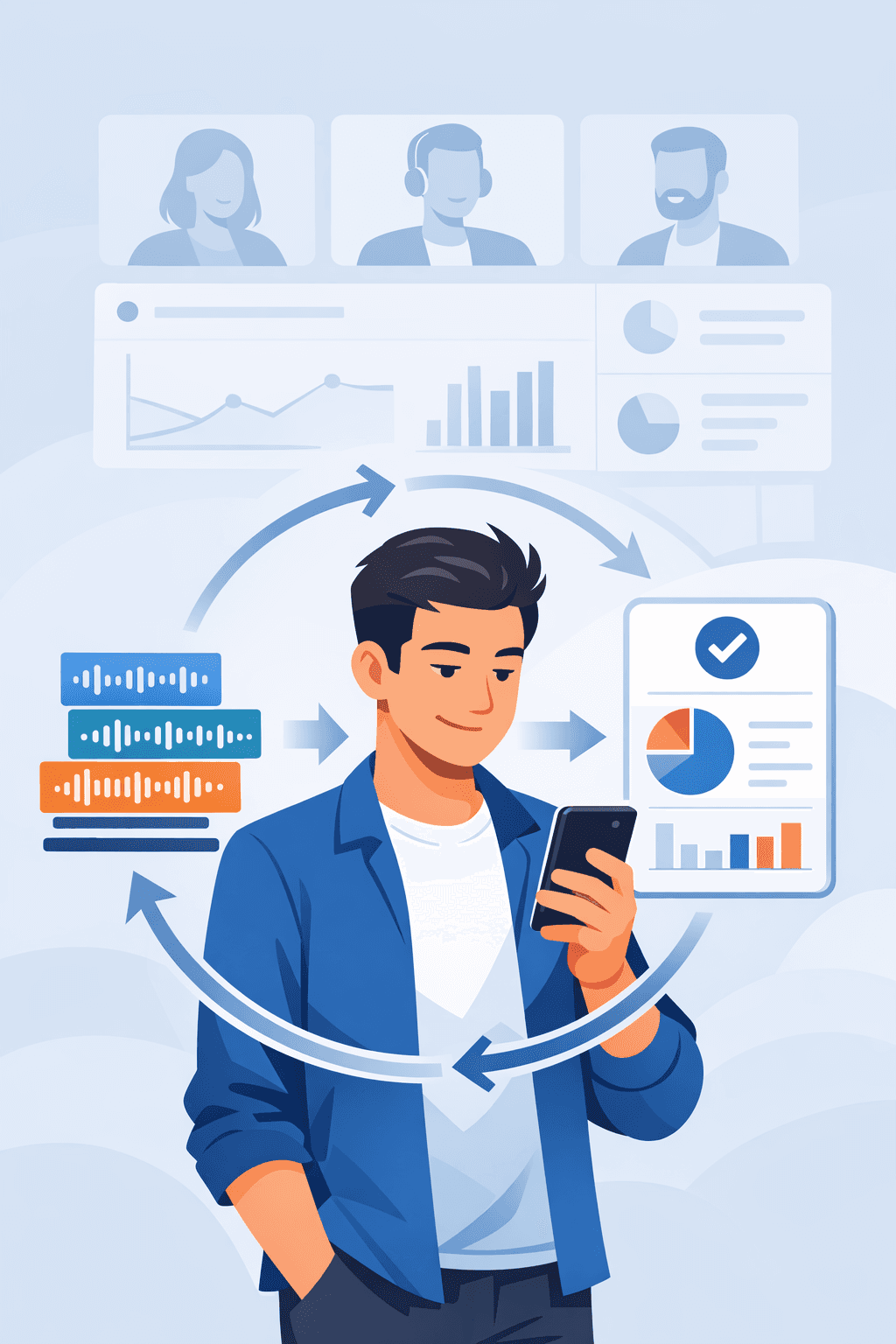
The behavior change that makes this work
Tools don’t fix culture, but they can make a better habit easier than the bad one.
What you’re enforcing here is not “write more updates”. It’s a tighter contract between the team and the owner: every week has a win, a priority, and a surfaced blocker. If something is at risk, it shows up early. If someone is stuck, it becomes visible without them having to raise their hand in public.
The owner’s role changes too. Instead of running a meeting, they read the room, decide what matters, and broadcast direction. That’s leadership. Attendance is not leadership.
Common failure modes (and how to avoid them)
If you turn this into a performance report, people will game it. Keep the prompts focused on decisions and constraints, not on proving worth.
If you let people ramble for five minutes, the system collapses under its own audio. Encourage short, structured voice messages. The point is signal, not storytelling.
If the owner never sends the weekly broadcast, motivation dies fast. Teams don’t want to talk into the void. The loop must close.
Who this is for
If you’re running a remote team and you’re tired of paying ten salaries to sit in a meeting where half the people have nothing to contribute, this is for you.
If you’re the owner and you want visibility without becoming the bottleneck, this is for you.
And if you secretly hate standups but you’re scared that removing them will create chaos, this is the cleanest replacement I’ve seen: low friction for the team, high signal for leadership, and accountability built in.
If you want to set this up with Notis, start simple: one database, one reminder, one owner summary. Then iterate based on what you actually learn from the first two weeks.

Flo is the founder of Mind the Flo, an Agentic Studio specialized into messaging and voice agents.
Related posts
Turn Your Work Documents Into Endless Content
Transform your work documents into valuable content by reframing specs, tickets, and user stories into engaging posts. Learn a sustainable workflow to extract insights and leverage internal knowledge for continuous distribution without starting from scratch.
Voice Notes Aren't About Speed - Here's the Real Reason
Explore the true benefits of voice notes beyond speed: they reduce friction and enable easier task initiation. Learn how to effectively capture and convert voice notes into actionable tasks, ensuring productivity and cognitive offloading.
How to Turn Cursor’s API into an MCP Server (and Use It From Notis)
This guide explains how to turn Cursor’s API into an MCP server using Ogment.ai and connect it to Notis, enabling you to trigger Cursor background agents from various chat platforms. By following the steps outlined, you can expose Cursor's capabilities without custom integrations for each platform, facilitating a more efficient workflow across messaging apps.