Content
How I stay at Inbox Zero while scaling a company

Inbox zero is not some monk-level email discipline trick. It is usually the side effect of building a company that does not keep asking you to repeat yourself.
I have been doing inbox zero since before people started giving it a name. Not because I enjoy sorting emails for sport, but because I hate answering the same preventable thing again and again. The moment I notice a request coming back for the fifth time, I stop treating it like a message and start treating it like a systems bug.
That is the real trick. I do not stay close to inbox zero because I am faster at replying. I stay close to inbox zero because I keep removing reasons people need to email me in the first place.
Inbox zero is an output, not a workflow
A lot of founders talk about inbox management like it is a personal operating system. Filters. Labels. Rules. Fancy keyboards. A religion around triage. Some of that helps, sure. But it misses the bigger point. If your company grows and your inbox grows at the same speed, you do not have an email problem. You have a repetition problem.
When users keep writing in for the same thing, they are not sending six different problems. They are showing you one unresolved pattern wearing six different hats. Refund requests. Trial confusion. Credit limits. Activation edge cases. From the founder side it feels like admin. From the system side it is a backlog of automation opportunities.
That is why I think inbox zero is a lagging indicator. It tells you whether your business is still routing repetitive work through human hands. If the answer is yes, the inbox fills up. If the answer is no, the inbox stays weirdly calm even while the number of users goes up.
My rule: if I say it five times, it becomes a skill
I have a very simple internal rule. If I reply to roughly the same thing five times, I am not doing it a sixth. That does not mean I write a better canned reply. It means I look at the request and ask the only useful question: should Notis be doing this instead of me?
Usually the answer is yes. If someone asks for a refund, why should that depend on me noticing the email and manually handling it? If someone finishes a trial, burns through credits, and gets confused about what happens next, why should the explanation live in my head instead of in the product? If the same edge case keeps appearing, it is no longer an exception. It is part of the actual user journey.
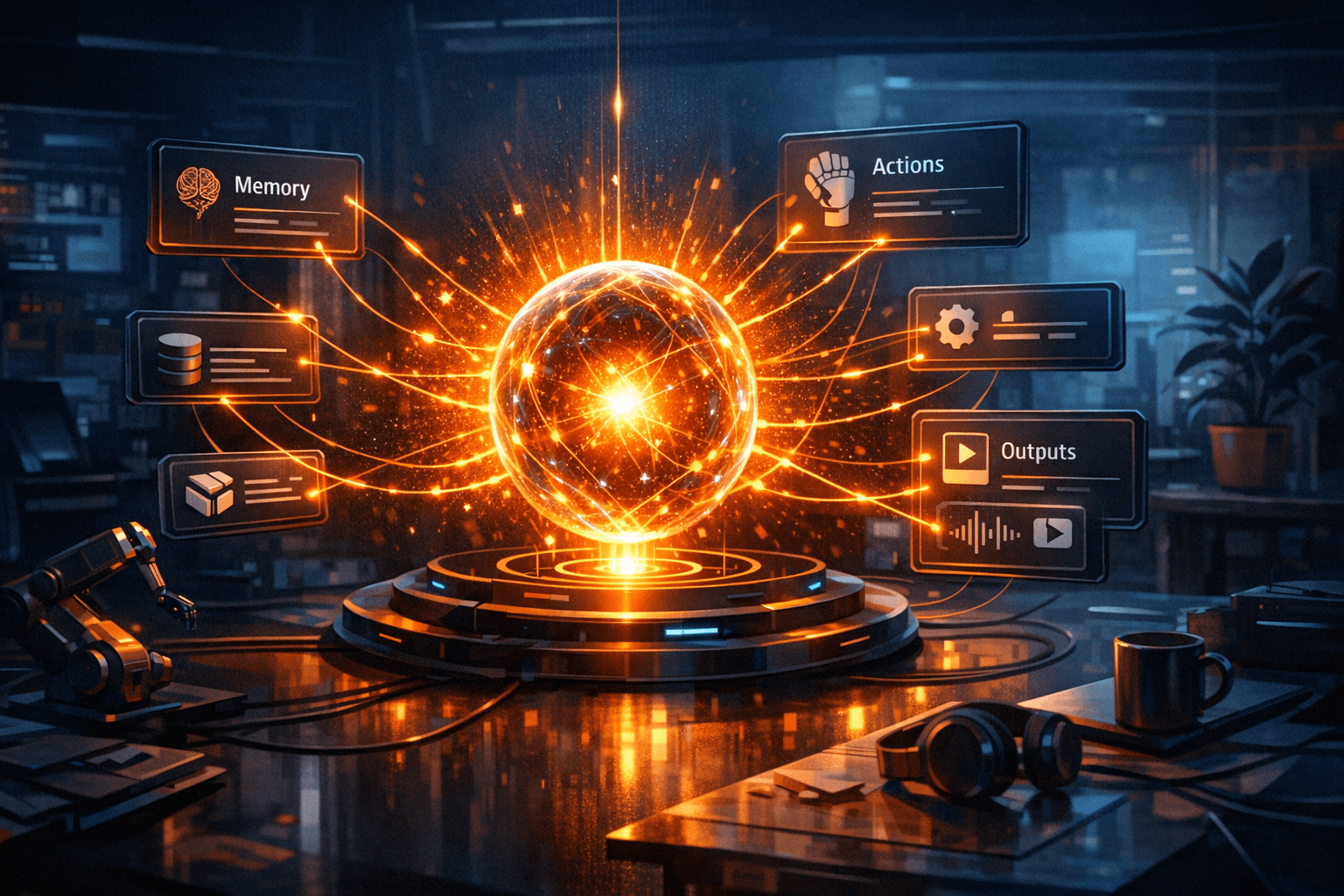
This is where AI becomes useful in a practical way. Not as a chatbot bolted on top of chaos, but as a way to turn repeated human responses into reusable behavior. The second I know the answer should be stable, I want it encoded somewhere stable. Then Notis can handle it, and the inbox never sees that class of problem again.
Customer support should be a product input
One reason founders drown in email is that they treat support as cleanup. I think that is backwards. Support is one of the cleanest sources of product truth you have. It tells you where friction still exists, where expectations do not match behavior, and where the same explanation is being paid for again and again with founder attention.
Every repeated support thread is basically the system telling you, very politely, that it is unfinished. You can either keep staffing around that unfinished part, or you can close the loop. I prefer closing the loop.
That is also why the number of emails I receive has stayed surprisingly constant while the number of users has gone up. It is not because users became less needy. It is because more of the repetitive support work got absorbed by Notis over time. The company grew. The surface area grew. But the founder inbox did not need to grow linearly with it.
The goal is not faster email. The goal is fewer necessary emails.
This is the mistake I see all the time. People optimize for handling volume better instead of removing the source of volume. They build a nicer cockpit for the pilot while the engine is still leaking oil. Sure, you can get very good at clearing the inbox every day. You can also spend years becoming world-class at dealing with work your system should have swallowed automatically.
I do not want to be excellent at email. I want email to be reserved for the stuff that actually deserves judgment, nuance, or a real human reply. The rest should quietly disappear into product logic, workflows, and skills. That is where leverage comes from.
This mindset changes how you look at operations. Instead of asking, “How do I keep up?” you start asking, “Why does this still require me?” That question is much more annoying, but it leads to much better companies.
Inbox zero is a lagging indicator. The real metric is whether repetitive requests still need your hands.
What this looks like inside Notis
At a practical level, the pattern is simple. A user asks something. I answer it. The same issue comes back enough times that the answer is obviously not supposed to remain manual. At that point, I turn the response into something the system can execute reliably. Sometimes that is a clearer workflow. Sometimes it is a product change. Sometimes it is an AI skill. But the destination is always the same: take the repetition out of my inbox.
That is why scaling does not automatically mean more email for me. Growth creates more interactions, but it should also create more patterns. And patterns are exactly what software is supposed to be good at handling. If I keep personally sitting in the middle of every known pattern, I am not scaling the company. I am just becoming a more exhausted router.
The nice side effect is that users also get a better experience. They do not have to wait for the founder to come online and type the same explanation again. They get a faster, clearer response at the moment they need it. So this is not just about my inbox staying clean. It is about making the system feel more complete for everyone involved.
Founders should be suspicious of repetitive manual work
If you are a founder and your inbox keeps filling up with the same category of request, do not congratulate yourself for being responsive. Be suspicious. Repetition is usually not proof that you are needed. It is proof that something has not yet been encoded properly.
The first time is customer feedback. The second time is a pattern. By the fifth time, you are looking at a design decision. Either you accept that this task belongs to a person forever, or you promote it into the system. I think most founders wait way too long to make that promotion.
So yes, I am good at managing email. But the real reason is less flattering and more useful: I am ruthless about refusing to keep manual ownership of repeated work. If I say it five times, it becomes a permanent AI skill. That is how I stay near inbox zero while scaling a company.

Flo is the founder of Mind the Flo, an Agentic Studio specialized into messaging and voice agents.