Content

How I Put My Blog & Newsletter On Full Autopilot
If your blog feels like a chore, you’re not alone. Most founders I know start with good intentions, publish a few posts, then disappear for months. Not because they don’t have ideas—because writing is work, and the day always wins.
The “solution” everyone reaches for right now is to let AI crank out content. And sure, you’ll publish more. But you’ll also publish what I call AI slop: generic, interchangeable paragraphs that could have been written by anyone. That kind of content doesn’t build trust. It actively destroys it.
Here’s the system I use to put my blog and my newsletter on autopilot—without sacrificing my voice. The trick isn’t automation. The trick is context.
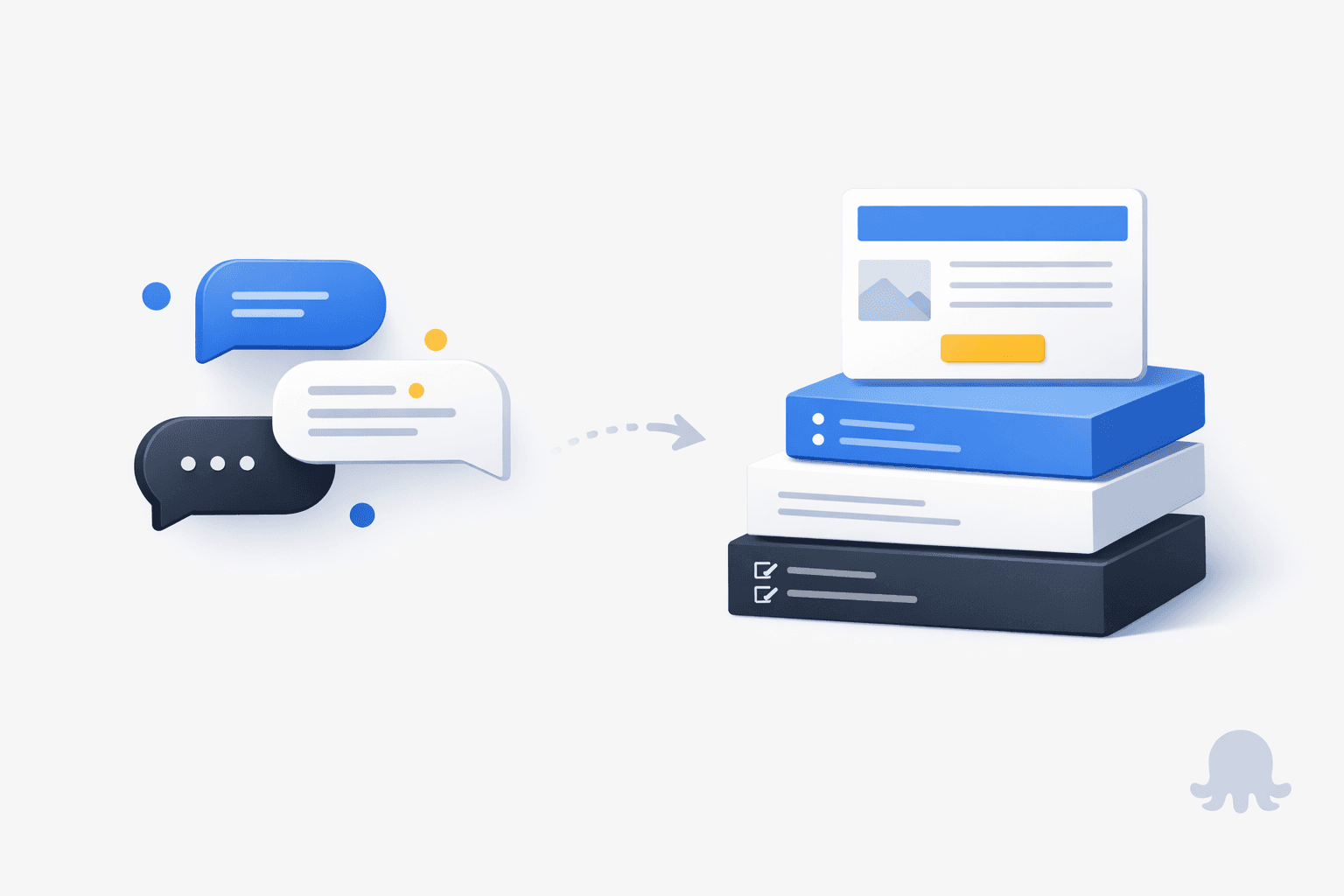
Why every business still needs a blog and a newsletter (especially now)
In the LLM era, everyone can produce content. That means content is no longer a moat. The moat is perspective.
Your blog and your newsletter are still the two channels you actually own. They’re the closest thing we have to a compounding asset in marketing: every post becomes a reference point for your product, your point of view, your decisions, your mistakes, your taste. And every newsletter issue is a small reminder that you’re still here, still building, still thinking.
The problem is that most people treat these channels like a publishing schedule. I treat them like an output of the way I already work.
The AI slop problem (and why it happens)
AI slop is what happens when you ask a model to invent thoughts you didn’t have.
If you start from an empty page and type “write me a blog post about why businesses need a newsletter,” you’ll get something that is technically correct and emotionally empty. It will hedge, it will over-explain, it will sound polite. It will be optimized for sounding safe, not sounding true.
The internet is already full of that. Readers can feel it immediately. They might not be able to name it, but they’ll bounce. They’ll stop trusting. And you’ll conclude that “content doesn’t work,” when the real issue is that the content doesn’t sound like a human with stakes.
So I stopped trying to automate writing. I started automating extraction.
My autopilot setup: the simple pipeline
My best ideas don’t appear when I sit down to “write content.” They show up when I’m talking—during meetings, customer calls, brainstorming sessions, voice notes, random rants.
So I built a pipeline that takes those conversations and turns them into drafts automatically.
Step 1: Capture raw thinking (meetings, calls, voice notes)
First, I record my meetings. Not in a creepy way—just like taking notes, but with perfect recall. Any decent meeting recorder works. The only requirement is that you end up with a transcript you can access.
That transcript is the raw material. It contains my words, my phrasing, my tempo, my opinions. That’s the stuff that makes content feel real.
Step 2: Use a writing “skill” that forces my voice and structure
This is the most important piece: I don’t ask Notis to “write a blog post.” I give Notis a skill: a set of very explicit formatting and writing rules that define what a good post looks like for me.
It includes constraints like: don’t start with a title, don’t use H1 headings, write in proper prose (no bullet dumps), keep the tone conversational, and—crucially—use the transcript as the source of truth. Notis shouldn’t fabricate a personality. It should compress and shape what I already said.
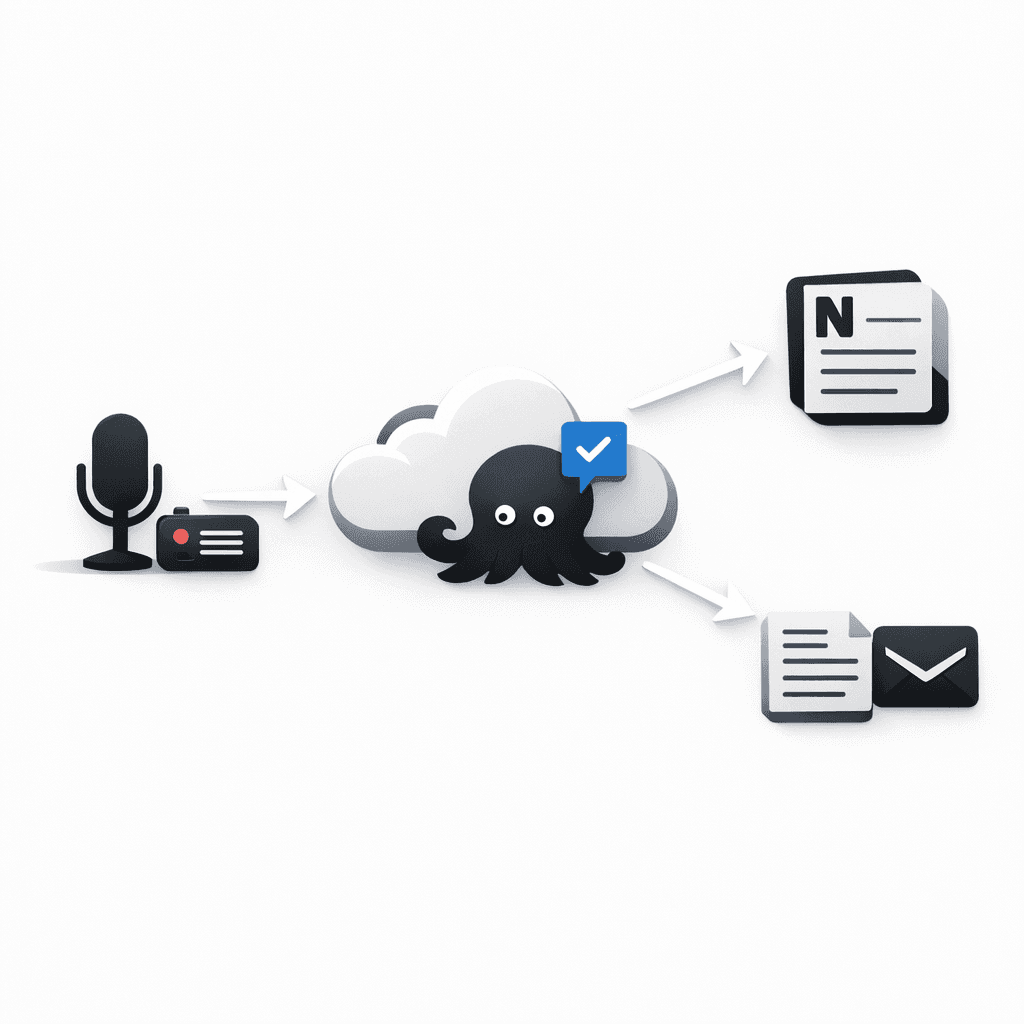
Step 3: Auto-create drafts in Notion (blog) and your newsletter tool
Once the meeting ends, Notis runs the skill automatically. It extracts the strongest thread, turns it into a structured draft, and saves it directly into my Blog database in Notion. Same idea for the newsletter: it drafts an issue in the format I want, ready for review.
The key word is draft. Autopilot doesn’t mean “publish without looking.” Autopilot means “remove the blank page and the formatting tax.” I open Notion and there’s a clean draft waiting for me like an assistant prepared it.
Why this works: context beats automation
When people say they want “AI content,” they usually mean they want the output without the effort. But the effort isn’t typing. The effort is thinking.
A transcript is captured thinking. It’s already anchored in reality: a customer question, a product decision, a disagreement, a moment of clarity. That context is what makes the writing specific.
And specificity is what makes content useful. It’s also what makes it sound like you. Not because of some magical “tone prompt,” but because it literally is you.

What I review (and what I don’t touch)
My review loop is short. I’m not rewriting everything. I’m doing founder-level editing: tightening the hook, removing fluff, adding one or two concrete examples, and making sure the post says something that I’d defend in public.
What I don’t do anymore is: outline from scratch, fight with formatting, wonder what to write about, or spend two hours turning a decent idea into a publishable structure. The system handles that part.
The blueprint if you want to copy it
If you want your blog and newsletter to run like an engine, don’t start by asking “how do I automate publishing?” Start by asking “where do my best thoughts already happen?” For most founders, it’s conversations.
Record those conversations, centralize the transcripts somewhere you can query, then define a writing skill that is unapologetically opinionated about structure and tone. Finally, wire it so the output lands as a draft inside a database you actually check.
Do that for a month and you’ll notice something surprising: you won’t feel like you’re “doing content.” You’ll feel like your work is finally leaving a paper trail. That’s the whole game.

Flo is the founder of Mind the Flo, an Agentic Studio specialized into messaging and voice agents.