Content
From Notes to Agents: Why Software Is Starting to Disappear
Most software still assumes that work begins when you open the right tool. I think that assumption is already breaking. What I’m seeing now is that work begins the moment you express intent, and the software layer increasingly becomes a thin, temporary wrapper around that intent. That shift changes everything: how products are built, how companies compete, and how people stay economically relevant.
That was the core thread in a recent conversation I had with Olivier Perrotey. We started with Notis, but very quickly the discussion expanded into something bigger: why productivity software is moving away from rigid interfaces, why messaging may become the most natural operating system for work, and why AI is forcing us to rethink not just products, but entire professional identities.
Notis didn’t start as an agentic workspace
Notis started in a much narrower place. The initial use case was simple: capture notes, tasks, and thoughts as fast as possible, especially through voice. That constraint mattered. I wasn’t trying to invent a grand theory of software. I was trying to remove friction from the earliest moment of work, the moment where an idea appears and usually gets lost before it reaches the right system.
But once users start capturing things in one place, they immediately want the next step. They don’t just want to remember. They want to process. They want to transform. They want the note to become a task, the thought to become a document, the meeting to become a follow-up, the raw signal to become execution. That naturally pushed Notis from capture into workflow automation.
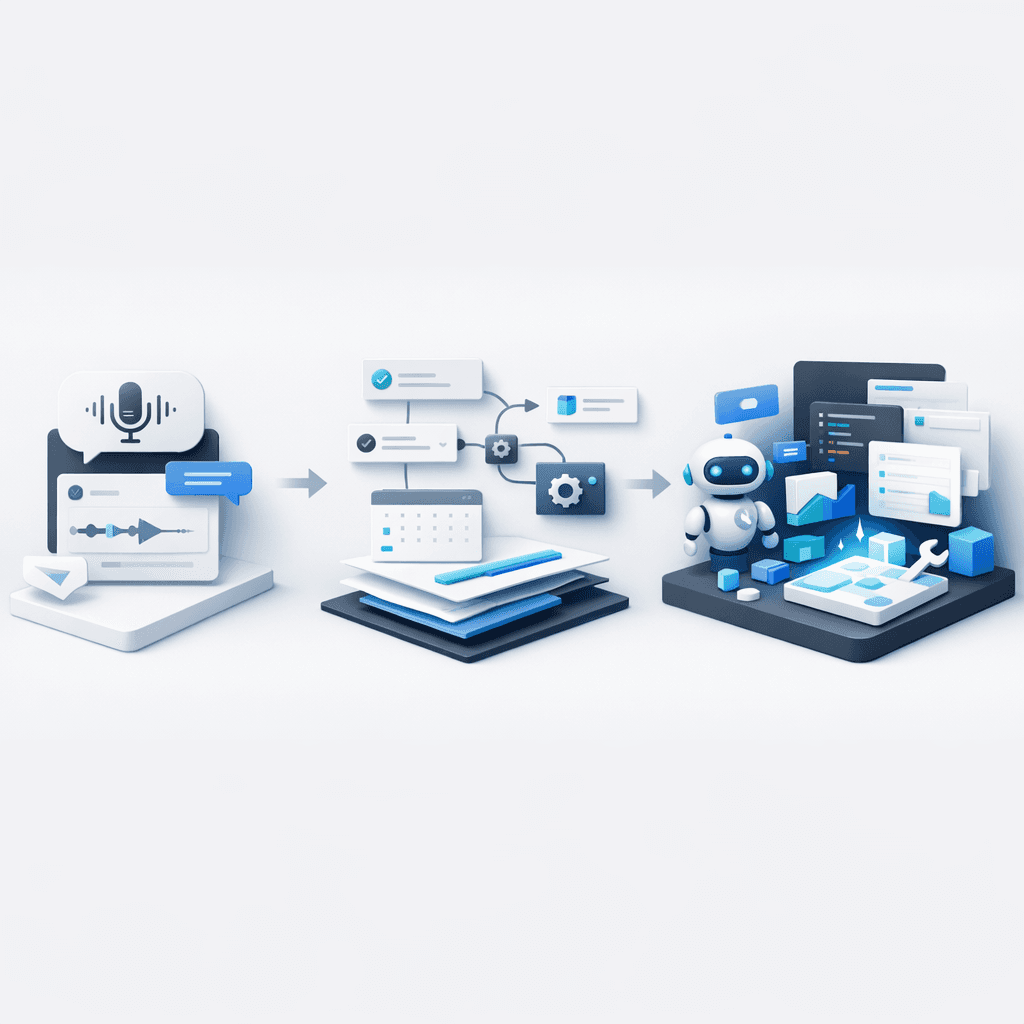
Now I think there is a third step, and it is much more important than the first two. The future is not just capturing information and routing it through automations. The future is letting people describe the tool they need and having that tool materialize around the job to be done. In other words, the workspace becomes agentic. Instead of forcing the user to adapt to the software, the software adapts to the user’s intent in real time.
The interface advantage nobody planned for
One of the most interesting parts of this evolution is that Notis became messaging-first almost by accident. At the MVP stage, constraints often make decisions for you. You pick the simplest surface that lets you test value quickly. In our case, messaging was fast to ship and easy to understand. What looked like a practical shortcut turned out to be something much more valuable: users actually liked it better.
That matters because messaging is a deeply natural interface. People do not think in tabs, menus, forms, and nested settings. They think in requests, clarifications, follow-ups, and context. They think in conversation. A chat-like interface is not just a UI trend. It is often closer to how human intent is formed. Once AI becomes reliable enough to interpret that intent, the old software metaphor starts to feel unnecessarily rigid.
I don’t believe every product will collapse into a chat box. But I do believe many products will stop leading with dashboards and start leading with understanding. In that world, the best software is not the one with the most features. It is the one that disappears the fastest between a user’s thought and a useful outcome.
Traction is a signal, but the shape of traction matters more
A lot of founders talk about growth as if the number alone tells the story. It rarely does. What I care about more is the pattern inside the growth. With Notis, some of the strongest signals have come from places that many European startups still underestimate, especially India and Mexico. We’re seeing meaningful pull there, not just curiosity. And in India in particular, the economics of paid acquisition have been surprisingly efficient.

That says something important. First, the appetite for AI-native productivity tools is global from day one. Second, prosumers are often the earliest and clearest market signal. They are not buying because a procurement process told them to. They are buying because the product solves a real pain in their daily work. I take that very seriously because prosumer adoption often reveals product truth before enterprise vocabulary catches up.
Enterprise adoption will come, but usually later and with more friction. Regulated industries, large public organizations, and complex procurement environments move slowly. That creates a temporary buffer. It does not create long-term safety. The assumption that slower-moving institutions are somehow protected from AI is, in my view, one of the most dangerous forms of complacency in the market today.
Why I’m deprioritizing fundraising right now
People often assume that if a startup has traction, the next logical step is to raise. I’m not dogmatic about that, but I am skeptical of doing it by default in a market changing this fast. If I spend six months fundraising, that is six months not spent building, learning, shipping, and tightening the product loop. In a normal market, maybe that tradeoff is acceptable. In the current AI market, it can be fatal.
The reason is simple: timing compression. Capabilities are improving monthly, not yearly. Distribution is changing. User expectations are changing. Product categories are melting into each other. Under those conditions, the company that learns fastest may outperform the company that capitalizes fastest. Money still matters, of course. But right now, speed of iteration feels more strategic than the prestige of a financing announcement.
This is also why I think a lot of fundraising narratives already feel outdated. Founders are still being coached to tell clean market stories while the market itself is becoming structurally messy. We are in a period where the smartest move is often to stay close to users, stay close to the product, and delay any distraction that turns attention into theater.
Coding agents are not a feature. They are a regime change
The deeper thesis behind all of this is that software development itself is being transformed by AI. I don’t mean in the superficial sense of autocomplete getting better. I mean in the more destabilizing sense that coding agents are starting to change the economics of making software. When the cost of building falls and the speed of iteration rises, the nature of software businesses changes with it.
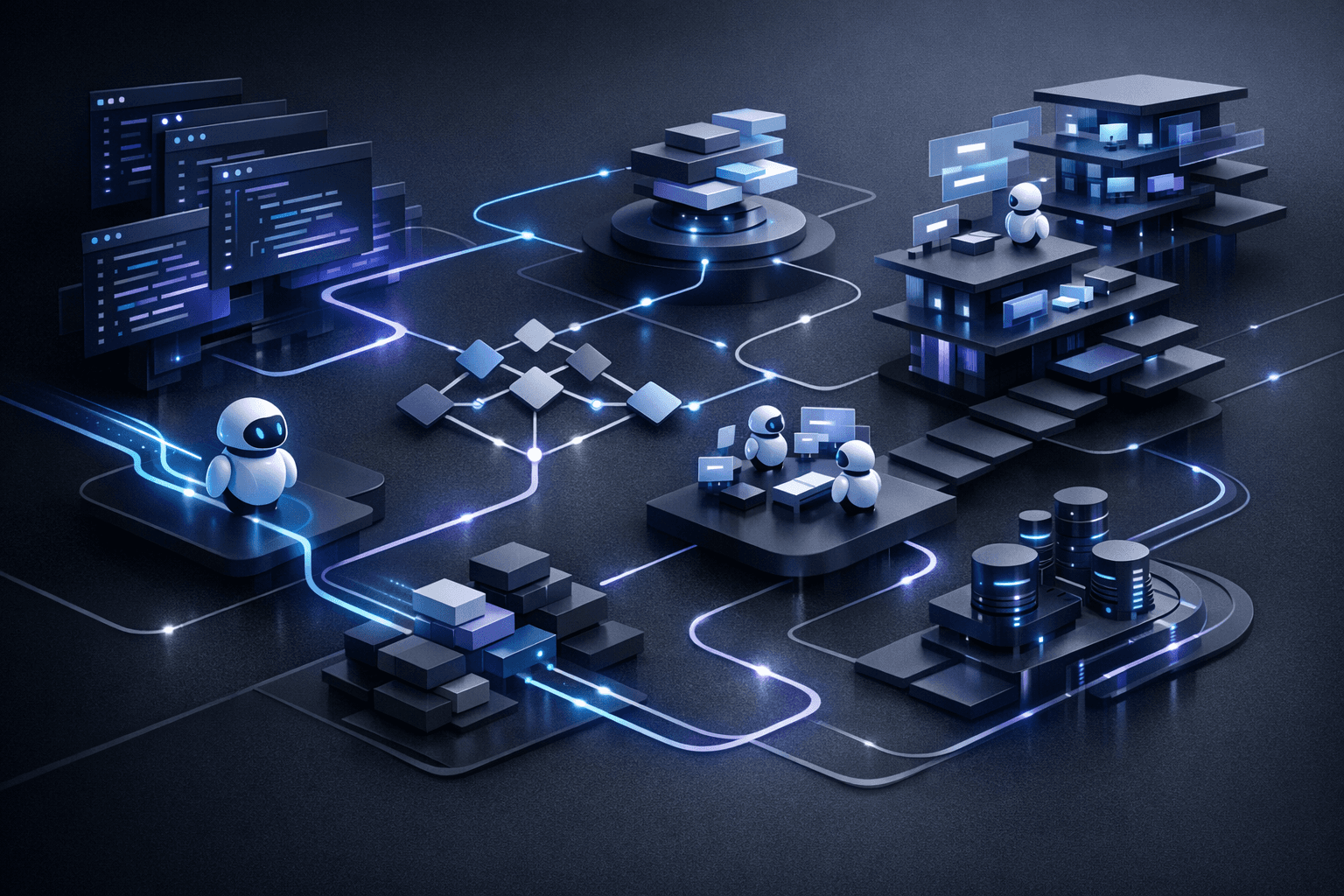
This is where the conversation becomes uncomfortable. If software creation becomes radically easier, then many tasks currently performed by knowledge workers become vulnerable much faster than most institutions are prepared to admit. Not eventually. Soon. The bottleneck stops being technical production and becomes judgment, taste, distribution, trust, and the ability to define valuable problems.
Olivier made an important point from the enterprise side: some sectors will move slower, especially those constrained by regulation, procurement, or public accountability. I agree. But that is a delay, not a defense. A slower adoption curve should not be mistaken for immunity. The wave still arrives. It just reaches some shores later than others.
What comes next for productivity tools
My belief is that we are moving toward a world where people will increasingly create their own software by describing the outcomes they want. Not with code in the traditional sense, and not by stitching together dozens of brittle tools, but by working with agents that can generate interfaces, workflows, memory, and execution paths on demand. That is the direction I want Notis to keep moving toward.
If that sounds abstract, here is the practical translation. The best productivity tool of the next decade may not be a better note taker, a better project manager, or a better automation builder. It may be a system that can become any of those things, instantly, depending on the context. The product is no longer a fixed application. The product is an adaptive layer between human intent and useful work.
That is why I no longer see the future of software as a universe of static tools. I see it as a continuum of capabilities, orchestrated by systems that understand context well enough to compose the right behavior at the right time. Once you see that clearly, you stop asking whether AI belongs inside software. You start asking how much of software survives at all.

Flo is the founder of Mind the Flo, an Agentic Studio specialized into messaging and voice agents.