


Building the Notis “manager” experience (and the refactor underneath)
Notis is evolving into a manager-style control center for agents—fast to spin up, context-rich via @-mentions, and consistent across channels. A major backend refactor (single Python API + unified MCP proxy) is setting the foundation for skills-first building blocks and an agentic workspace that can generate UI and reusable apps.
I’ve been thinking a lot about what “using agents” should actually feel like day to day. Not a sci‑fi demo, not a prompt playground—but a manager experience: a control center where you can spin up agents as quickly as sending an email, pull in the right context with @‑mentions, and flip any chat into voice instantly.
That direction is forcing us to rebuild parts of Notis from the inside out. The UX is the visible part, but the real story is the refactor underneath that makes the whole thing reliable across channels, secure by default, and fast to extend.
The “manager” control center: speed + context, not ceremony
The north star is simple: I want Notis to feel like a cockpit. You shouldn’t have to “set up AI” each time. The job of the product is to assemble context quickly, run actions safely, and keep you moving without ceremony.
In practice, that means you can create an agent on the fly, bring context in seconds through @‑mentions (automations, skills, files), keep the same experience whether you’re in the portal, desktop, or messaging channels, and switch to voice without changing tools or workflows.
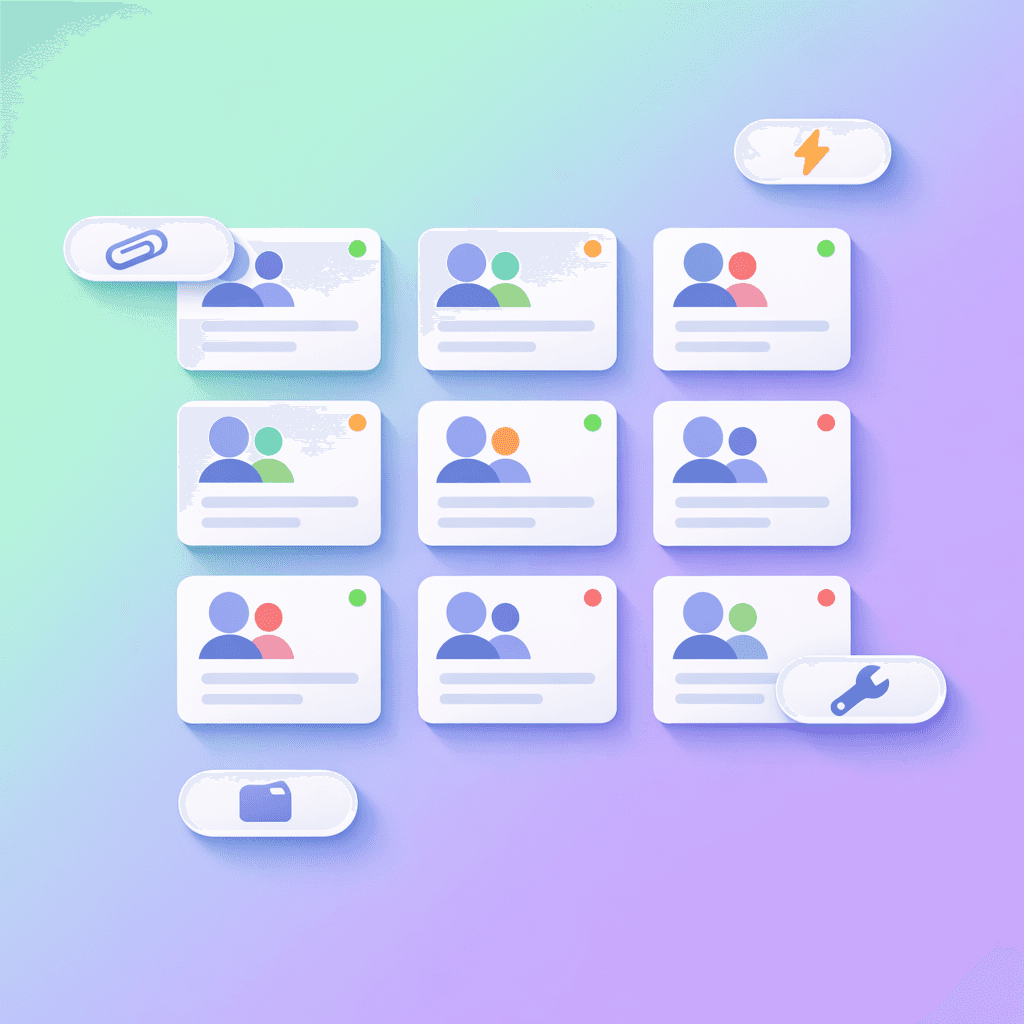
The refactor: one Python API, no scattered endpoints, no secrets in the desktop app
To make that experience real, the backend needed to stop behaving like a collection of “it works” pieces. We consolidated the backend into a single Python API. That removed scattered server endpoints and it also addressed a big security smell: avoiding shipping secrets inside the Electron desktop app.
If we want agents to be truly operational—touching email, calendars, CRMs, and internal tools—the foundation has to treat credentials and auth boundaries as first‑class design constraints, not as afterthoughts. This consolidation isn’t glamorous, but it’s what lets us move fast without breaking everything each time we add a new capability.
Tool execution: everything flows through one unified MCP proxy
The second big shift is how tools are executed. Instead of letting agents call tools directly, or wiring tool calls through websocket events, we redesigned execution so all actions flow through one unified MCP proxy.
That proxy exposes three tool families in a consistent way: built‑in Notis tools, user‑connected custom MCP servers, and Composio tools. The proxy handles authentication and ensures parity between dev and prod and across channels (portal, WhatsApp, and more). The goal is boring reliability: one action layer, one mental model, and one place to enforce permissions and logging.

“Skills” vs “automations” is getting reframed (and simplified)
This refactor also forces a clearer model for what we’re building. Right now, I think about automations as triggerable instruction bundles injected at the orchestrator level (webhooks, schedules, manual runs). Skills are dynamically loadable capabilities for sub‑agents, often paired with scripts for deterministic work like PDF/DOCX parsing or transformations.
As we push toward a manager control center, skills start to look like the more fundamental building block. In that world, an automation is effectively a skill plus a trigger. That’s not just semantics—it’s a product simplification. It lets us design one core object and then decide how it runs, instead of maintaining two parallel systems that overlap but never quite align.
The bigger strategy: an agentic workspace that can generate UI, databases, and templates
This is where it gets exciting. The longer‑term vision is Notis as an agentic workspace that can generate UI plus databases and templates, so users can build and distribute custom “apps” inside Notis—things like accounting or invoicing workflows that are usually painful to stitch together.
Strategically, I’m not trying to pretend we’re creating the entire market. OpenAI and Anthropic are expanding it massively. The move is to ride that wave with the right abstraction layer: a workspace where agents can actually operate, where tooling is composable, and where end users can package real outcomes into reusable systems. That’s what I mean by “manager experience.” It’s not about talking to AI. It’s about running work.

Flo is the founder of Mind the Flo, an Agentic Studio specialized into messaging and voice agents.
Related posts
Treat Notis Like an Intern: what a messy onboarding taught me about AI assistants
A behind-the-scenes onboarding story that reveals the simple setup fixes, the right prompting mindset, and the product direction I’m building for Notis—so your assistant actually ships work instead of getting stuck.
The uncomfortable truth about my next raise: 250k or 500k changes the whole company
This blog discusses the implications of raising either $250k or $500k, emphasizing how the amount influences company strategy, hiring, and narrative. It explores the emotional aspects of fundraising, the importance of clarity in pitching, and the potential risks of being tied to existing platforms like Notion. The author outlines a plan to refine their pitch, focus on key hires, and choose a fundraising amount that aligns with achievable milestones.
What $100 on YouTube taught me about Notis growth (and why we split B2B vs prosumer)
This article discusses insights gained from a $100 YouTube ad experiment that revealed the importance of engaging content structure for Notis's growth strategy. It emphasizes the need to separate B2B and prosumer marketing funnels, with tailored narratives for each segment. The piece outlines a LinkedIn-based B2B outreach strategy and plans for increasing video content production to enhance engagement. The key takeaway is to focus on creating a solid core message before optimizing distribution.