Content

Boniface Gaultier: the AI executive assistant that finally stuck
Boniface Gaultier didn’t come to Notis looking for “another productivity tool.” He came because his weeks were full, his inbox was loud, and the real problem always showed up after the meeting: the follow-up that never got done.
When we spoke, he described the same loop I’ve lived through as a founder: you take notes everywhere, you promise yourself you’ll “process them later,” and then you wake up three days later with zero clarity on what was decided, who owns what, and what’s now quietly late. Notis became his AI executive assistant not because it was clever, but because it was reliable.
The problem wasn’t work. It was the after-work.
Boniface’s days weren’t empty. They were packed with calls, quick decisions, and that kind of “constant context switching” that looks productive from the outside. The thing that kept breaking was the invisible layer: remembering what mattered, turning it into action, and keeping it moving when everyone’s attention moved on.
He had the usual setup: calendar invites, a few docs, a to-do list that grew faster than it shrank, and a graveyard of voice notes. None of it was wrong. It just required a person behind it. And that person was always him, at 11pm, trying to reconstruct a week from fragments.
What he actually wanted
He didn’t want “better notes.” He wanted someone to sit in the back of the room, pay attention, and then do the annoying part: write the follow-up, pull out the decisions, assign the next steps, and remind him when something drifted.
That’s literally what an executive assistant does. The punchline is that most of us don’t have one. So we cosplay as our own assistant, and it’s exhausting.
What changed when Notis became his assistant
Boniface started using Notis the way you’d use a real assistant: he stopped organizing and started delegating. He’d forward an email thread, drop a meeting recording, or speak a quick voice note, and expect a clean output: a summary he could trust and tasks that were already where they belonged.
The subtle shift is that Notis isn’t a place to store information. It’s a system to move information forward. And for Boniface, that distinction was the whole point.
Every conversation becomes a brief
Instead of re-listening to a call or re-reading a chat thread, he’d ask one question: “What did we decide and what happens next?” Notis would answer in plain language, with the context attached, so he could act immediately without playing detective.

Meetings that end with decisions
Boniface told me his biggest frustration wasn’t meetings. It was the ambiguity they left behind. Someone says “let’s do it,” everyone nods, and then the next day nobody knows what “it” was. With Notis, he treats the recording like a source of truth. The assistant pulls out the decisions, captures the rationale, and turns the loose “we should…” into concrete next actions.
The difference is speed. When the summary arrives while the context is still fresh, he can reply instantly, assign ownership, and close loops before they rot. That’s exactly the behavior I’ve seen in great executive assistants: they don’t just remember, they accelerate.
Follow-ups that write themselves
The other thing he kept repeating was “I just hate writing the follow-up email.” Not because it’s hard, but because it’s a tax. You need to recap, stay polite, be precise, and not forget anything. Notis drafts the follow-up in his voice, with the exact decisions and open questions, so he’s editing instead of starting from zero.
That sounds small until you realize how many times per week you avoid sending a follow-up because it feels like a 15-minute task. Multiply that by every meeting. That’s where execution goes to die.
One place to ask, not search
Boniface also stopped searching for information. He stopped opening five tabs, scanning Slack, digging through docs, and trying to remember which version was “the real one.” He asks Notis. The assistant answers with context, and when needed it points back to the original thread or note. It’s less like a database and more like having someone who remembers your week.
How Boniface uses Notis day to day
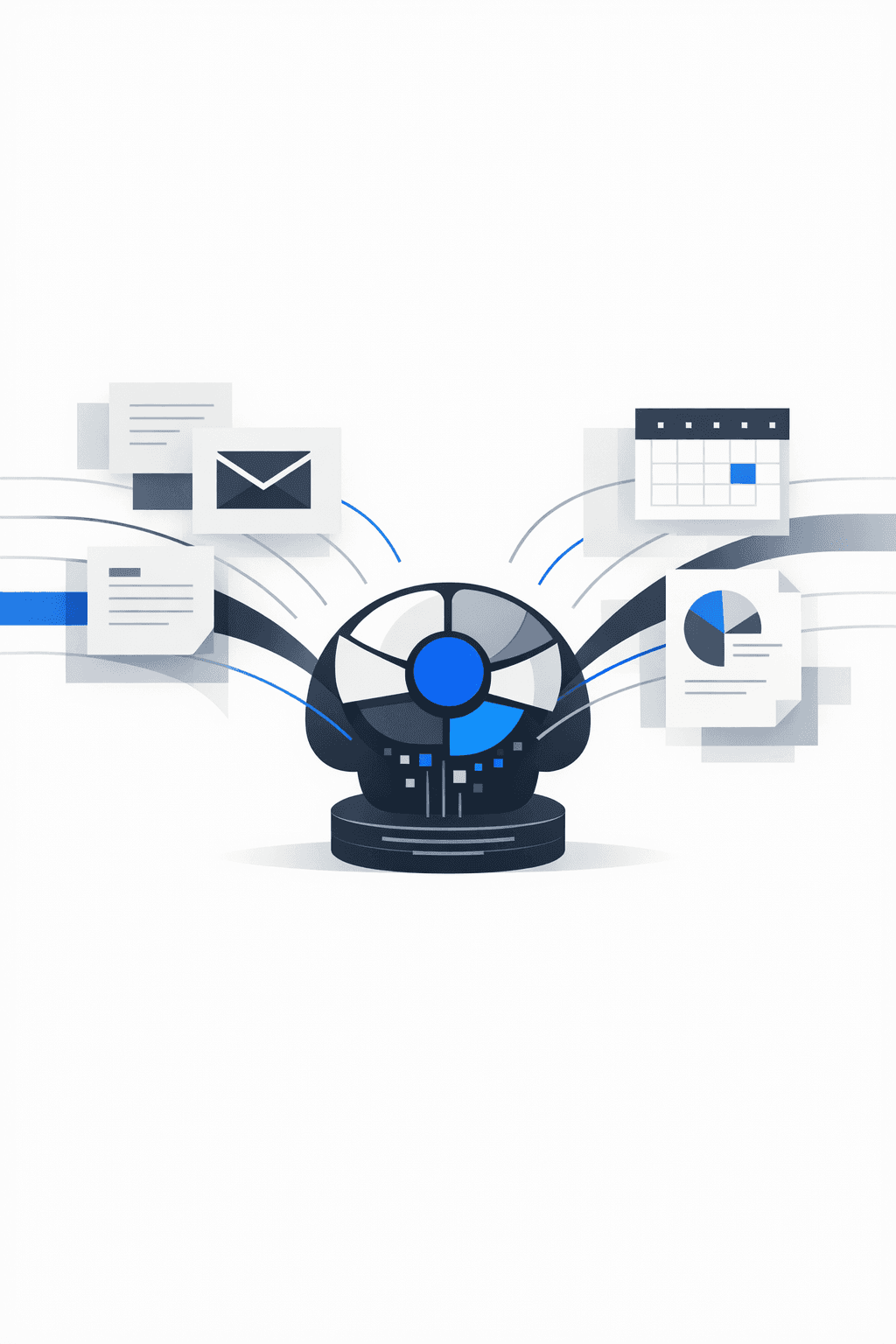
His workflow is refreshingly unsexy. During the day, he just captures reality: meetings, emails, random thoughts, voice notes while walking. He doesn’t sort anything. He doesn’t “organize his second brain.” He forwards or records and moves on.
Then, at the end of the day or before his weekly review, he asks for an executive recap. Not a dump of notes. A recap: what got decided, what’s blocked, who’s waiting on him, and what he should not forget. That’s the moment the assistant earns its keep, because it’s doing the coordination work humans are bad at.
What I liked most is that he didn’t build a ritual around the tool. He didn’t become “a Notis power user.” He just removed friction. The assistant does the boring translation between messy reality and clean execution.
For Boniface, that means fewer mental tabs. He’s not carrying five half-open loops in his head all week. When someone asks “where are we on that?” he isn’t guessing. He’s checking what was decided, what was assigned, and what’s overdue.
The part that surprised me (and why I’m obsessed with this)
When we started Notis, I thought the breakthrough would be “better AI.” Smarter summaries, more features, more prompts. Conversations like this keep pulling me back to a simpler truth: people don’t need more intelligence. They need more support.
The job of an executive assistant isn’t to be brilliant. It’s to be dependable, context-aware, and a little annoying in the right way. It’s to make sure the follow-up happens, the decision gets written down, and the next step has an owner. If Notis can do that for someone like Boniface, that’s the real win.
If you’re trying to be your own assistant, you’ll recognize this
If your calendar is full but your projects feel stuck, it’s probably not a motivation issue. It’s a coordination issue. Most work doesn’t fail because people don’t care. It fails because the follow-up is manual, scattered, and easy to postpone.
Boniface’s story is a reminder that the goal isn’t to capture everything. The goal is to turn the right moments into action, fast enough that the week stays coherent. That’s what an assistant does. That’s what we’re building.


Flo is the founder of Mind the Flo, an Agentic Studio specialized into messaging and voice agents.