Content
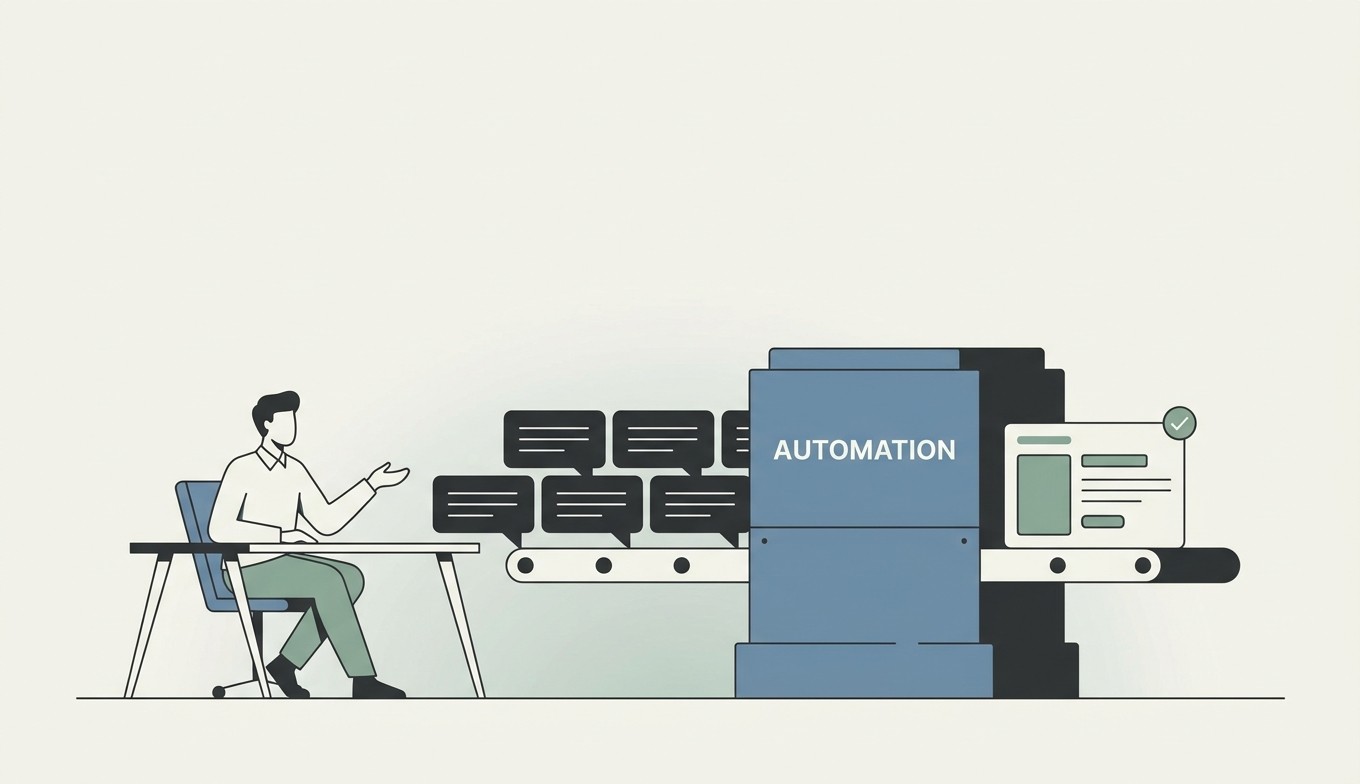
Automate Repetition: The Five-Times Rule That Gives Founders Their Time Back
You do not get ahead by working harder. You get ahead by refusing to repeat yourself.
Most founders say they want automation. What they actually want is for the pain to disappear without changing anything about how they work. That is why they stay stuck. They keep answering the same customer questions, rewriting the same explanations, and manually pushing the same buttons like it is still a virtue.
I have a simpler rule.
If I type the exact same reply five times, I am done. I will not type it a sixth time.
That rule sounds small. It is not. It changes how you look at your business. The moment you notice repetition, you stop treating it like work and start treating it like a system failure. The repeated refund explanation is not a task. It is a broken workflow. The repeated onboarding answer is not customer care. It is documentation that has not been turned into execution. The repeated follow-up email is not discipline. It is a machine begging to be built.
Most businesses miss this because repetition feels harmless when it arrives in little pieces. Two minutes here. Four minutes there. A quick reply after lunch. A copy-paste before dinner. Nothing looks dramatic in isolation. But stack those micro-repetitions over a month and you realise you have hired yourself into the role of full-time human keyboard.
That is insane work for a founder.
Repetition is the first signal
The people who win with AI are not necessarily the most technical. They are the ones who notice patterns fast.
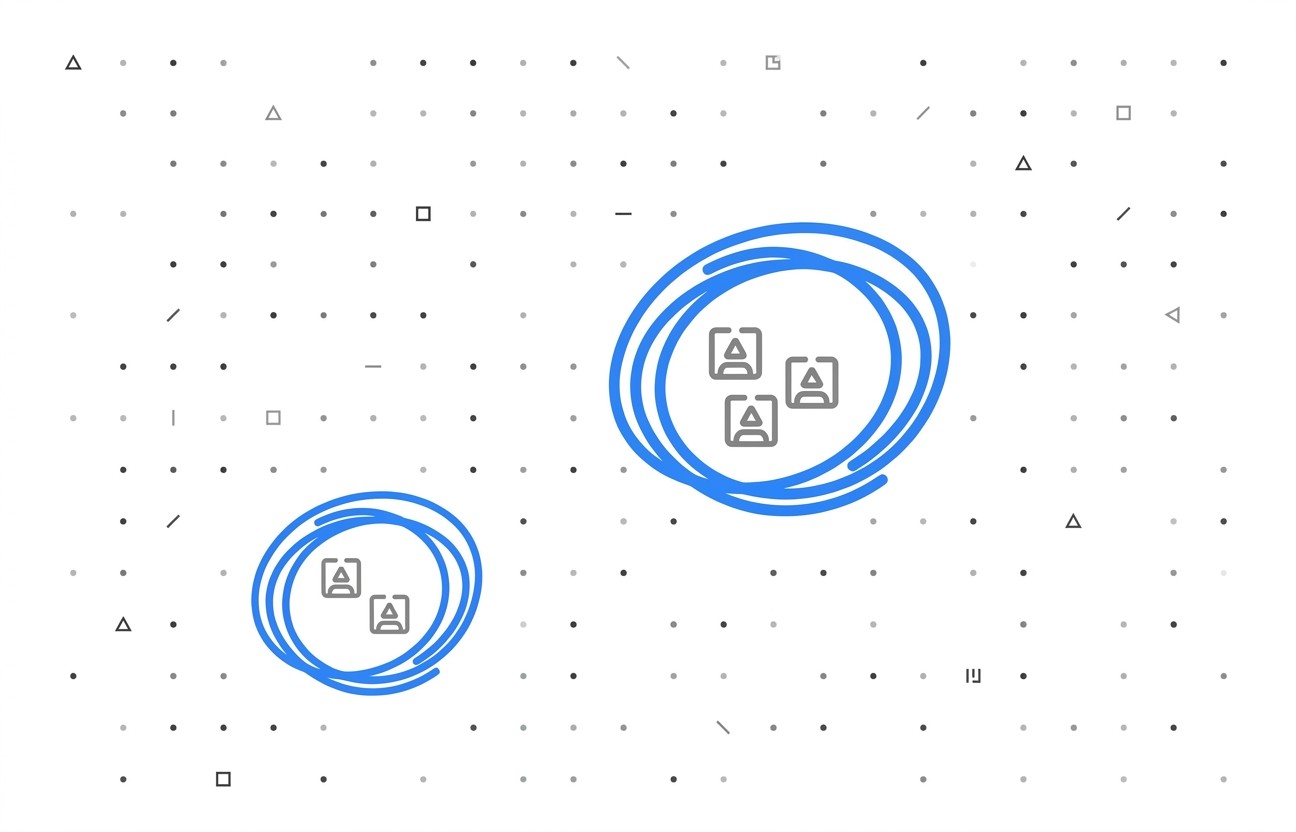
They open their sent folder and see the same sentence ten times. They hear the same objection on five sales calls in a row. They notice that every new feature launch triggers the exact same internal checklist, the same explanations, the same customer questions, the same support tickets. They do not shrug and say, “That is business.” They say, “Good. This is automatable.”
That is the mindset shift most people still have not made.
Automation does not start with Zapier diagrams, agent frameworks, or a giant systems map on a whiteboard. It starts with counting. Count the repetitions. Count the messages you send again and again. Count the steps you take with zero judgment required. Count the decisions that are not really decisions because you already know the answer before opening the tab.
If you can count it, you can probably automate it.
And right now, 99% of your competitors do not do this. They talk about AI. They repost threads about AI. They collect AI tools like Pokémon cards. But when you actually look inside the business, they are still manually sending policy answers, manually logging meeting notes, manually triaging leads, manually moving information from one place to another.
They are busy looking advanced.
You can be the one actually becoming efficient.
Stop worshipping manual work
A lot of founders still wear manual effort like a badge of honour. They think speed comes from being responsive at all hours. They think quality comes from personally touching everything. They think control means keeping themselves in the loop for every tiny action.
It does not.
That mindset scales stress, not output.
The truth is brutal: if your business depends on you personally rephrasing the same answer over and over, you have not built an advantage. You have built a bottleneck with a pulse.
There are only so many times you can explain your refund policy before the real problem is no longer the customer question. The problem is that you decided your brain should remain the API for your company.
That might feel safe in the beginning. It feels less safe when you are buried under messages, your team is waiting on decisions, and your best work keeps getting pushed into the evening because the day was consumed by low-leverage repetition.
This is where automation earns its place. Not as a gimmick. Not as a futuristic layer you add for branding. As a ruthless filter for what still deserves your hands.
The five-times rule
The five-times rule works because it kills ambiguity.
Founders often delay automation because every repetitive task feels too small to justify the setup. They wait for the perfect workflow, the perfect tool stack, the perfect library of prompts, the perfect weekend to “systemise everything.” That weekend never comes.
So use a trigger instead.
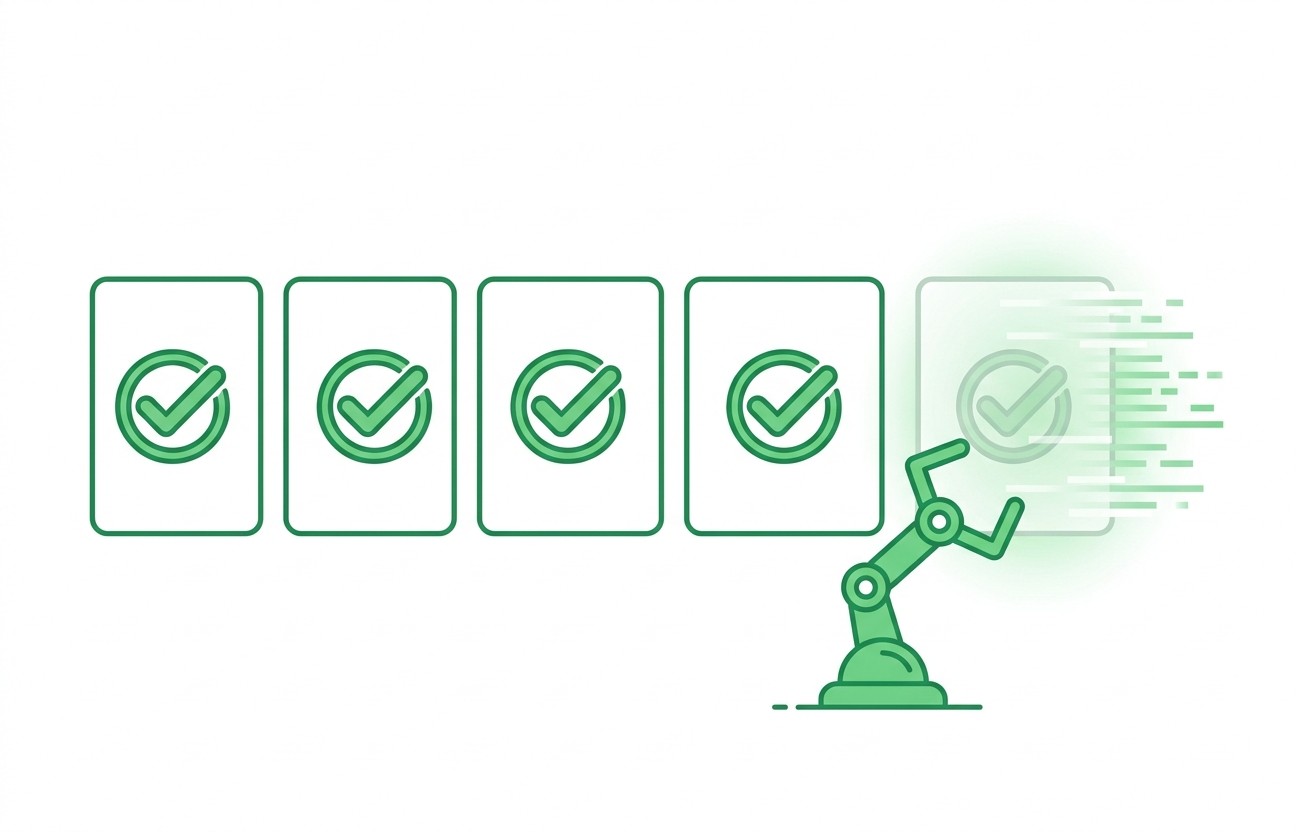
The moment something happens for the fifth time, it graduates from annoyance to candidate for automation.
That could mean building a small internal tool. It could mean turning a support response into a template with logic. It could mean teaching an AI assistant how to classify incoming requests, draft the first answer, or update your systems after a call. It could mean documenting the decision tree once so the machine can run it forever.
What matters is not the tool. What matters is that the sixth repetition does not belong to you anymore.
That one principle compounds fast.
A repeated sales explanation becomes an automated follow-up sequence. A repeated support answer becomes an instant response with the right context. A repeated post-call admin task becomes a workflow that extracts the decisions, updates the CRM, and creates the next actions before you even stand up from your chair.
This is how you get your afternoons back. Not with a grand productivity reinvention. With a small refusal to keep doing stupid work twice.
Your sent folder is a gold mine
If you want an unfair advantage, do not start by shopping for more AI tools. Start with your sent folder.
Your sent folder is basically a map of where your company still leaks time.
Open it. Search for repeated phrases. Look at customer replies, internal updates, proposal explanations, onboarding instructions, scheduling messages, feature clarifications, pricing answers, all of it. You will find clusters. Those clusters are the beginning of your automation roadmap.
The same is true for support tickets, Slack replies, WhatsApp threads, and meeting follow-ups. Repetition leaves fingerprints everywhere. Most teams ignore them because they are too close to the mess. They adapt to the pattern instead of removing it.
Do not adapt. Extract.
Take the patterns. Write down the rule behind them. Define the input, the expected output, and the edge cases that still need a human. Then hand the predictable middle to the machine.
That is the real promise of AI for businesses. Not some vague idea that “everything will be automated.” It is the ability to identify repeatable judgment and operationalise it while it is still trapped in someone’s inbox.
Automation is not about laziness
Some people hear this and think automation is just a cleaner word for avoiding work.
Wrong.
Automation is how serious operators protect work that matters.
You automate the repetitive reply so you can spend time on the angry customer who needs nuance. You automate the scheduling and summaries so you can think clearly in the meeting itself. You automate the obvious follow-up so you can focus on the strategic conversation that actually moves the deal.
Machines are not replacing judgment here. They are clearing the repetitive sludge that stops judgment from showing up where it matters.
This is why the businesses that adopt automation properly do not just save time. They look sharper. They respond faster. They are more consistent. Their operations feel tighter because the repetitive parts are no longer dependent on mood, memory, or whether someone had enough sleep.
That consistency becomes a product advantage.
And because most competitors still operate like manually stitched-together workflows with a logo on top, even simple automation creates separation.
The 1% start by counting
If you want to be in the 1%, stop asking whether AI is important. That question is already dead.
Ask this instead: what did I repeat five times this week?
That is where the opportunity is hiding.
Not in abstract debates. Not in trend reports. Not in another carousel about “10 AI tools every founder needs.” In the boring, obvious repetition you have started to accept as normal.
The founder advantage today is not knowing the most about AI. It is building the habit of noticing repeatability before everyone else does.
Count the patterns.
Then remove yourself from them.
That is how you stop acting like a human keyboard. That is how you turn speed into leverage. That is how you get time back without lowering the standard.
And that is how you quietly outrun competitors who are still typing the same sixth reply.

Flo is the founder of Mind the Flo, an Agentic Studio specialized into messaging and voice agents.