Content

AI Won't Take Your Job But This Person Will - The Efficiency Truth
Most people hear “AI is coming for your job” and picture some sci‑fi takeover. The reality is more boring and way more uncomfortable: AI won’t take your job, but someone that is using it will.
The real competition isn’t the model, it’s the workflow
When you work with an AI agent, there’s this almost magical feeling: you ask, it answers, you iterate, you ship. No scheduling. No waiting. No decoding someone’s vague Slack message three hours later. No “quick sync” that eats half your morning.
That feeling isn’t just about the intelligence of the model. It’s about the fact that the agent doesn’t bring human coordination tax.
If you’ve ever run a team, you already know the dirty secret: a huge part of “work” is not building anything. It’s alignment, handoffs, status updates, context transfer, approvals, and the endless loop of clarifying what we meant.
AI doesn’t remove the need for communication. It removes the friction of it.
AI exposes how inefficient humans are at working together
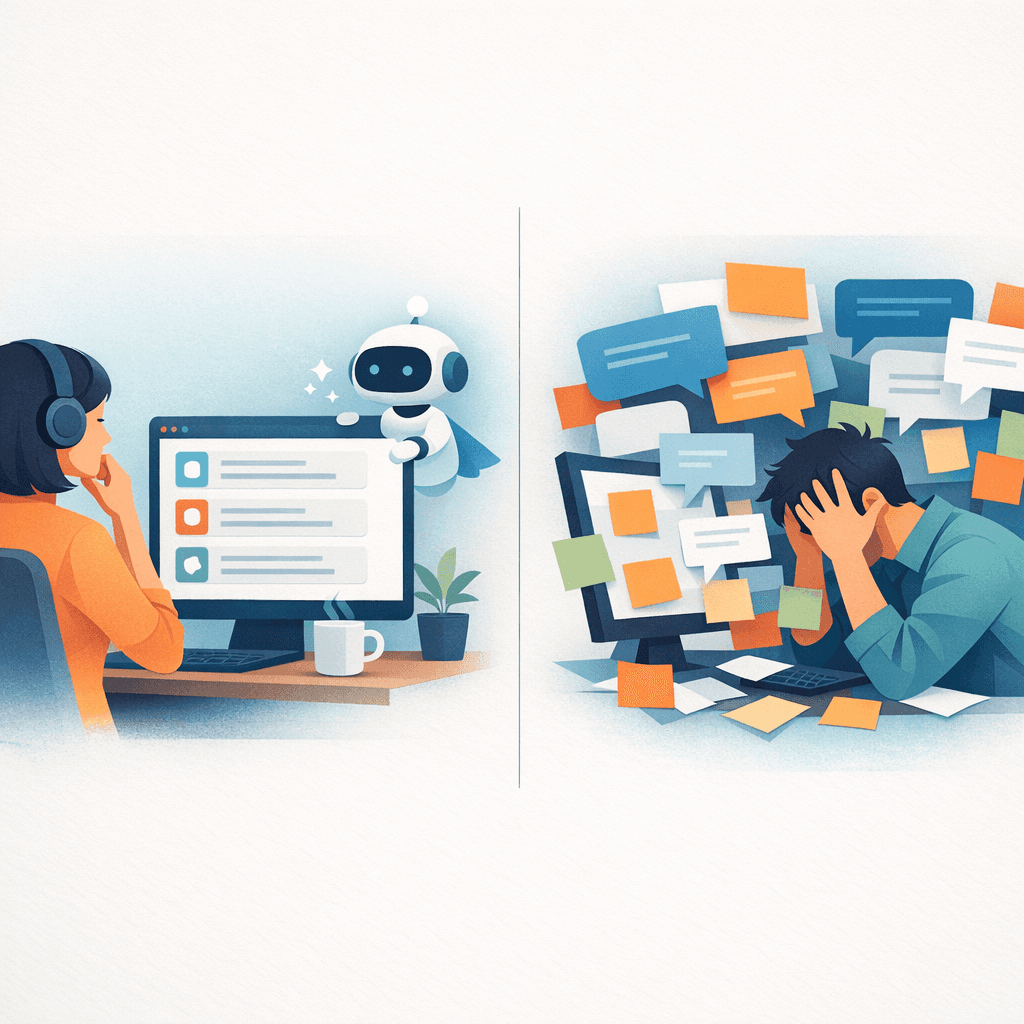
I don’t think AI is primarily a “replacement” story. I think it’s a mirror.
The moment you start collaborating with an agent, the inefficiencies of human collaboration get louder. You notice how often you’re blocked by other people’s calendars, their time zones, their attention, or their need for context you already provided somewhere else.
And I’m not saying this to dunk on humans. I’m human. You’re human. We’re just operating on a collaboration stack that was designed for a different era.
We built modern work on synchronous rituals: meetings, standups, weekly calls, “let’s jump on a quick one.” It worked when teams were small, co‑located, and the pace of change was slower.
Now we’re distributed, the surface area of work is massive, and the speed of execution is the only real moat for most startups. Synchronous communication becomes a bottleneck. It creates delays, and delays compound.
The simplest leverage: make communication asynchronous by default
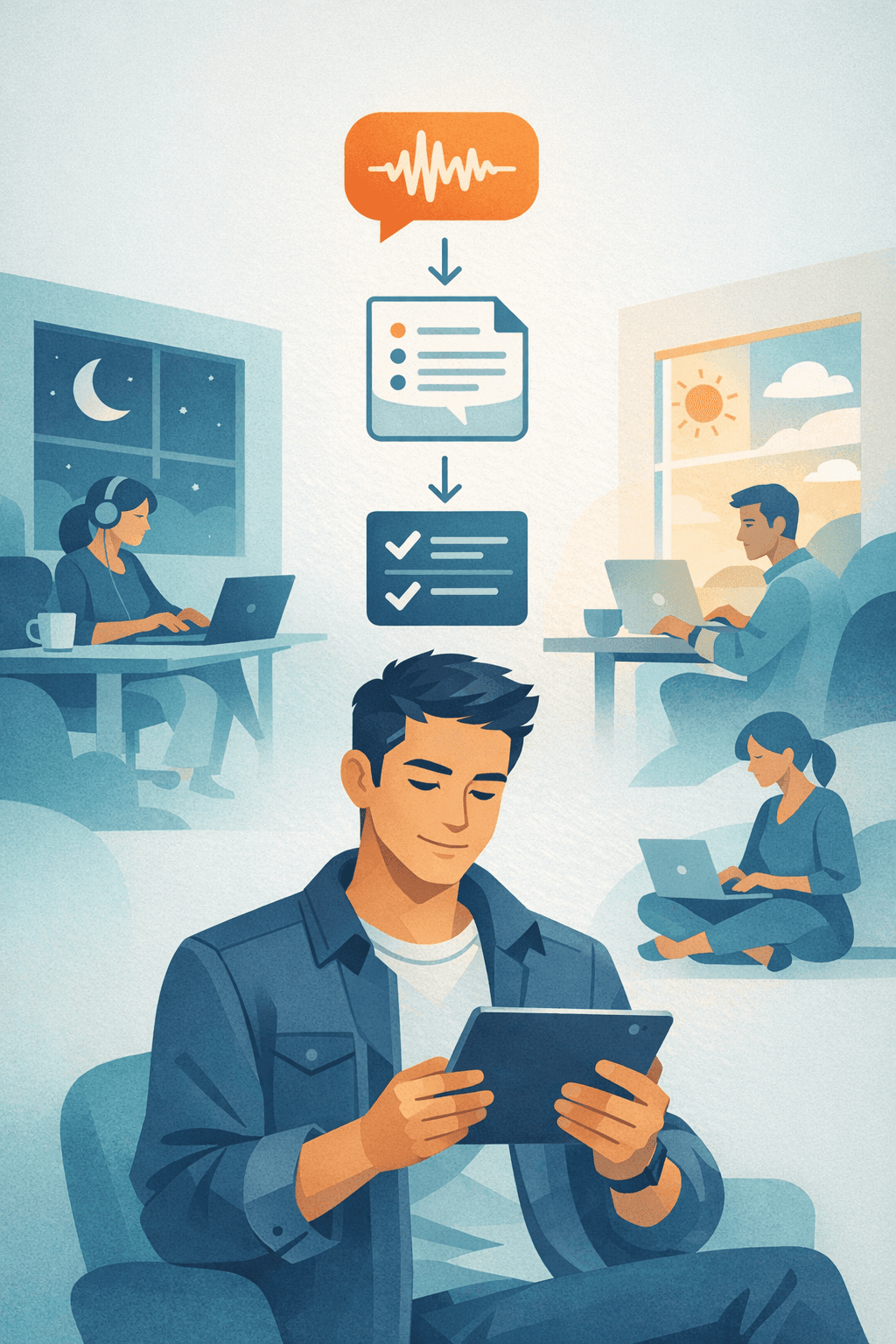
One thing AI can help with immediately is streamlining communication by making it asynchronous so it can be consumed when it’s convenient for people.
That sounds simple, but it’s a huge shift.
Instead of forcing everyone into the same moment, you move to artifacts that carry context on their own: a clear decision, a short explanation, a recap with the why, the what, and the next move. The receiver can consume it when they’re actually able to think, not when they’re trapped in back‑to‑back calls.
AI helps because it can do the boring parts that people hate doing consistently: turning messy thoughts into structured updates, extracting what matters, rewriting for clarity, summarizing threads, and capturing decisions without making you feel like you’re writing documentation for fun.
Why the “AI person” wins
The person who uses AI well isn’t just faster at producing output. They’re faster at moving work through the system.
They reduce the time between idea and execution because they don’t get stuck waiting for clarity, waiting for approvals, or waiting for the right meeting slot to exist.
They create artifacts instead of noise.
They work in a way that respects attention. Their collaborators get clean context, at the right level, when they need it. That is a competitive advantage that doesn’t show up on a résumé.
Over time, it becomes brutal.
Two people can be equally smart, equally experienced, equally motivated. The difference is that one of them has built an operating system where communication doesn’t block progress.
The efficiency truth nobody likes hearing
If you want the honest take: most teams aren’t losing because they lack talent. They’re losing because they’re slow.
AI doesn’t magically fix culture, strategy, or taste. But it can absolutely remove a layer of friction that we’ve normalized for years.
If you take nothing else from this: stop asking “Will AI replace me?” and start asking “What parts of my job are pure coordination, and how do I kill that overhead?”
That’s where the gap opens.
What I’d do this week if I wanted an unfair advantage
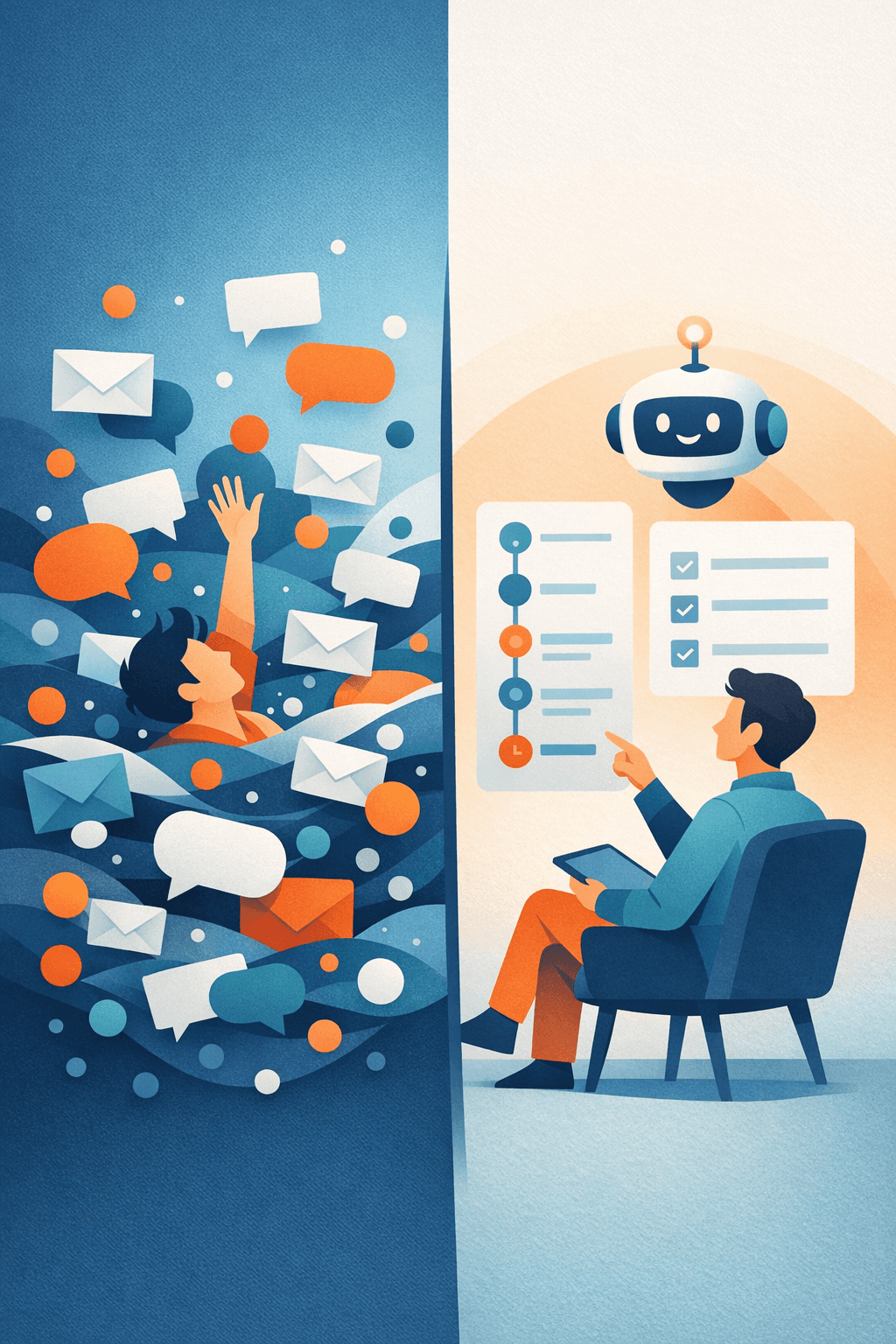
Pick one recurring communication loop that’s wasting time in your team: a status meeting, a standup, a weekly update, a “keep me posted” Slack thread. Then redesign it so it produces one clean artifact that can be consumed asynchronously.
Do that once, and you’ll feel it.
Do it across your organization, and you’ll understand why the real threat isn’t AI.
It’s the person using it better than you.

Flo is the founder of Mind the Flo, an Agentic Studio specialized into messaging and voice agents.