Content

AI Note-Taking Apps Are Solving the Wrong Problem
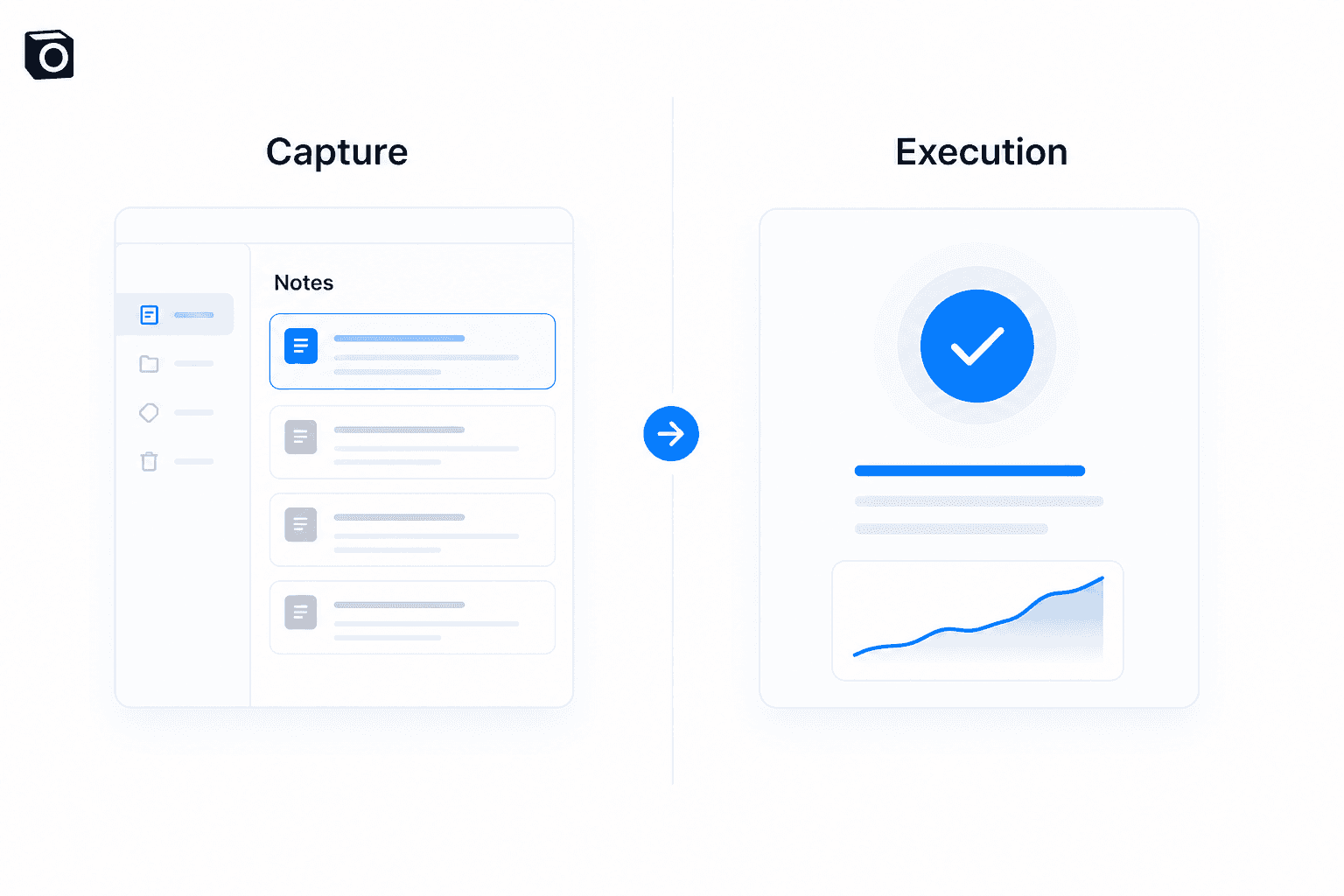
The problem with most AI note-taking apps is not that they take bad notes. The problem is that they stop exactly where a founder’s real problem begins. You capture the idea, the meeting, the reminder, the bug, the investor follow-up, the half-formed product thought. Then what? It sits there, beautifully summarized, waiting for you to become the operations department again.
That is why I think the next wave of note-taking will not be about better capture. Capture is basically solved. The useful question is whether your notes can become action without making you leave the conversation, switch tabs, clean up a database, or perform the sacred productivity ritual of pretending a tag system will save your life.
Search intent: people want smarter notes, but they really need follow-through
The obvious keyword here is “AI note-taking apps.” But the founder pain underneath is more specific: “I keep having ideas and conversations that should become work, but they die in the place I captured them.” Google Search Console for Notis already shows long-tail demand around voice notes and Notion, including queries like “best ai dictation tools that integrate directly with notion pages for voice-first note taking,” with 146 impressions and a 0% CTR over the last roughly 90 days, and “voice notes to notion,” where Notis is already appearing. That is not huge traffic yet, but it is very precise traffic.
The market is moving in the same direction. Notion AI Meeting Notes can transcribe and organize meeting content inside a workspace. Otter’s Notion integration can push transcripts into Notion. Dedicated voice-to-Notion tools such as Pivotic and SendMyVoice are built around the idea that a spoken thought should land somewhere structured. All of that is useful. None of it is the full job.
A note is not a result
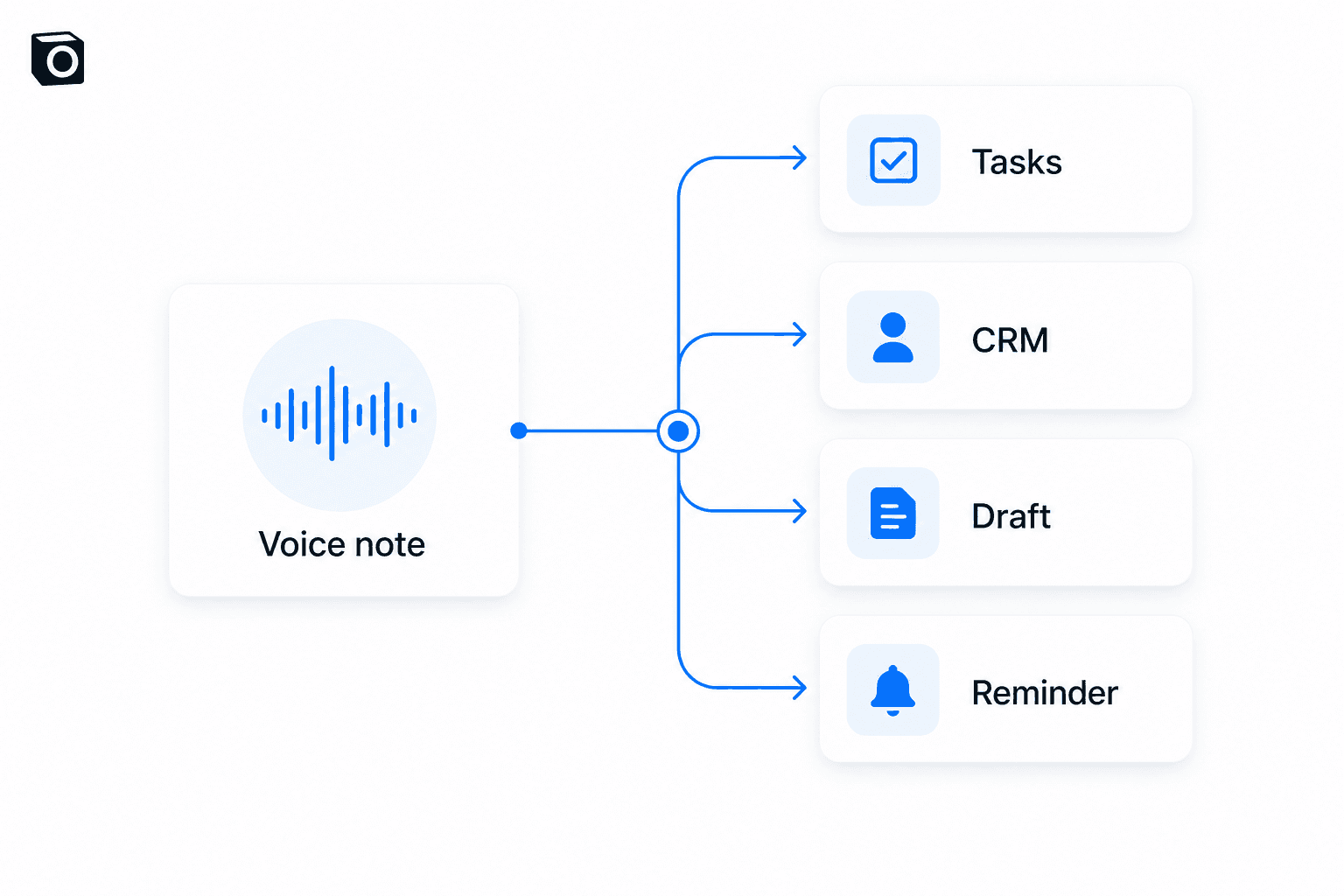
A note is a container. A result is what happens after the note exists. If I tell my assistant, “Remind me to send Antoine the updated pricing, add the investor intro to the CRM, and draft a short follow-up,” I do not want a beautiful markdown transcript of my anxiety. I want the reminder created, the CRM updated, and the follow-up drafted. If something needs approval, ask me. If something can be done safely, do it.
This is where AI note-taking apps and AI interns start to separate. A note-taking app optimizes the archive. An AI intern optimizes the handoff. The archive matters because memory matters, but founders do not win by having a cleaner pile of unprocessed thoughts. They win by keeping momentum while the machine handles the operational mess around them.
The founder workflow should start where the thought happens
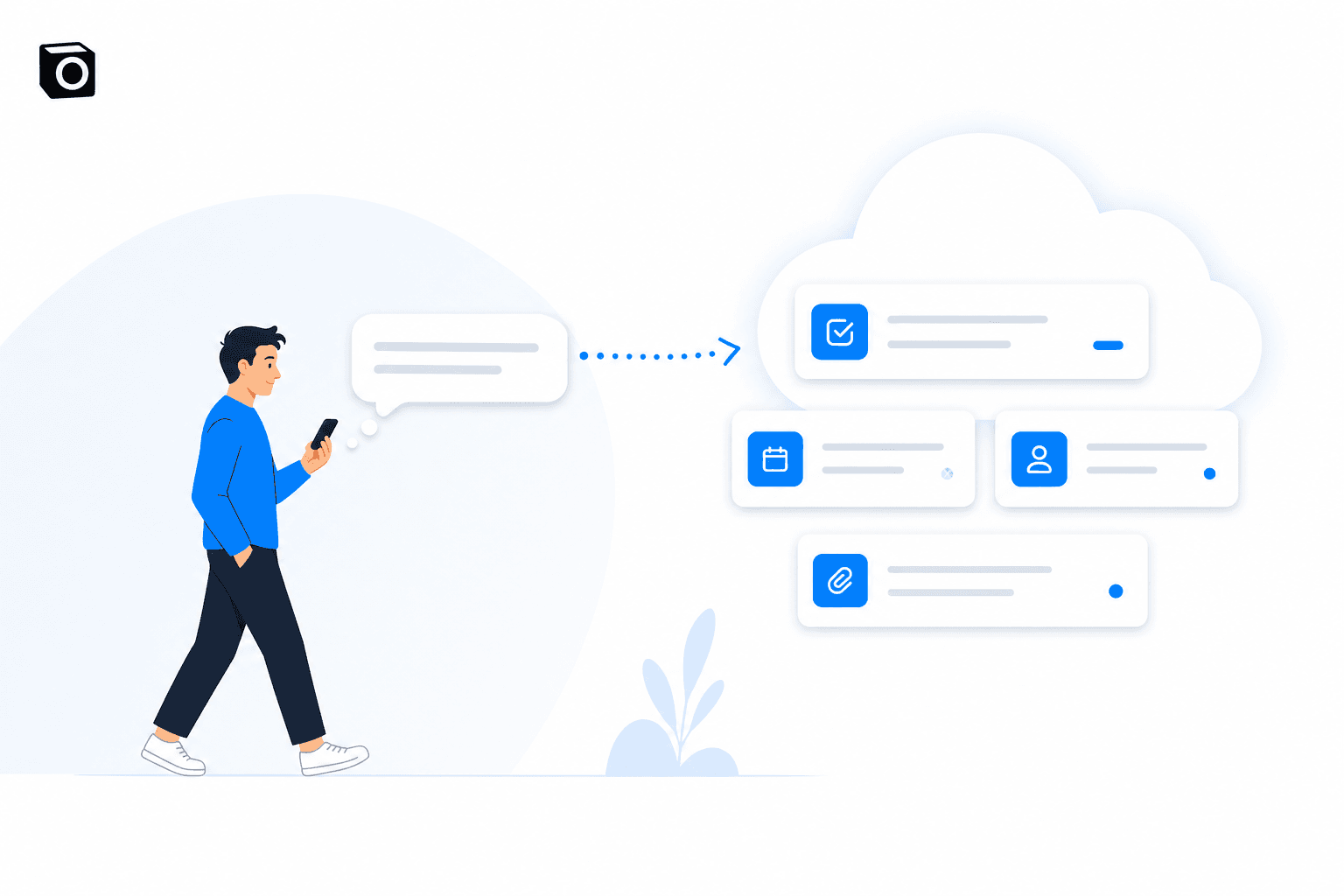
For most founders, the thought does not happen inside a dashboard. It happens while walking, driving, cleaning up after a toddler, waiting for a call, or reading an annoying email in WhatsApp. That is why the interface matters. If the tool requires you to open a separate productivity app, choose a workspace, pick a template, and then speak in a way the system understands, it has already lost the moment.
Notis is built around the opposite assumption. The message is the interface. You send a voice note or text from WhatsApp, Telegram, iMessage, email, or Slack, and Notis turns that into the right next step across your connected tools. The Notis documentation covers the broader pattern: notes, tasks, CRM updates, content generation, reminders, and automations all connect to the same assistant instead of living as separate little islands.
What good AI note-taking should do in 2026
A useful AI note system should capture the raw thought, preserve the context, decide what kind of object it is, and route it. If it is an idea, save it where future you can find it. If it is a task, create the task. If it is a meeting insight, connect it to the meeting. If it is a customer signal, update the CRM. If it is content, create a draft. If it is ambiguous, ask one clarifying question and stop being clever.
This sounds simple, but it changes the product category. The note is no longer the destination. The note becomes the input layer for execution. The goal is not to remember more. The goal is to trust that your scattered founder brain can throw work into one place and have it come back as something usable.
Where Notis fits
Notis is not trying to be the prettiest note-taking app. Honestly, that race is crowded enough. Notis is the messaging-native AI intern that catches the thought where it appears and pushes it into the right workflow. That may be a Notion page, a reminder, an email draft, a CRM update, a blog outline, a bug report, or a scheduled automation.
If you are a student building a personal knowledge base, choose the app with the nicest graph view and enjoy the aesthetic. If you are a founder trying to keep the business moving while your brain throws sparks in twelve directions, choose the system that turns capture into completion. A note you never act on is just a very well-formatted guilt trip.
The takeaway
The future of AI note-taking is not another place to store thoughts. It is a lightweight execution layer that turns messy human input into useful work. Capture should be instant. Organization should be automatic. Follow-through should be the default. Anything less is just a smarter notebook pretending to be an assistant.

Flo is the founder of Mind the Flo, an Agentic Studio specialized into messaging and voice agents.