Content
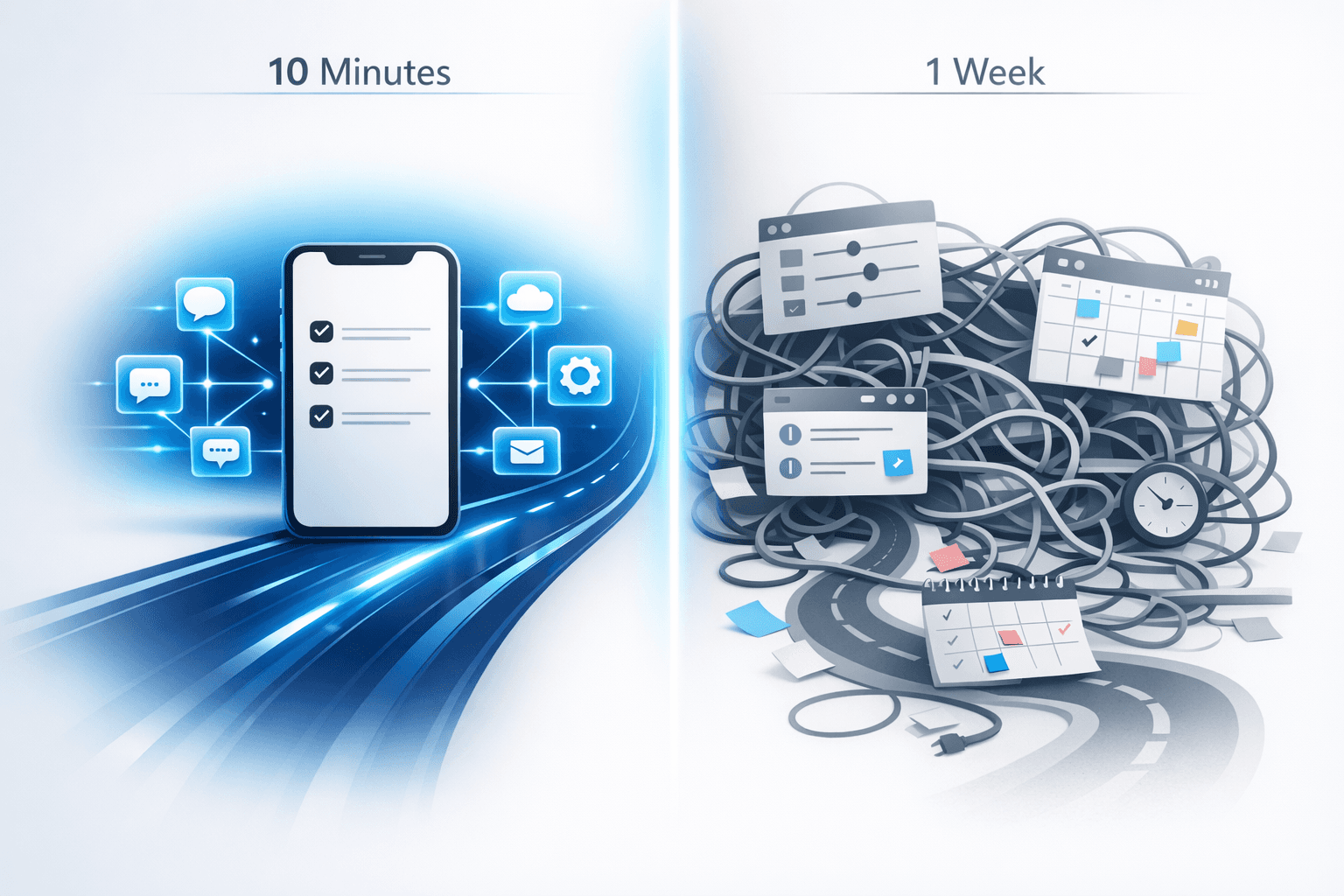
10 Minutes vs 1 Week: The AI Setup Reality
Most teams don’t fail at “adopting AI agents.” They fail at something way less sexy: setup.
They get excited, pick a tool that looks powerful, and then spend days wiring connectors, fighting auth scopes, deploying infra, and arguing about security. By the time the agent can do one useful thing, the momentum is gone.
That’s exactly why I built Notis: not to win the “most configurable” contest, but to win the only contest that matters in real life—time-to-value.
The setup tax nobody puts on the pricing page
If an agent can touch your email, calendar, docs, tasks, and CRM, it also touches your company’s nervous system. That’s where the setup tax comes from: permissions, governance, reliability, and making sure the thing doesn’t break the moment someone changes a setting.
Frameworks like OpenClaw are genuinely impressive. They give you an insane amount of control. But control comes with responsibility: you own deployment, hardening, updates, monitoring, and the long tail of “oh wow, this connector doesn’t behave like we expected.” A popular OpenClaw setup guide estimates roughly 20–40+ hours for a self-hosted setup—before you even count ongoing maintenance (source).

That’s not “bad.” It’s just a different product. It’s a project. And most teams don’t want another project—they want leverage.
What “10-minute setup” actually means in Notis
Notis is phone-first on purpose. If you can’t get value from an agent while waiting for your coffee, you’ll probably never roll it out to a team.
The Notis flow is deliberately boring: you sign up, add your phone number, pick the channel you want to talk to Notis on (Telegram or WhatsApp), and connect the apps you already use. The quickstart is designed to get you productive in minutes, not weeks (quickstart).
From there, it’s about doing real work immediately: turn voice notes into tasks, draft follow-ups from meeting context, push structured updates into Notion, and generally remove the “tiny busywork” that burns a team’s day.

And because Notis is built as a managed product, the messy parts are already handled: integrations, reliability, and the boring glue work that turns “cool demo” into “daily habit.”
Shipping vs configuring (and why speed compounds)
Here’s the pattern I’ve seen over and over: the first week decides everything. If the agent doesn’t create obvious leverage fast, people quietly stop using it.
Speed compounds in three ways. First, you get feedback sooner—so the agent gets tuned to the team’s real workflow instead of an imagined one. Second, adoption is social: once one person gets value, the rest of the team copies. Third, the ROI starts immediately: every automated follow-up, every captured task, every summarized meeting is time back in the same week you started.
That’s why I’m opinionated about setup time. It’s not just convenience; it’s the difference between an agent becoming infrastructure or becoming shelfware.

When I’d still pick OpenClaw
If you have an infra team, strict self-hosting requirements, or you’re building something that needs deep custom behavior at the framework level, OpenClaw can be the right call. Maximum control is valuable when you actually plan to use it—and when you can afford the operational ownership that comes with it.
But for most teams, the goal isn’t to run an agent framework. The goal is to get work done faster.
The simple rule: pick the agent you can deploy before lunch
If you’re evaluating tools, don’t start with feature checklists. Start with this: how fast can the team go from “we should try this” to “it did something useful for me today”?
Any agent can unlock productivity. The one that matters is the agent that can do it in the next 10 minutes.
If you want to see what that feels like, start with the Notis quickstart and connect the two or three apps you live in. You’ll know in the first hour whether it’s your kind of leverage (quickstart).

Flo is the founder of Mind the Flo, an Agentic Studio specialized into messaging and voice agents.