

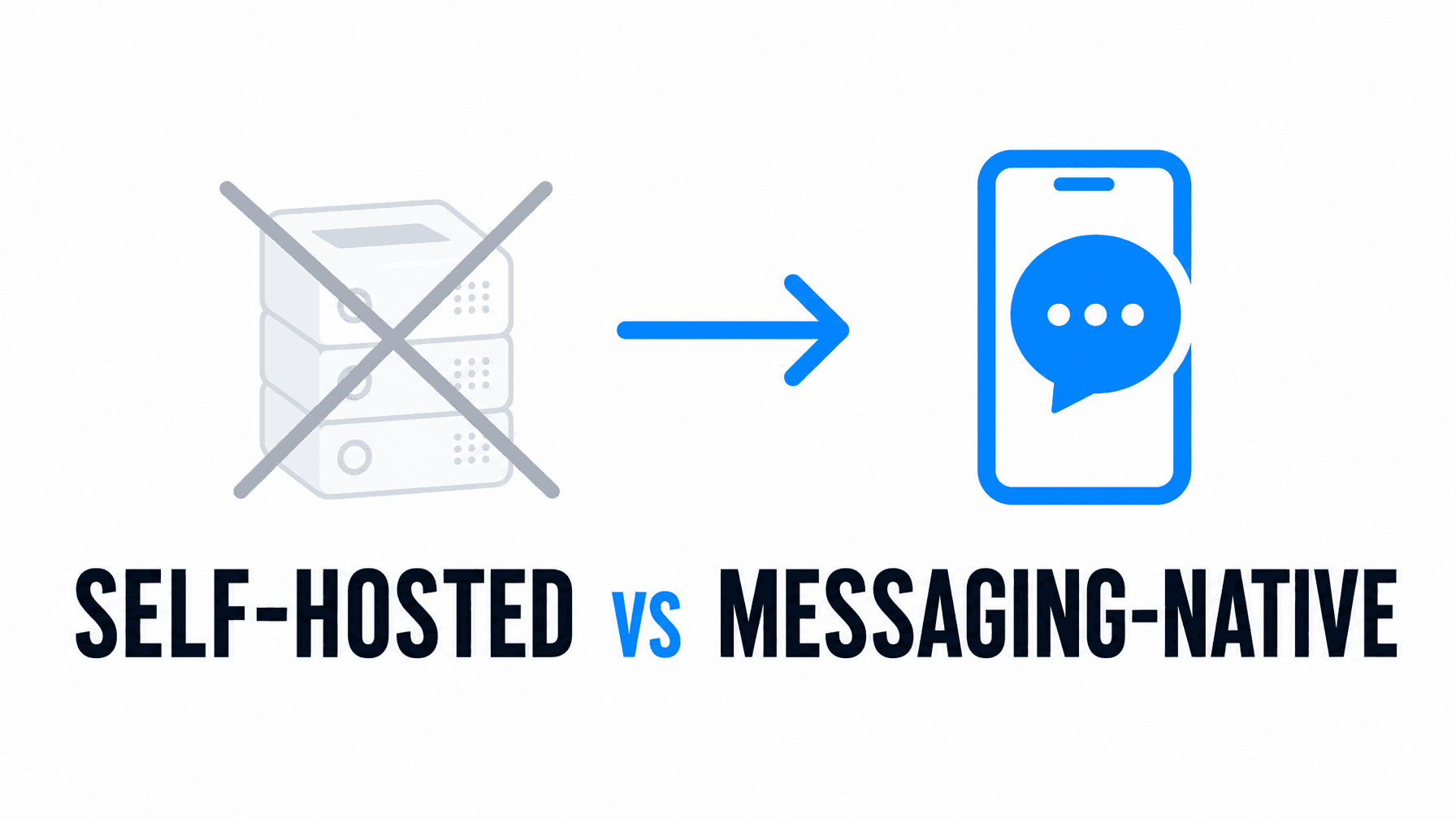
Hermes Agent Alternative: Why Founders Are Trading Self-Hosted Setup for Messaging-Native AI
A founder‑friendly AI intern that works via messaging, offering instant context from Notion, Gmail, Drive, and more—no server setup, just a single chat message.
Hermes Agent, built by Nous Research, is one of the more genuinely impressive open-source AI agents to ship this year. MIT licensed, tens of thousands of GitHub stars, a real self-improving learning loop, and connectors into Telegram, Discord, Slack, WhatsApp, Signal, email, and CLI. If you're a developer who wants to own every layer of your AI stack, it's worth respecting.
If you're a founder who wants an AI intern by tonight, it's also a project. And that's the actual decision in front of you: do you want to run infrastructure, or do you want to send a message?
What Hermes Agent actually is
Hermes Agent is a self-hosted, open-source autonomous agent from Nous Research, the lab behind the Hermes model family. It launched in February 2026 and grew fast, crossing 64,000+ GitHub stars and briefly overtaking OpenClaw on OpenRouter's global rankings with over 200 billion daily tokens processed.
The pitch is genuinely good: persistent memory, auto-generated skills that let the agent teach itself new capabilities, scheduled automations, sandboxed subagents, and browser control. Nous Research also launched a Nous Portal subscription with 300+ models in April 2026, giving Hermes users more model choice than most closed products.
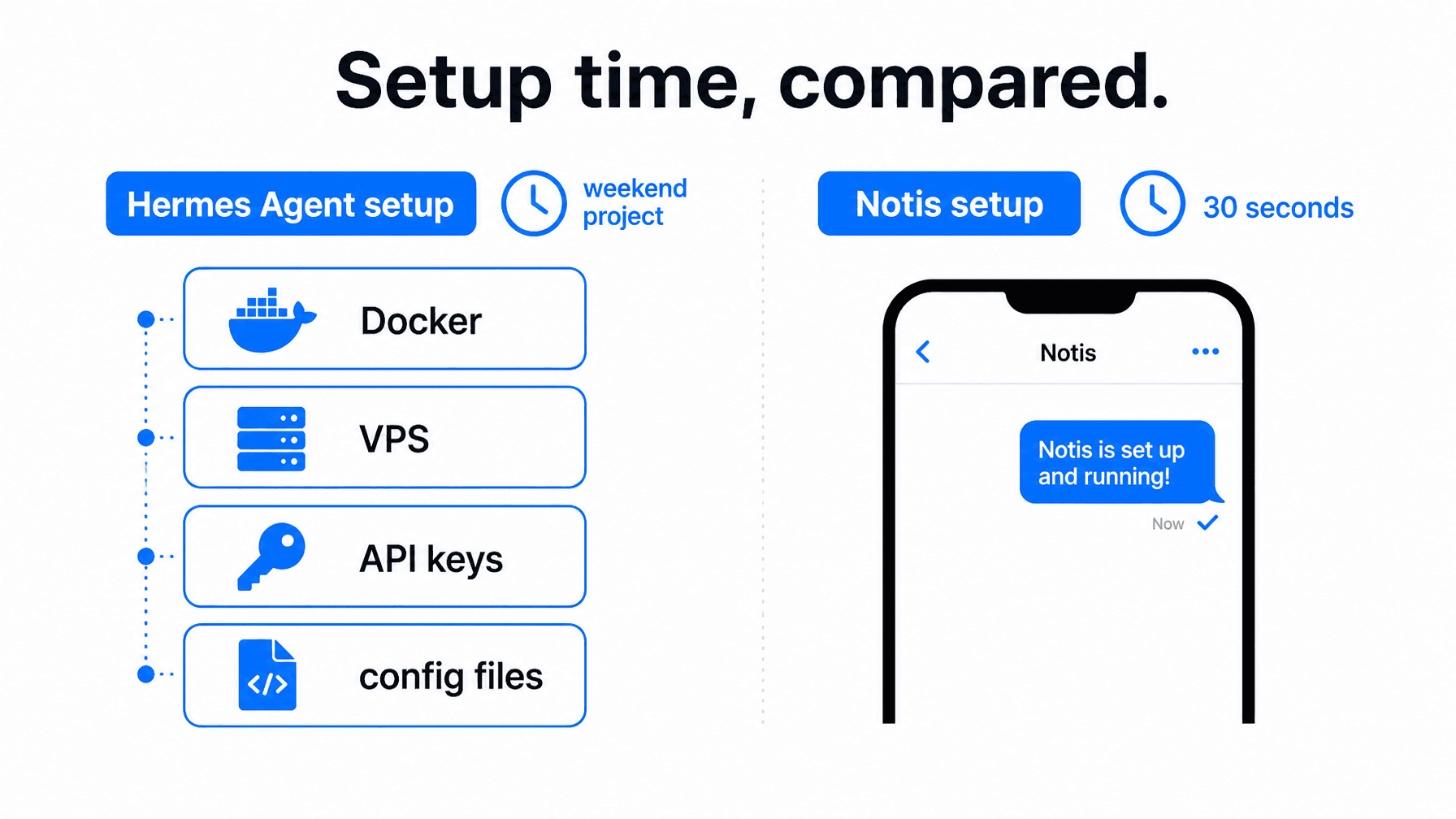
None of that changes the core requirement: Hermes Agent runs on your server. You provision it, you configure the messaging connectors, you manage the process, and you keep it patched. Community deploy guides on Railway and AWS walk through exactly this, because there was demand for an easier path to "managed Hermes" almost immediately after launch. That demand tells you something. As one reviewer running a Hermes vs. OpenClaw comparison over three weeks put it, the setup effort is the first thing any evaluator has to budget for, before ever getting to the agent's capabilities. Source: I Ran Hermes Agent vs OpenClaw for 3 Weeks
Who Hermes Agent is actually built for
Hermes Agent's own documentation and community are built around a developer audience. The configuration docs cover Docker security options, custom LLM endpoints, and self-hosted browser automation via Camofox, a self-hosted Node.js wrapper around a Firefox fork. Source: Hermes Agent Configuration Docs This is not a criticism, it's the target user. Nous Research built Hermes for people who already think in terms of servers, API keys, and process managers.
That's precisely the population that doesn't overlap with most solo founders. If you're running a company, hiring, closing deals, and trying to keep your own head straight, standing up and maintaining a self-hosted agent is a second job you didn't sign up for. Even the community has started building managed hosting layers on top of Hermes itself, essentially confirming that raw self-hosting is a barrier most non-developers don't want to cross.
The real cost isn't the software, it's the weekend
Hermes Agent is free and open source. That's real. But "free" software that needs a VPS, a Docker setup, uptime monitoring, and security patching isn't actually free, it's a time cost you pay every week it stays running. One developer's write-up of building an always-on Hermes Agent on AWS describes exactly this: getting it deployed "in a day, mostly async," fitting the setup work into the margins of a normal workday. Source: I Built an Always-On Hermes Agent on AWS in a Day A day of a developer's time is a very different number than 30 seconds of a founder's attention.
That's the trade Notis makes on purpose. There's no server to provision, no Docker container to babysit, no patch cycle to track. You message Notis on WhatsApp, Telegram, Slack, iMessage, or email, and it's already listening. Thirty seconds. Not your weekend server.
Self-improving skills vs. already-built memory
Hermes Agent's headline feature is its learning loop: it writes its own skills as it encounters new tasks, so its capabilities compound over time. That's a genuinely interesting piece of engineering, and it's the reason developers are excited about it. Source: NousResearch/hermes-agent GitHub
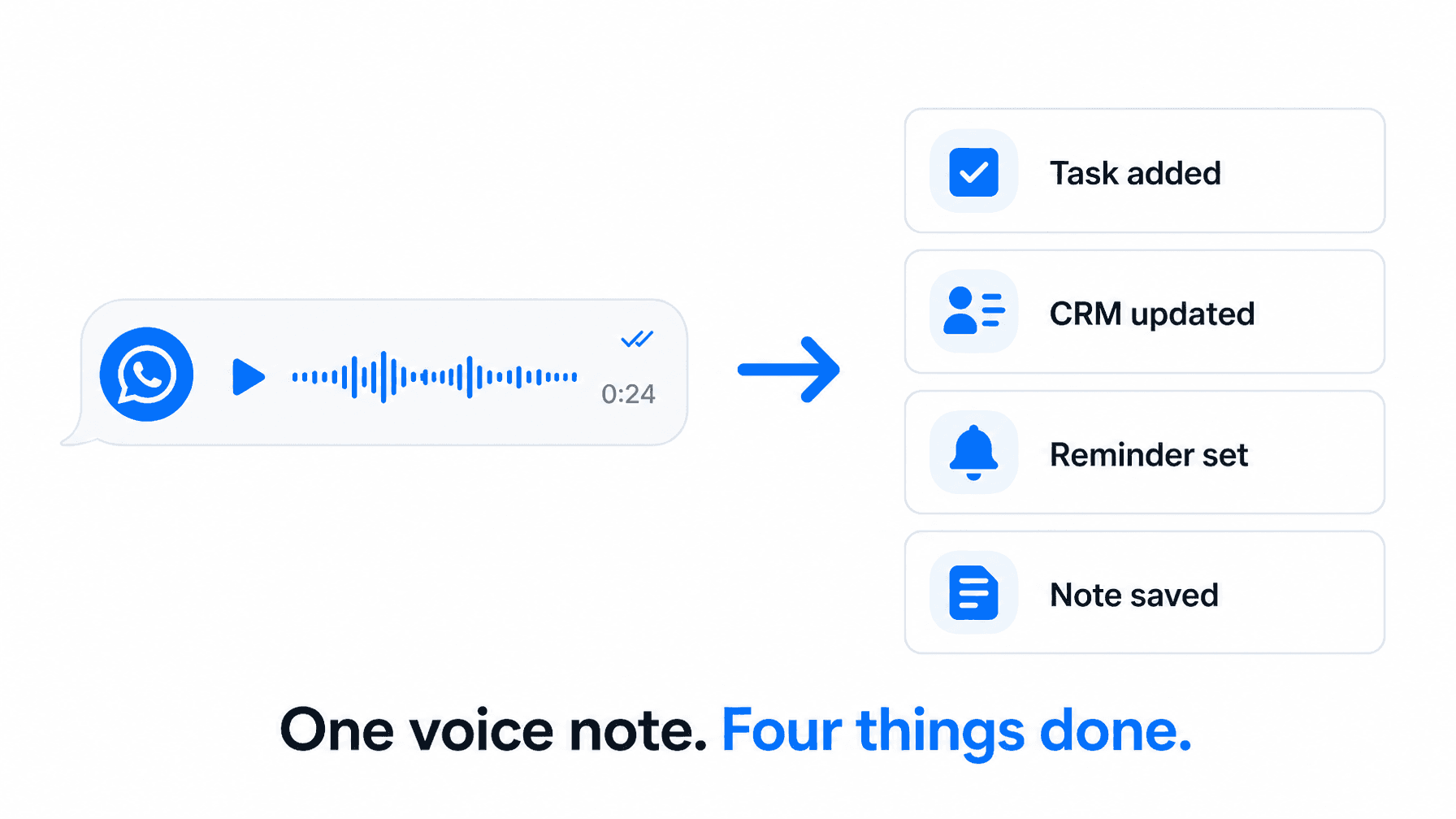
Notis takes a different bet on memory. Instead of asking you to wait for the agent to teach itself, Notis ingests what you already have — your Notion workspace, your Gmail, your website, your Google Drive — and starts acting on it from day one. You're not training an agent from a blank slate over weeks of usage. You're handing it context it can use immediately, over the messaging channel you already check forty times a day.
Where Hermes Agent genuinely wins
Fairness matters more than winning every point. If you want full control over your model provider, your data residency, and your infrastructure, and you have the technical comfort to maintain it, Hermes Agent is a legitimately strong choice, arguably the most credible open-source agent on the market right now. If your team already runs infrastructure for other things, the marginal cost of adding one more service is lower than it would be for a solo founder starting from zero.
Notis isn't trying to out-engineer that. It's built for a different question entirely: not "how do I control every layer of my AI stack," but "how do I get an AI intern working for me before my coffee gets cold."
Notis vs. Hermes Agent, side by side
Setup: Hermes Agent needs a server, Docker, and configuration. Notis needs one WhatsApp message.
Maintenance: Hermes Agent is your responsibility to patch and monitor. Notis is hosted and maintained for you.
Memory: Hermes Agent learns skills over time through self-generated automations. Notis ingests your existing Notion, Gmail, Drive, and website context from day one.
Audience: Hermes Agent is built for developers comfortable running their own infrastructure. Notis is built for founders who want to execute, not configure.
Pricing: Hermes Agent is free software plus your hosting bill and your time. Notis is $13/month, all-in, no credit system, no server bill.
The honest recommendation
If you're an engineer who wants to tinker with agent architecture on a weekend, Hermes Agent is a genuinely good project to explore. If you're a founder who runs your business in chaos and wants your tools to embrace that instead of adding another system to maintain, that weekend is better spent somewhere else.
Notis is for the second kind of person. It's an AI intern that's already one message away, across WhatsApp, Telegram, Slack, iMessage, and email, trusted by 17,000+ founders who'd rather send a voice note than SSH into a box.
Try Notis at notis.ai and have it running before you'd have finished reading the Hermes Agent Docker documentation.

Flo is the founder of Mind the Flo, an Agentic Studio specialized into messaging and voice agents.
Related posts
The Best Memorae Alternative for ADHD Founders Who Have Good Taste
Notis is a messaging‑native AI tool that replaces Memorae by handling voice notes, updating Notion, CRM, and reminders, offering deep memory, 1,000+ integrations, and responsive support for ADHD founders.
The Best Lindy Alternative for Founders Who Don't Want to Build Another Workflow
Lindy now leads with an iMessage and SMS executive assistant. Here is the honest Notis comparison across admin depth, channels, integrations, visibility, and price.
Zapia Max Alternative: Why ADHD Founders Choose Notis
Zapia Max is a free WhatsApp chatbot for personal tasks, while Notis is a paid AI intern that integrates with 1,000+ tools, offers long‑term memory, and helps ADHD founders manage business workflows across multiple channels.