

AI Agent Architecture for Founders Who Just Want the Work Done
A founder-friendly explanation of AI agent architecture: message, memory, tools, judgment, approvals, and delivery — without the diagram theater.
Founders do not wake up thinking, “I need better AI agent architecture.” They wake up thinking, “Why did the assistant forget the thing I already told it?” or “Why did the workflow break after one weird email?” or “Why am I still babysitting the automation I created to stop babysitting my work?”
Architecture sounds like a developer word, but it is really just the difference between a clever demo and an assistant you can trust on a Tuesday afternoon when your inbox is on fire. The model matters, obviously. But the model is only one organ. The agent needs memory, tools, permissions, retries, context, and a way to close the loop without turning every task into a science project.
The simple version: an agent is a loop, not a chat
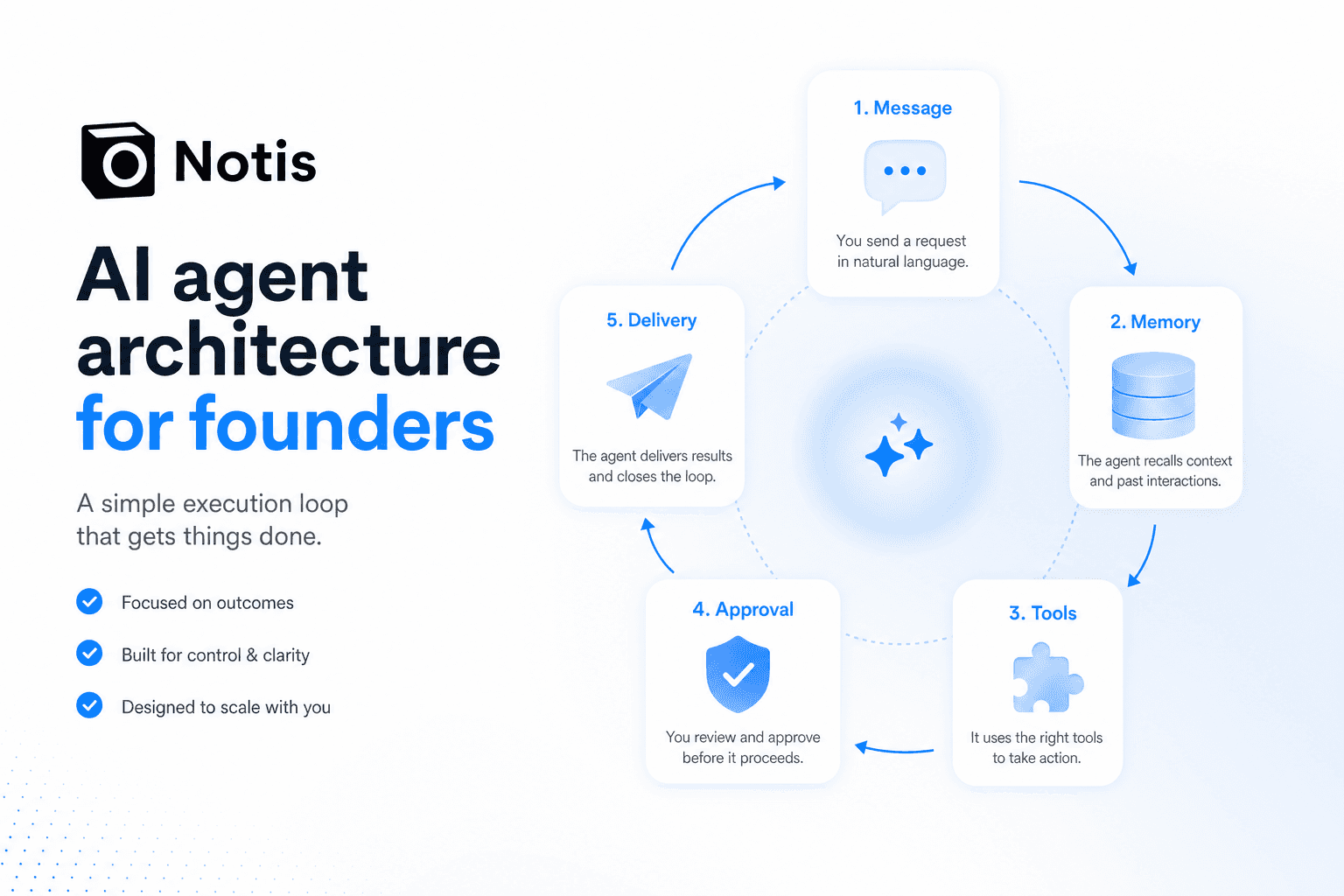
A chatbot replies. An agent runs a loop. It receives an instruction, understands the goal, checks context, uses tools, makes decisions within boundaries, asks for approval when needed, and delivers a result. That loop is the architecture. If the loop is sloppy, the agent feels like a goldfish with API access. If the loop is solid, it feels like an intern who actually read the brief.
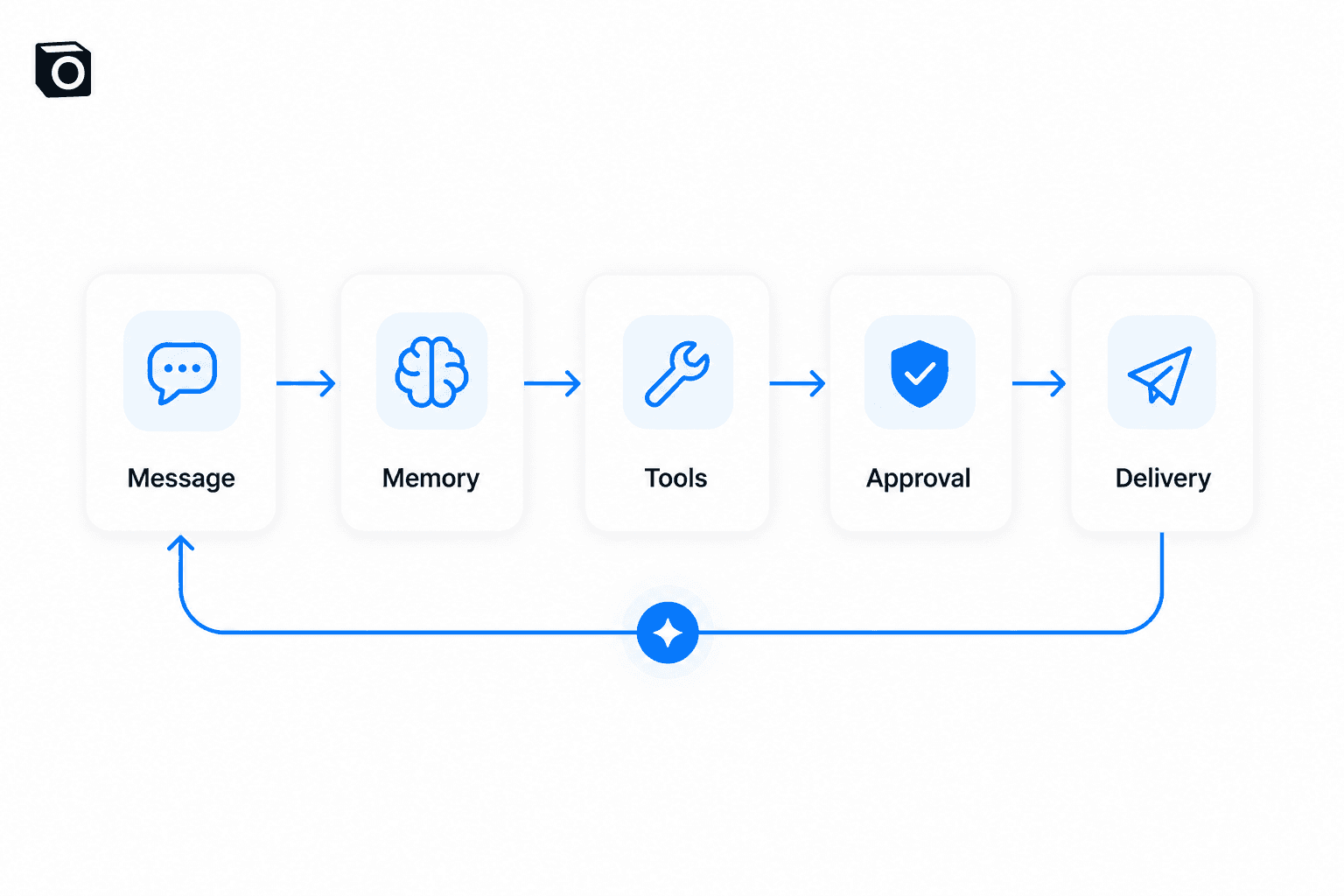
For founders, the useful mental model is not “multi-agent orchestration” or “graph-based execution.” It is message, memory, tools, judgment, approval, delivery. Can I tell it what I need in plain language? Does it remember relevant context? Can it use the systems where my business already lives? Does it know when to act and when to ask? Does it come back with proof?
Memory is not magic. It is product discipline
Memory is where many agent demos become dangerous. Remember too little and the assistant becomes useless. Remember too much and it becomes noisy, expensive, and occasionally creepy. Recent research on memory mechanisms for autonomous LLM agents frames this as an engineering problem: what gets written, retrieved, updated, contradicted, forgotten, and governed. That is exactly the right lens.
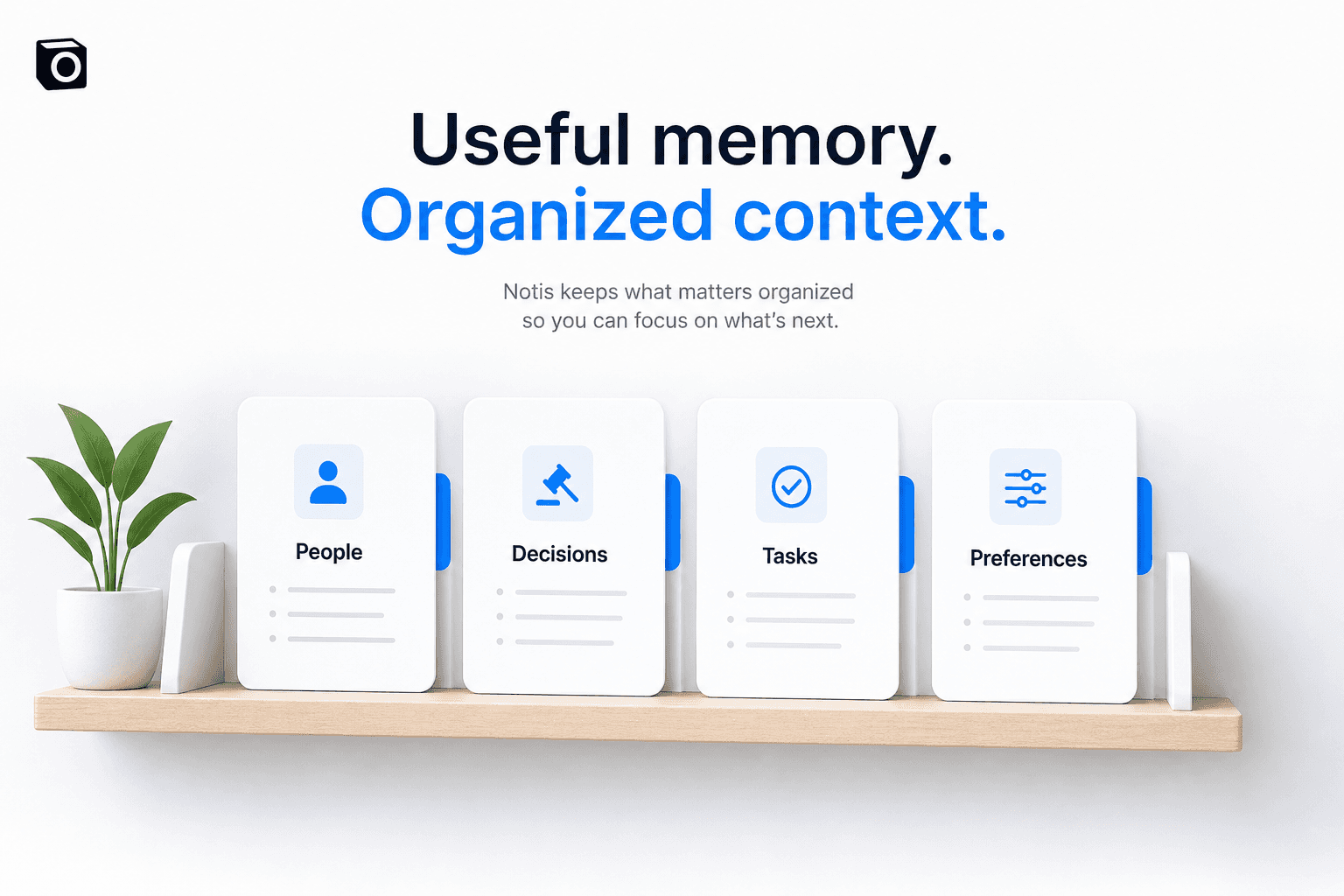
A founder does not need an assistant that remembers every sentence. You need one that remembers the useful facts: your company context, recurring workflows, preferred channels, important people, open tasks, draft state, and the decisions you have already made. Memory should reduce repeated explanation. It should not create a haunted filing cabinet.
Tools are where the promise becomes work
An AI agent without tools is basically a motivational speaker. It can tell you what to do, but it cannot do much. Tools are what let the assistant search your docs, draft an email, create a calendar event, update a CRM, query a database, generate a document, or trigger a workflow. This is why Notis connects to messaging channels and business tools instead of trying to trap everything inside one new app.
The Notis feature overview describes the practical version of this: notes, tasks, CRM updates, meeting work, content generation, reminders, automations, and integrations all sit behind a natural-language interface. The architecture is valuable only because it lets a founder send one messy request and get back a concrete outcome.
Reliability comes from checkpoints and boundaries
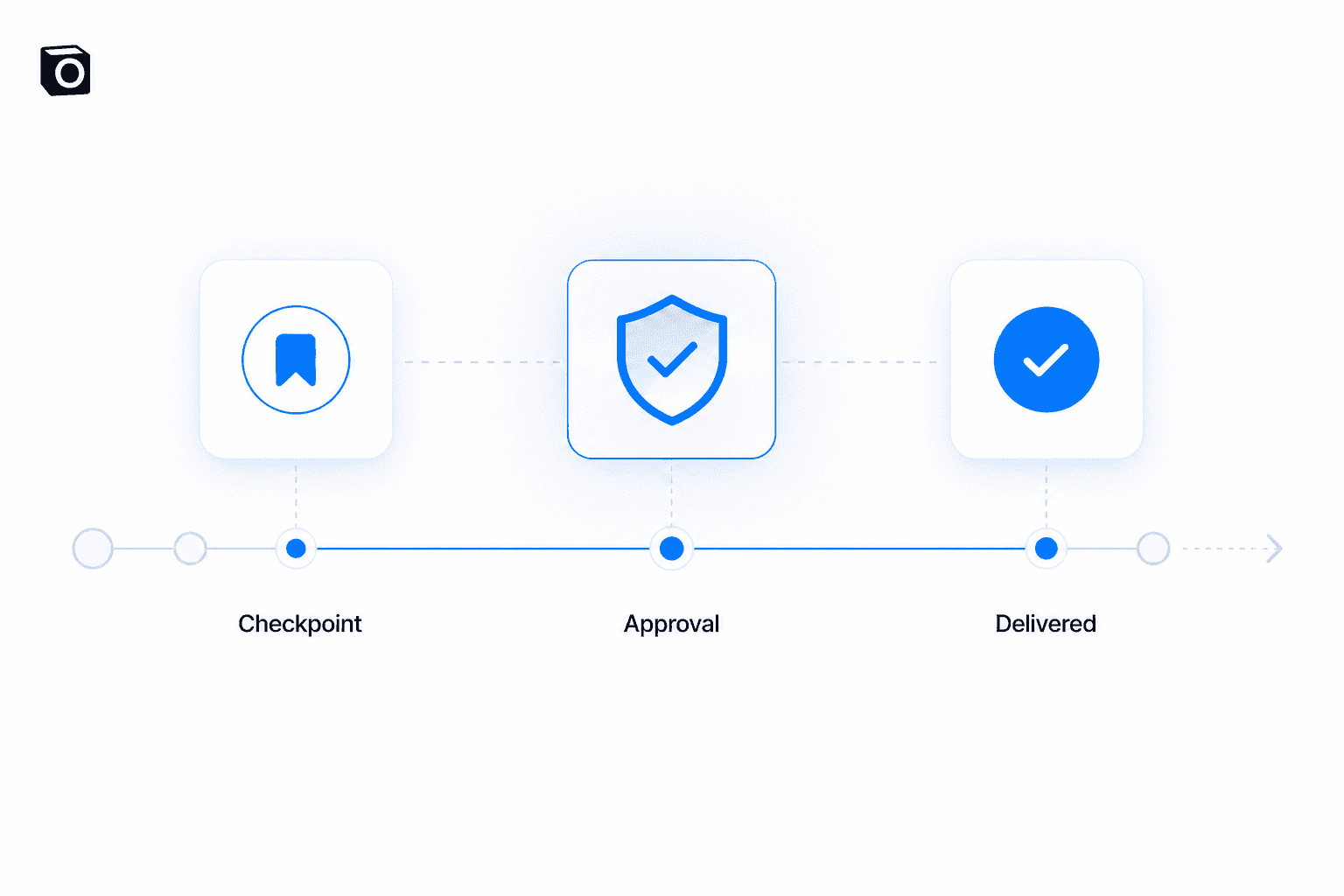
If an agent is going to do real work, it needs more than vibes. It needs durable state, retries, logs, and checkpoints. LangGraph’s documentation on persistence and checkpoints is a good technical example of the principle: save state at meaningful boundaries so the system can resume, inspect, and recover instead of starting from scratch every time something breaks.
For a founder, the product translation is simple. If the assistant drafts an email, show the draft. If it updates a CRM, say what changed. If it cannot complete a step, tell me where it stopped. If the action is risky, ask before doing it. The point is not full autonomy at any cost. The point is bounded autonomy that saves time without creating cleanup work.
The messaging-native architecture advantage
Most agent platforms make you visit the agent. Notis brings the agent to the place you already communicate. That sounds like a UX detail, but it changes the architecture. The message becomes the trigger. The assistant can capture intent in the moment, route work across integrations, remember context across tasks, and deliver the result back to the channel where the request started.
This matters because founders do not have a clean, linear workday. You are reading an email, getting a WhatsApp from a contractor, remembering a bug, scheduling a call, and half-writing a post in your head while making coffee. The best architecture is the one that accepts that reality instead of asking you to behave like a project manager in a demo video.
How to evaluate an AI agent as a founder
Do not start with feature lists. Start with failure modes. What happens if the instruction is ambiguous? What happens if the tool call fails? What context does it remember next week? Can you approve sensitive actions? Can you see what it did? Can it operate from WhatsApp, email, Slack, or the channels you already use? Can it turn a voice note into a completed workflow instead of a transcript?
If the answer is mostly “open our dashboard and configure this flow,” you are buying another operating system for your work. Sometimes that is the right choice. But if you are a solo founder or operator, the better architecture is often the boring one: one place to ask, many tools behind it, clear memory, safe approvals, and results delivered back where you started.
The takeaway
AI agent architecture is not about impressing engineers with diagrams. It is about making an assistant reliable enough to delegate to. For founders, the winning architecture will feel less like a cockpit and more like a competent intern in your messaging app: context-aware, tool-connected, honest about limits, and obsessed with getting the work over the line.

Flo is the founder of Mind the Flo, an Agentic Studio specialized into messaging and voice agents.
Related posts
AI Assistant vs Freelancer: Delegate Without the Hourly Guessing Game
Freelancers sell time. AI assistants sell execution. Here’s how founders should decide what to delegate to humans, what to delegate to AI, and where approval still matters.
AI Note-Taking Apps Are Solving the Wrong Problem
Most AI note-taking apps help you capture more. Founders need the next step: turning messy voice notes into finished work without opening another app.
From Voice Note to Finished Work: The AI Shift ADHD Founders Need
Organized notes are not the win anymore. For ADHD founders, the real shift is from capturing thoughts to having AI agents turn a voice note into finished work ready to review.